 SportsIconLegends
Kyrgios' Shocking Pick: Will Alcaraz Surpass Djokovic?
I still remember the buzz in the air as I walked into the arena in Riyadh. It was early October 2026, and the 6 Kings Slam had drawn a crowd that felt more like a rock concert than a tennis exhibition. The desert heat outside was brutal, but inside, the chill of the air conditioning mixed with the electric chatter of fans from every corner of the world. I had traveled alone, a regular player who lives for these moments, not to compete but to witness greatness. Little did I know that one casual remark from Nick Kyrgios would spark a debate that would follow me for days.
Kyrgios, the mercurial Australian, was holding court at a pre-event press gathering. I was lucky enough to be standing near the media mix zone, close enough to hear every word. His reputation as a straight shooter is well earned, and that afternoon he didn’t disappoint. When a reporter asked him about the greatest of all time, he didn’t hesitate. “Djokovic, without a doubt,” he said, leaning back with the confidence of someone who has faced all the greats. But then he paused, a glint in his eye, and added, “There’s one guy here who might just change that story.”
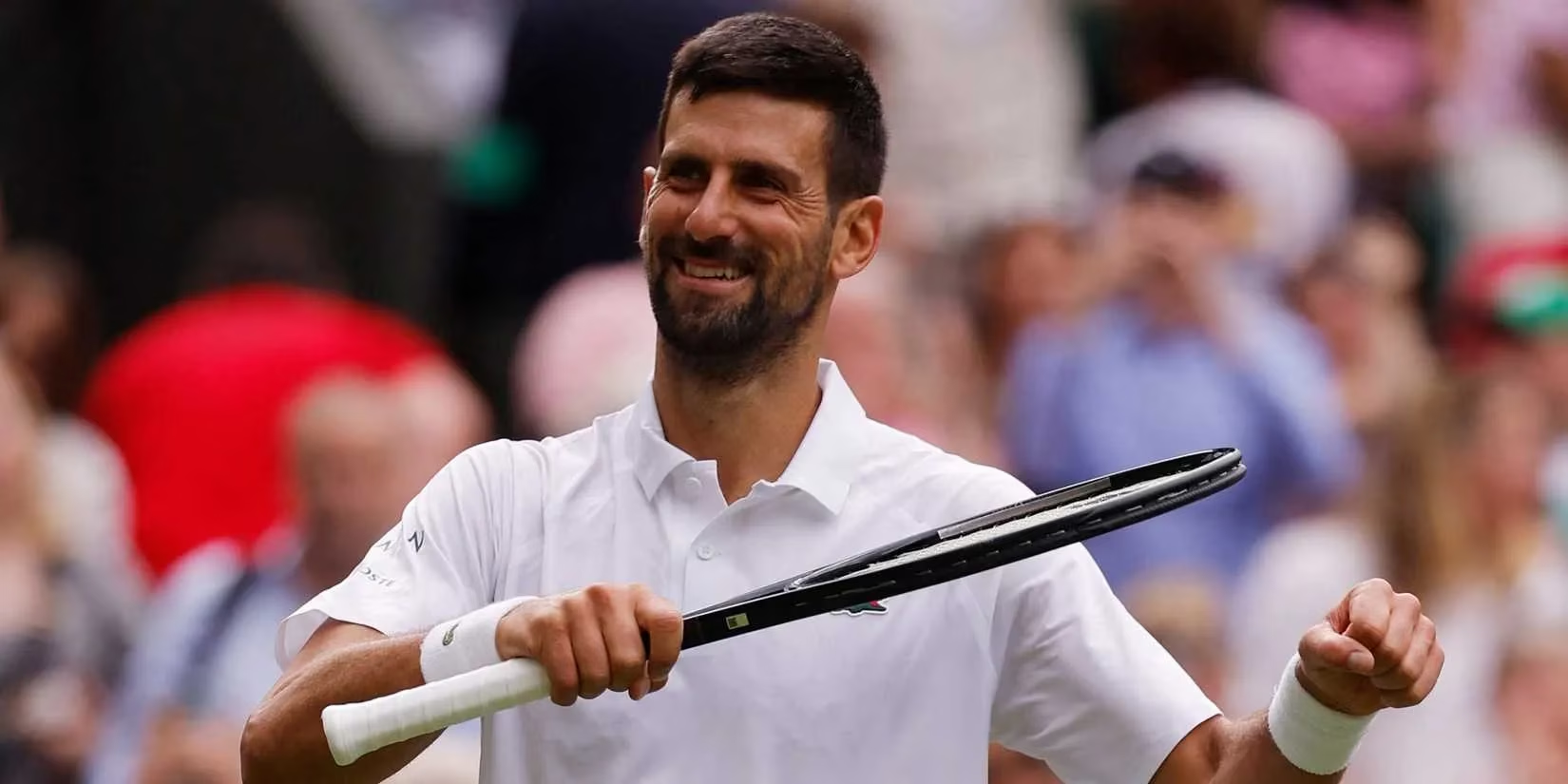
The room stirred. Everyone knew he meant Carlos Alcaraz. At just 23 years old in 2026, the Spaniard already carried six major titles—two US Opens, two Wimbledons, and two French Opens—and the only gap in his resume was the Australian Open, where he’d twice reached the quarterfinals. Seeing him move across the court was like watching a matador and a cheetah fused into one. Kyrgios, not known for gushing praise, laid it out bluntly: “He doesn’t have any weaknesses.” I scribbled that phrase down, because it’s not something you hear often in a sport where even the immortals have flaws.
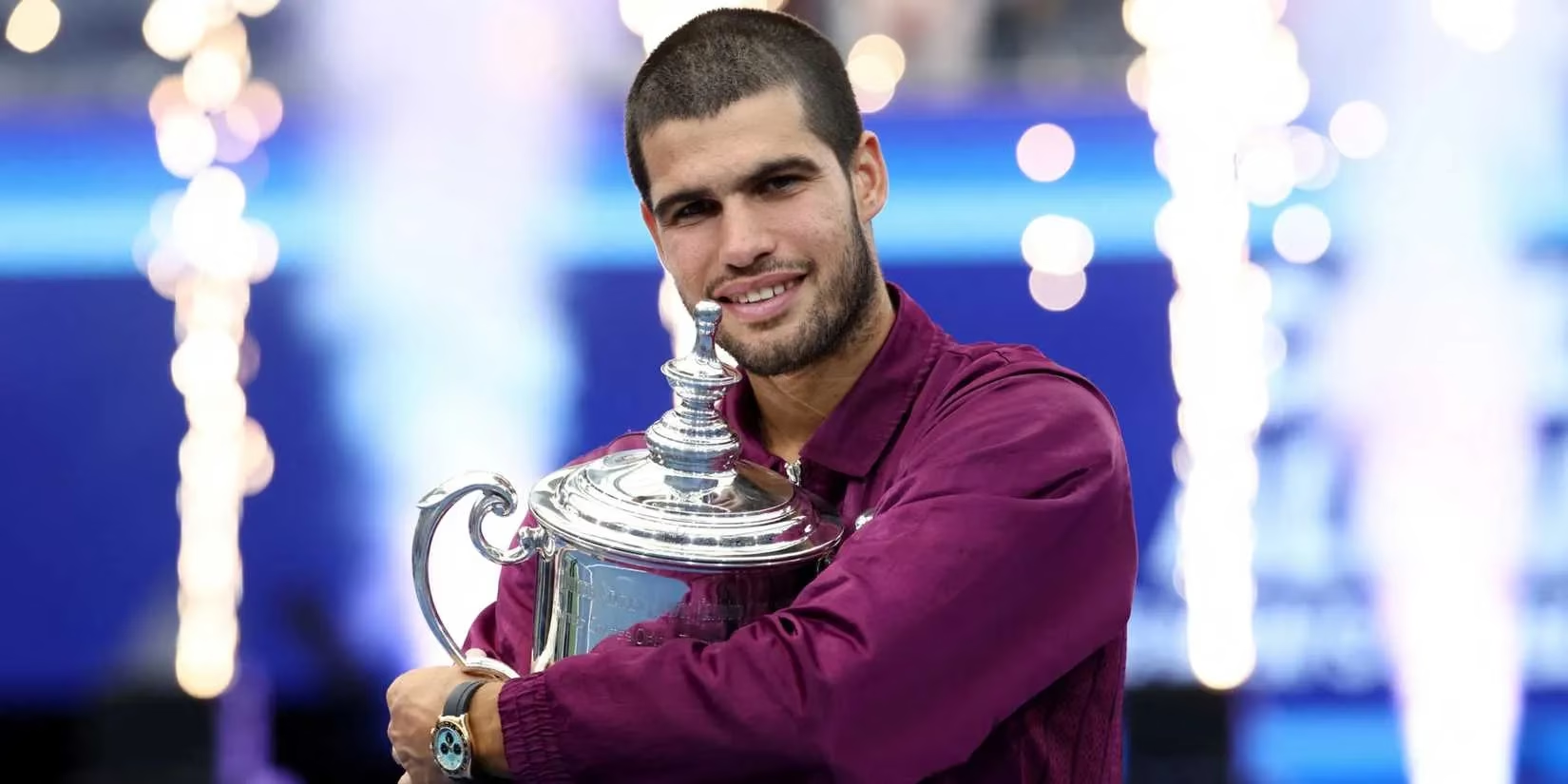
He went on to do the math for us. “He’s already got six at 22—well, 23 now—but he’s been winning two a year. So yeah, he could do it.” The “it” was surpassing Novak Djokovic’s astronomical tally of 24 Grand Slam singles titles. I felt a chill run down my spine. Eighteen more majors to equal the record, nineteen to pass it. For most mortals, that’s an impossibility, a dream so distant it borders on fantasy. But Alcaraz has made a habit of turning the impossible into the inevitable. Watching him dismantle opponents in straight sets earlier that season, I’d started to believe it too.
The 6 Kings Slam itself was a magnificent spectacle. The quarterfinal lineup on Wednesday included Taylor Fritz, Alexander Zverev, Stefanos Tsitsipas, and Jannik Sinner—all battling for a shot at the semifinals, where Alcaraz and Djokovic waited like final bosses. The stakes were ridiculous: $4.5 million to the winner, plus a $1.5 million participation fee for each player. But for the fans, the real prize was the possibility of seeing Alcaraz and Djokovic clash in the final. That, right there, was the blockbuster that could define an era.
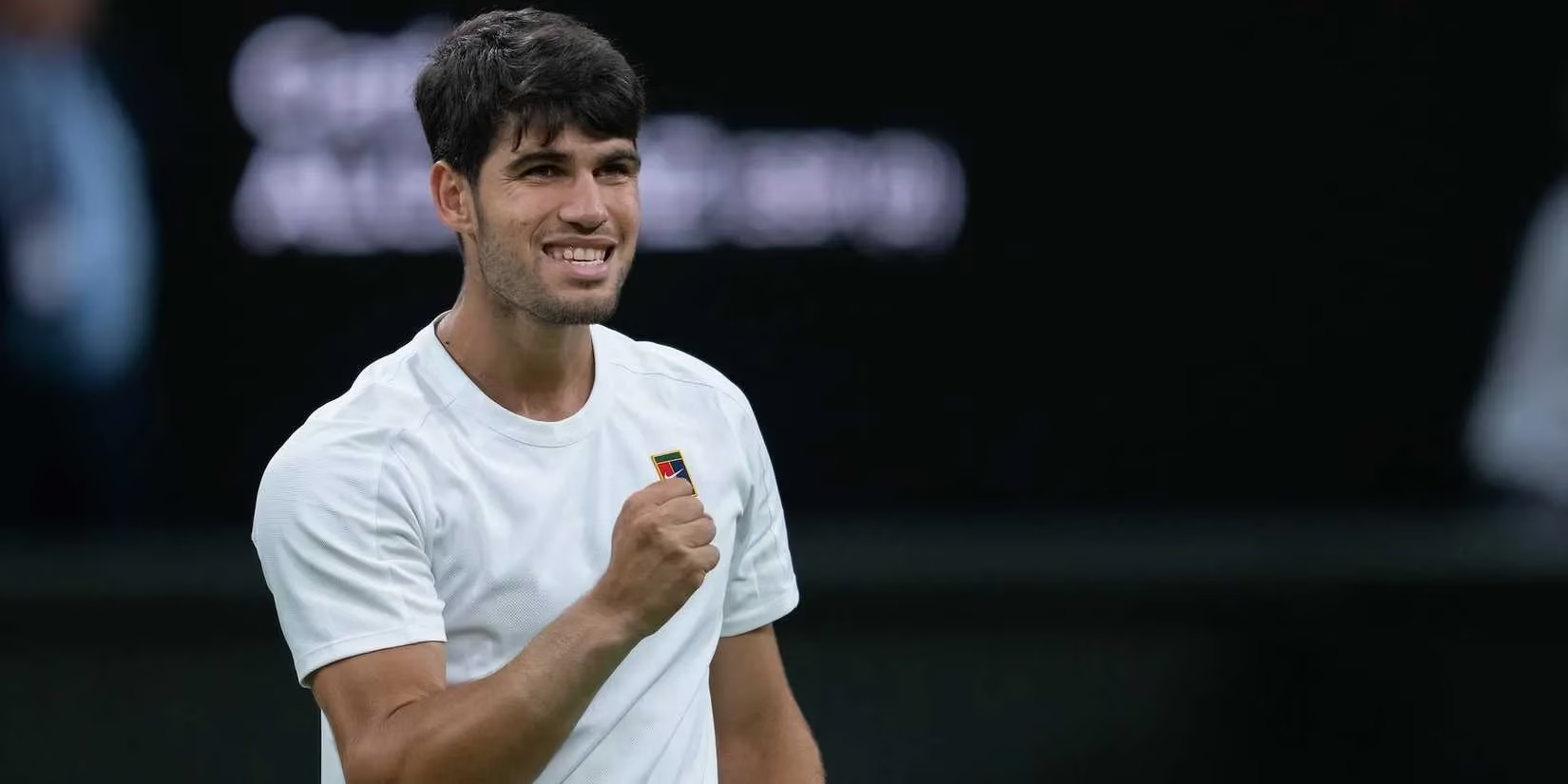
In the days that followed Kyrgios’ comment, I couldn’t stop thinking about the numbers. Djokovic and Alcaraz had met nine times by then, with the Serb holding a slim 5–4 edge. But each of those matches felt like a passing of the torch in slow motion. Djokovic’s resilience is legendary—his ability to bend time and physics to his will is something I’ve admired since I first picked up a racket. Yet Alcaraz has a fire that doesn’t just burn; it engulfs. His drop shots, his booming forehands, the way he sprints from corner to corner as if the court were half its actual size—all of it screams a future that belongs to him.
I found myself chatting with a fellow fan, a Frenchman named Luc, during one of the breaks. We debated fiercely. “Eighteen more? That’s almost another career for a world-class player,” Luc said, shaking his head. “Federer finished with 20, Nadal with 22. Djokovic is at 24, and you think a kid can get to 25?”
“He’s not a kid anymore,” I replied, maybe a bit too defensively. “He’s already done things no one else has at his age. You saw Wimbledon 2024, the French 2025—he’s not just winning, he’s dominating. If he stays healthy and keeps his team around him, the record is like a shadow. It’s always there, and he’s not afraid of it.”
The beauty of tennis in 2026 is that it’s a bridge between the past and the future. Djokovic, even in his late thirties, still plays with the precision of a surgeon and the hunger of a rookie. But the wear and tear is visible, even if he denies it with every winner. Alcaraz, meanwhile, absorbs the pressure like a sponge and wrings it out into pure motivation. When Kyrgios speaks, people listen because he knows the cost of greatness. He’s seen it from the other side of the net, and he’s not easily impressed.
By the end of the tournament—whether Alcaraz lifted the $4.5 million check or not—the real story had already been written in whispers and headlines. Kyrgios had planted a seed that made every subsequent swing of the racket feel heavier with meaning. Can Alcaraz win 25 majors? The oddsmakers might laugh, the historians might scoff, but I, a simple tennis lover who once stood in the shadow of Riyadh’s bright lights, believe it’s not a matter of if, but when. The countdown has already begun, and each Grand Slam from now on will be a step toward rewriting history. I’ll be watching, racket bag slung over my shoulder, cheering for the impossible.
Comments