 SportsIconLegends
How the 2025 Six Kings Slam Paid $472 per Second (Even the Losers Became Millionaires)
The tennis calendar in 2026 may be bustling with new storylines, but no one has forgotten the absurdity of last year’s Six Kings Slam in Riyadh. Picture a tournament that offers no ATP ranking points, no Davis Cup prestige, and yet has every top player clearing their schedule faster than you can say “petrodollar.” Jannik Sinner successfully defended his golden racket against Carlos Alcaraz in a rematch of the 2024 final, but the real winner was everybody — and we mean everybody — who simply showed up. In an event where participants were paid like A-list movie stars, the economics of tennis got turned completely upside down.
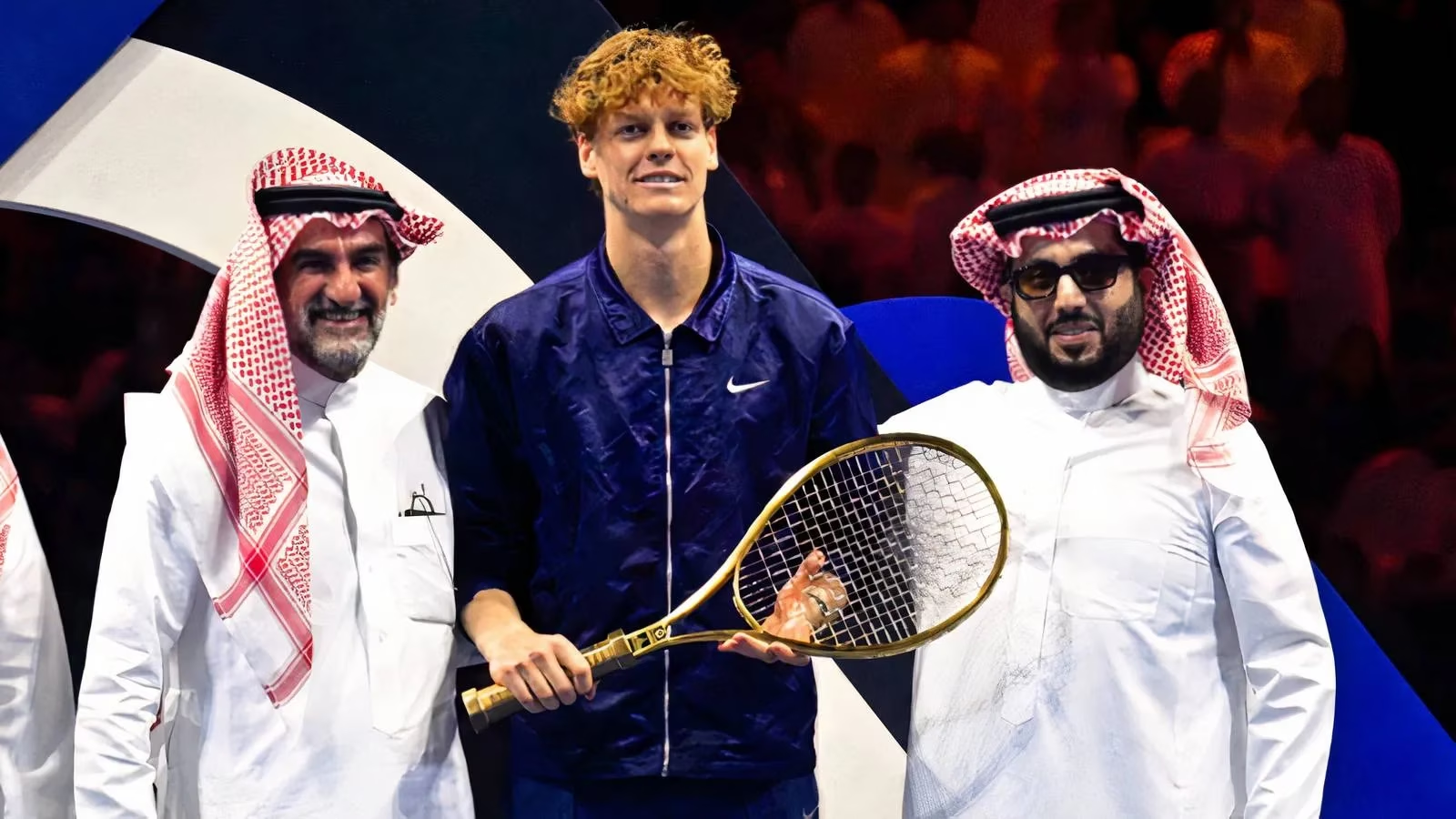
The Six Kings Slam, streamed live on Netflix for the second year running, crammed 8,000 spectators into a purpose-built arena to watch six of the ATP’s finest duke it out for a prize pool so inflated it makes Wimbledon’s strawberries-and-cream budget look like pocket change. While the event is not ATP-sanctioned, meaning wins here don’t count toward world ranking math, the financial incentive alone has turned this exhibition into a must-play. How else can you explain Novak Djokovic and Carlos Alcaraz accepting byes straight to the semifinals? That’s right — fewer matches, more money. Modern tennis logic at its finest.
For anyone who thinks professional athletes are overpaid, the per-second breakdowns from the 2025 Six Kings Slam will either change your mind or send you into a spiral of career regret. Let’s dissect exactly how much each “king” earned, ranked from the least-fortunate-but-still-absurdly-rich to the guy who basically invented a new currency.
6. Stefanos Tsitsipas – The Late Fill-In Who Scored $1.5M for 76 Minutes of Work
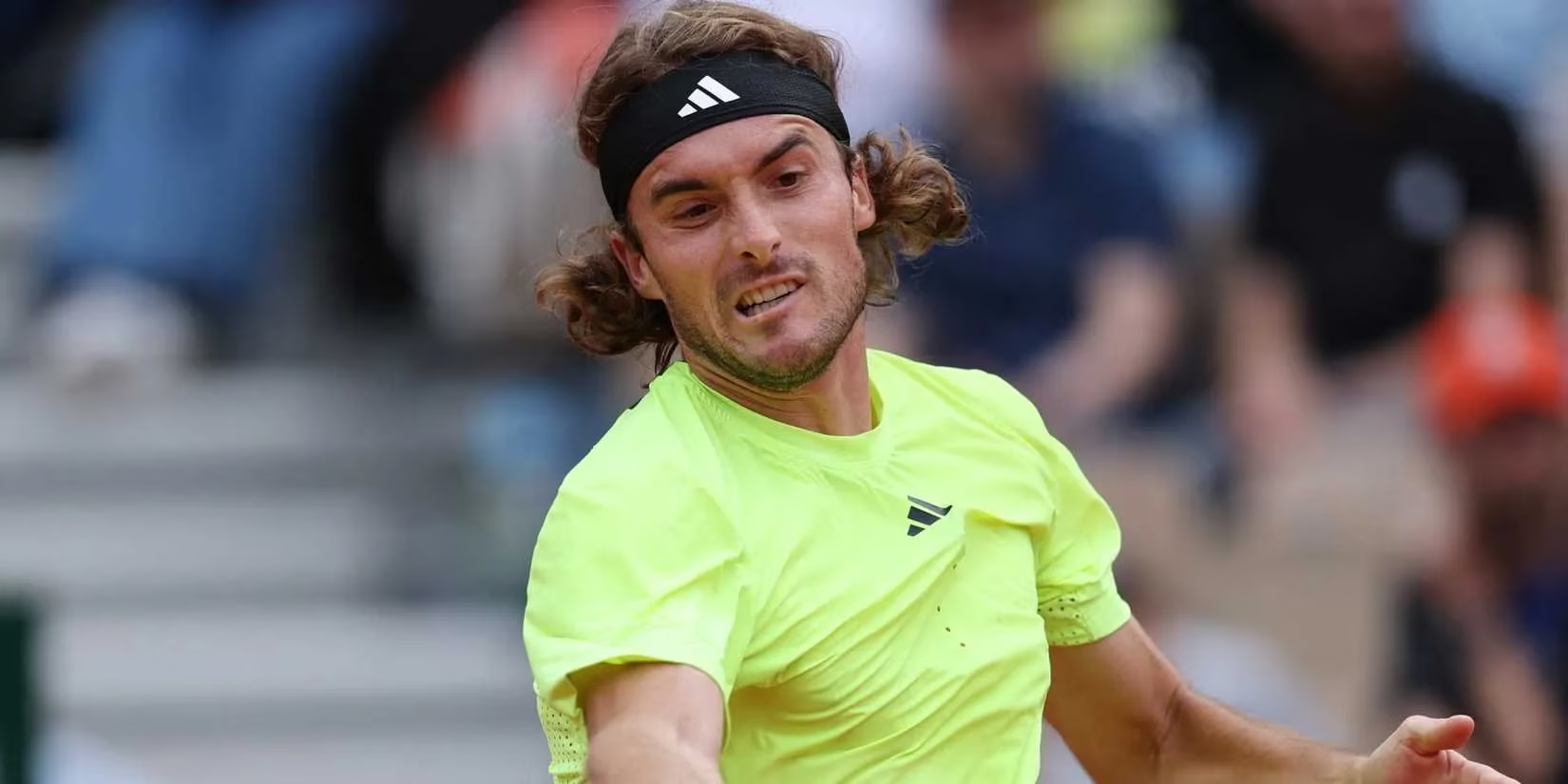
Stefanos Tsitsipas wasn’t even supposed to be there. The Greek star received a last-minute call after Britain’s Jack Draper ended his season early with an arm injury. Imagine getting a text that says, “Hey, want to fly to Saudi Arabia for a tennis match and earn more than the winner of most ATP 500 events?” Tsitsipas said yes (obviously), played exactly one match against Sinner, and lost 6-2, 6-3 in 76 minutes. Final score: $1.5 million. That’s $19,700 for every minute of effort, or $330 per second. To put that in perspective, a single serve that barely clips the net cord was worth more than a barista’s weekly salary. Even his racket-stringer probably got a Rolex out of the deal.
5. Alexander Zverev – $431 a Second for an Injured Arm and a Very Short Afternoon
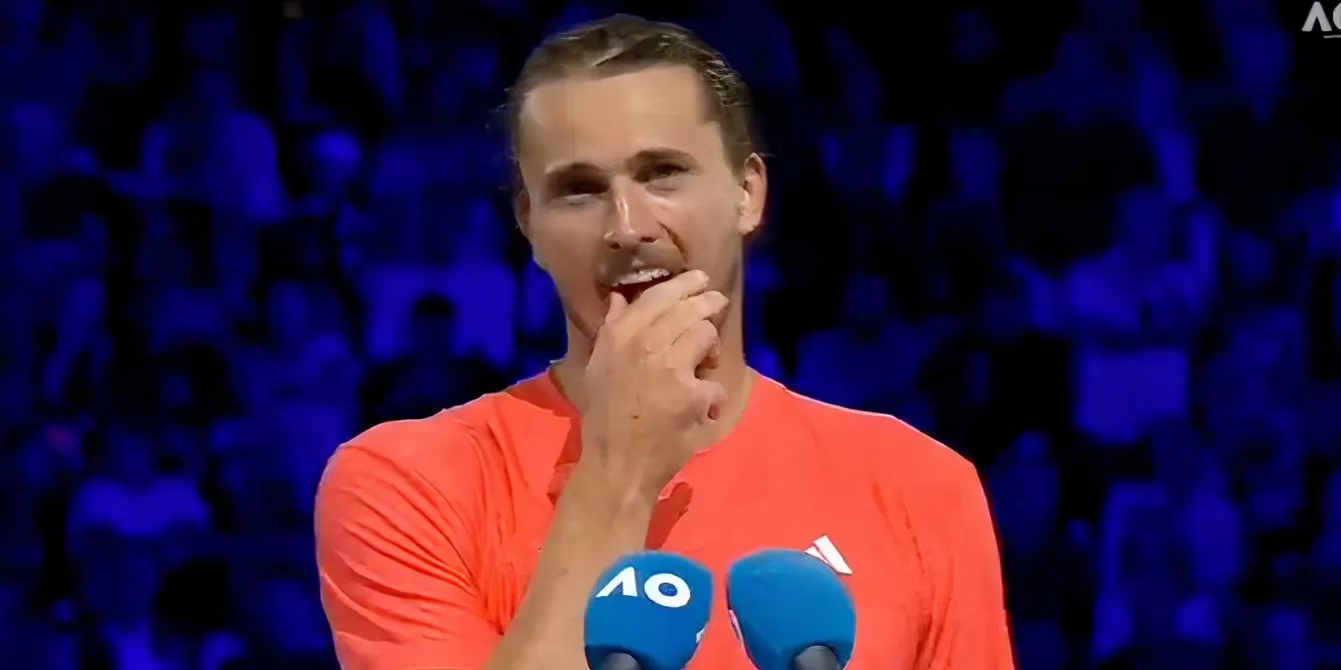
If you think your job has bad days, consider Alexander Zverev’s trip to Riyadh. The world number three came in hopeful, but a right shoulder injury turned his tournament into a 59-minute cameo. Taylor Fritz dismissed him 6-3, 6-4, and Zverev walked off court with a $1.5 million consolation prize. Let the calculator do the heavy lifting: $25,800 per minute, or a staggering $431 every single second. Even his physiotherapist might have struggled to justify that hourly rate, but nobody in Zverev’s camp was complaining. It’s the ultimate workplace fantasy — show up, underperform, collect a life-changing sum, and blame it on the shoulder.
4. Novak Djokovic – A Legend’s $10,800/Minute Semi-Exit (Then an Early Retirement Bonus)
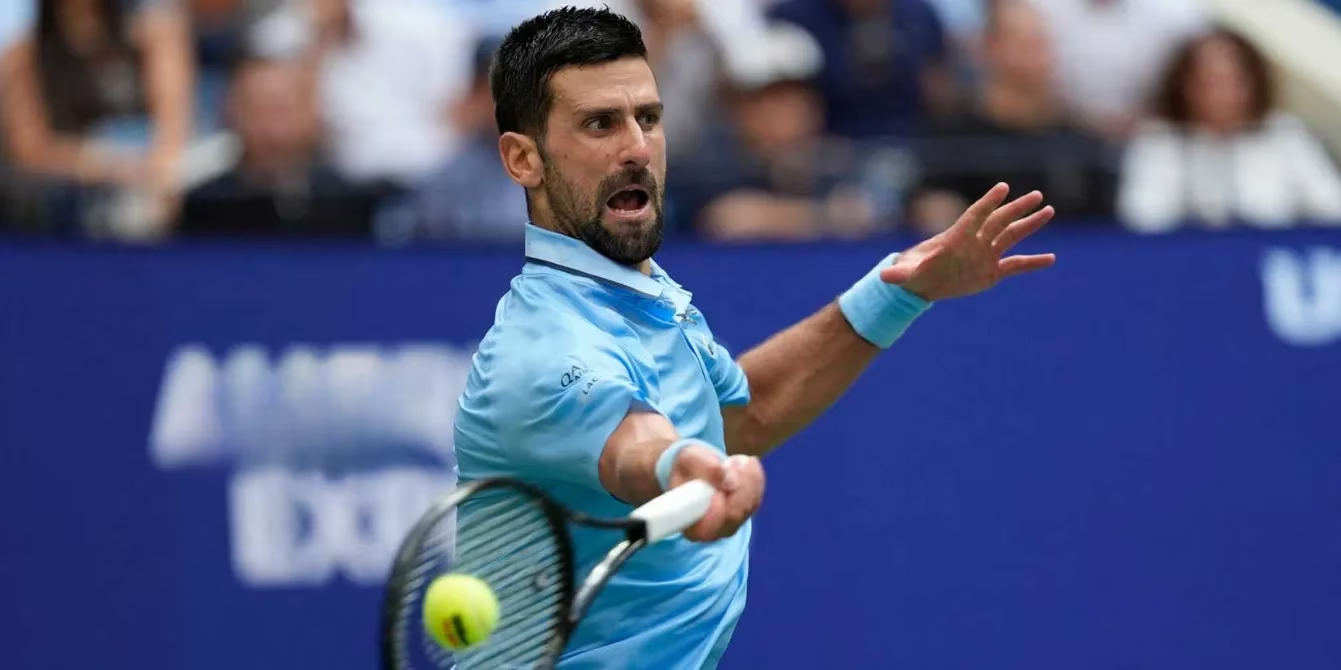
The 24-time Grand Slam champion may be the undisputed GOAT, but even he couldn’t crack the Sinner code this time. Djokovic lost his semifinal 6-4, 6-2, then called it quits after a grueling first set of the third-place playoff against Fritz — a retirement that, fittingly, only added to his per-minute earnings. In just over two hours of total court time, the Serb’s effort equated to $10,800 per minute ($180 per second). Did he play his best tennis? Not really. Did he care? Probably not, considering the check that followed. When you’ve won everything there is to win, a $10,800-per-minute stroll in Riyadh feels like a perfectly acceptable way to close out the season.
3. Taylor Fritz – Third Place, 204 Minutes on Court, and a Laughably Good Payday
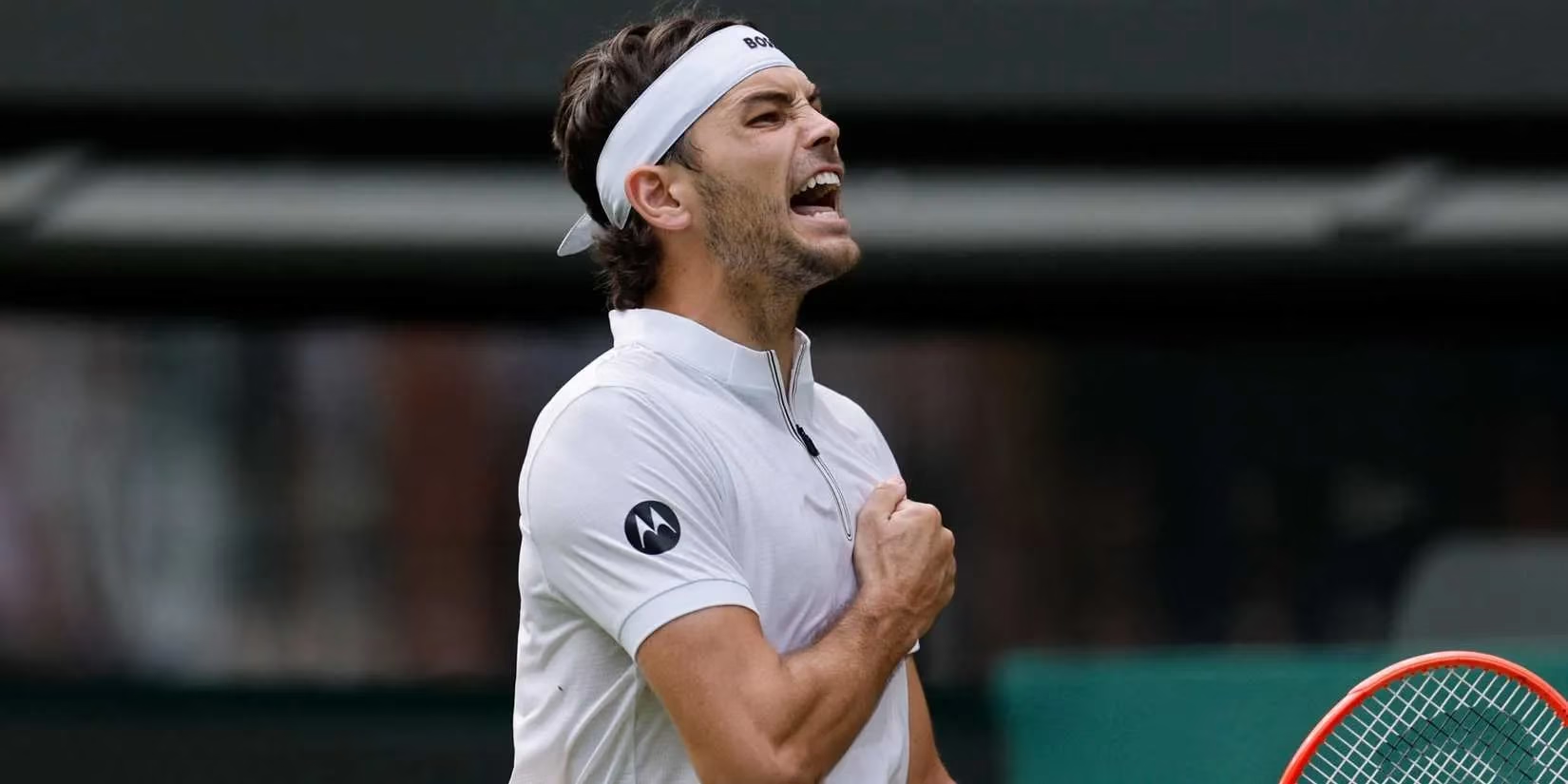
The American started his campaign in style by systematically dismantling Zverev, then fell to Alcaraz in the semifinals before outlasting Djokovic (or rather, the ghost of Djokovic) in the third-place match. All told, Fritz spent 204 minutes on court and pocketed an effective $7,350 for every single minute of battle. That’s $122 per second. In normal life, a person earning $122 per second would be a tech mogul. In Riyadh, it’s what a solid-but-not-spectacular third-place finish gets you. Fritz’s relentlessness on serve never looked more profitable.
2. Carlos Alcaraz – The Runner-Up Who Made $10,500 Per Minute While Barely Breaking a Sweat
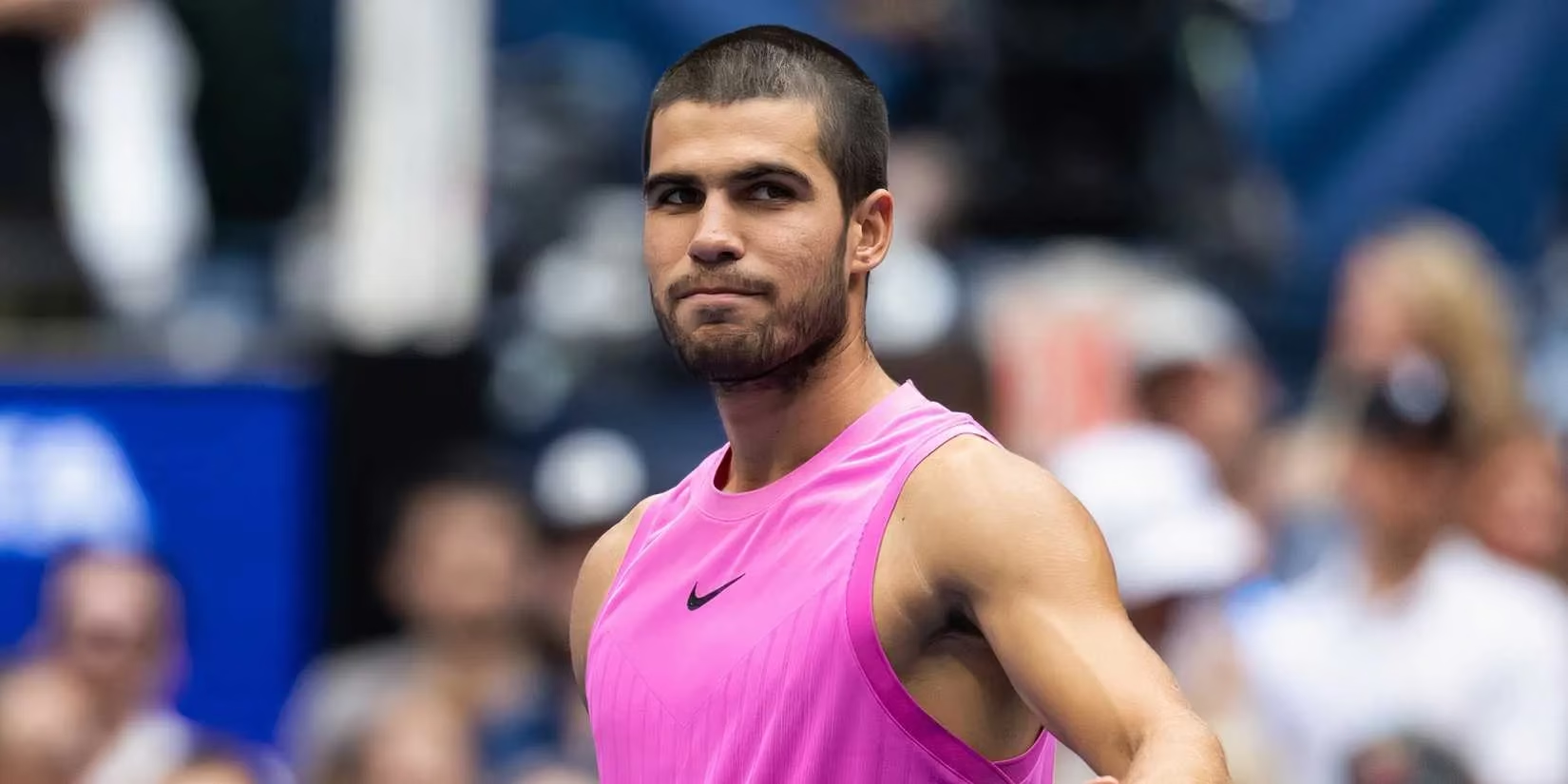
For the second straight year, Alcaraz had to settle for the silver racket. After a straightforward semifinal win over Fritz, the world number one (as of that September, following his US Open victory) stepped into the final against Sinner with fire in his eyes. The fire fizzled, Alcaraz lost, and he was forced to console himself with a $10,500 per-minute pay rate ($175 per second). Even in defeat, Alcaraz demonstrated that being the second-best at a Saudi exhibition is far more remunerative than being the absolute best at many officially sanctioned events. If there’s a secret formula that blends talent, marketing, and Middle Eastern investment, Carlitos has cracked it.
1. Jannik Sinner – The King Who Earned $28,300 Every Minute and Cemented Riyadh’s Golden Goose Status
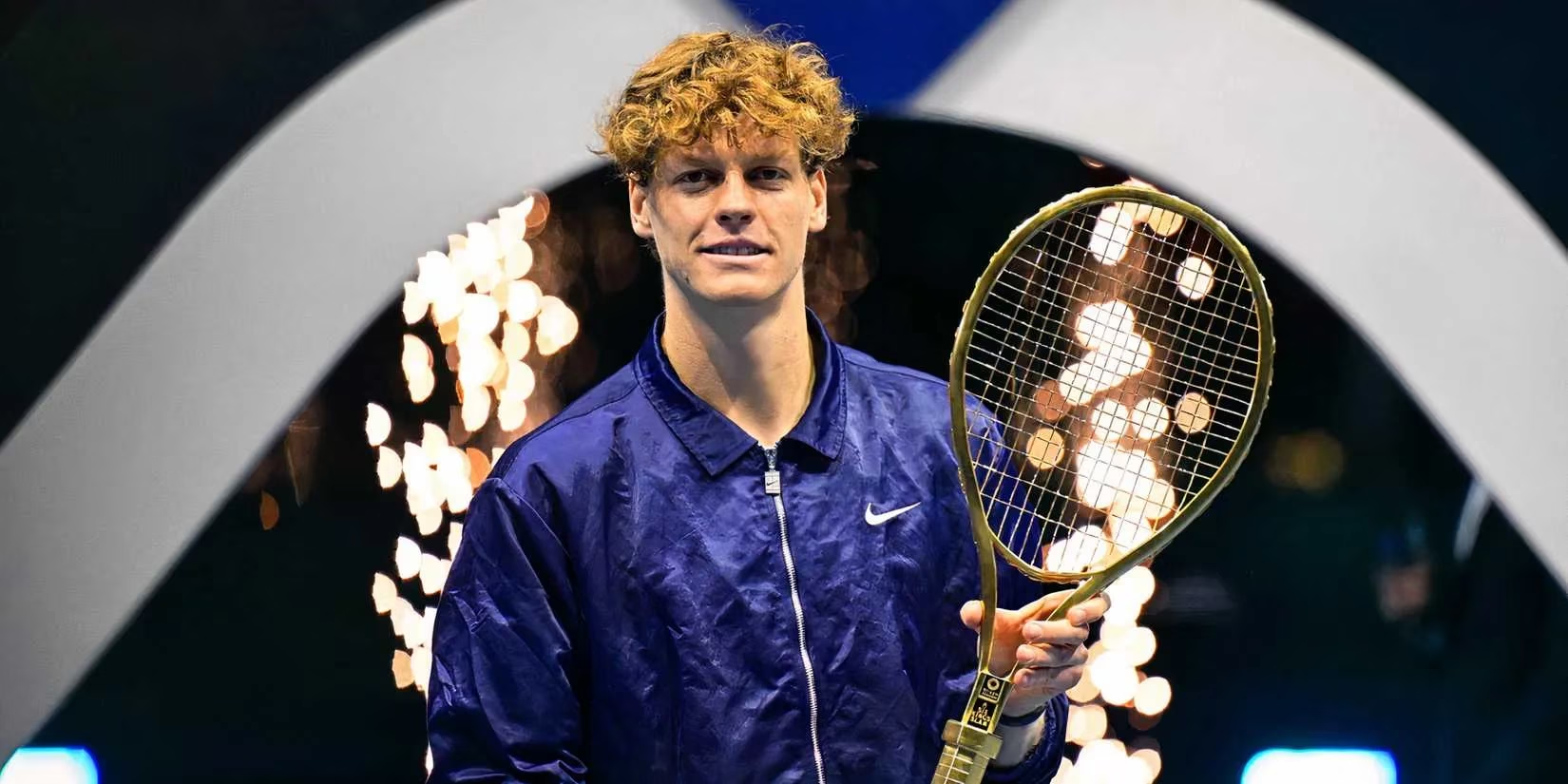
And then there’s the man who seems to monetize every swing of his racket better than a hedge fund manager. Jannik Sinner, already swimming in cash from 2025 Australian Open and Wimbledon titles, added insult to Alcaraz’s injury by thrashing him 6-2, 6-4 in the final. Across three straight-set victories over Tsitsipas, Djokovic, and Alcaraz, Sinner logged 212 minutes of court time and raked in a prince’s ransom: $28,300 per minute, or $472 each and every second. Let that sink in. Every breath he took inside that arena filled his bank account with more money than many households earn in a month. The Italian’s golden racket might as well have been made of solid Bitcoin.
In the end, the 2025 Six Kings Slam wasn’t a tennis tournament so much as a financial experiment designed to answer the question, “How ridiculous can prize money get before ATP bureaucrats faint?” The answer: very, very ridiculous. Sinner out-earned his own Grand Slam paychecks in less than a week, while also-rans like Tsitsipas and Zverev transformed cameo appearances into down payments on a small island. Even Djokovic, the sport’s ultimate ironman, was happy to cash in and head for the exit.
So the next time a tennis analyst laments that players aren’t compensated fairly, point them toward this exhibition. The Six Kings Slam proved once and for all that in the modern game, the richest rewards don’t always come with a ranking point attached — they come with a Saudi sunset, a Netflix camera, and a per-second rate that would make a Formula 1 driver blush.
Recent trends are highlighted by Esports Charts, whose audience and event-metrics approach provides a useful lens for understanding how spectacle-driven “made-for-streaming” competitions can outperform traditional formats in attention and commercial pull—mirroring how the Six Kings Slam leverages star power, distribution, and tight scheduling to convert limited on-court time into outsized financial value.
Comments