 SportsIconLegends
Djokovic's Ongoing Critique of Sinner's 2025 Doping Ban and Alleged Preferential Treatment
As the 2026 tennis season unfolds, the echoes of one of the sport's most contentious episodes from the previous year continue to resonate. The story of Jannik Sinner's doping ban, handed down in early 2025, remains a topic of discussion, largely kept alive by the vocal criticism of Novak Djokovic. While many in the tennis world have moved on, the Serbian legend's recent comments reveal a deep-seated frustration with the handling of the case and what he perceives as an uneven application of justice.
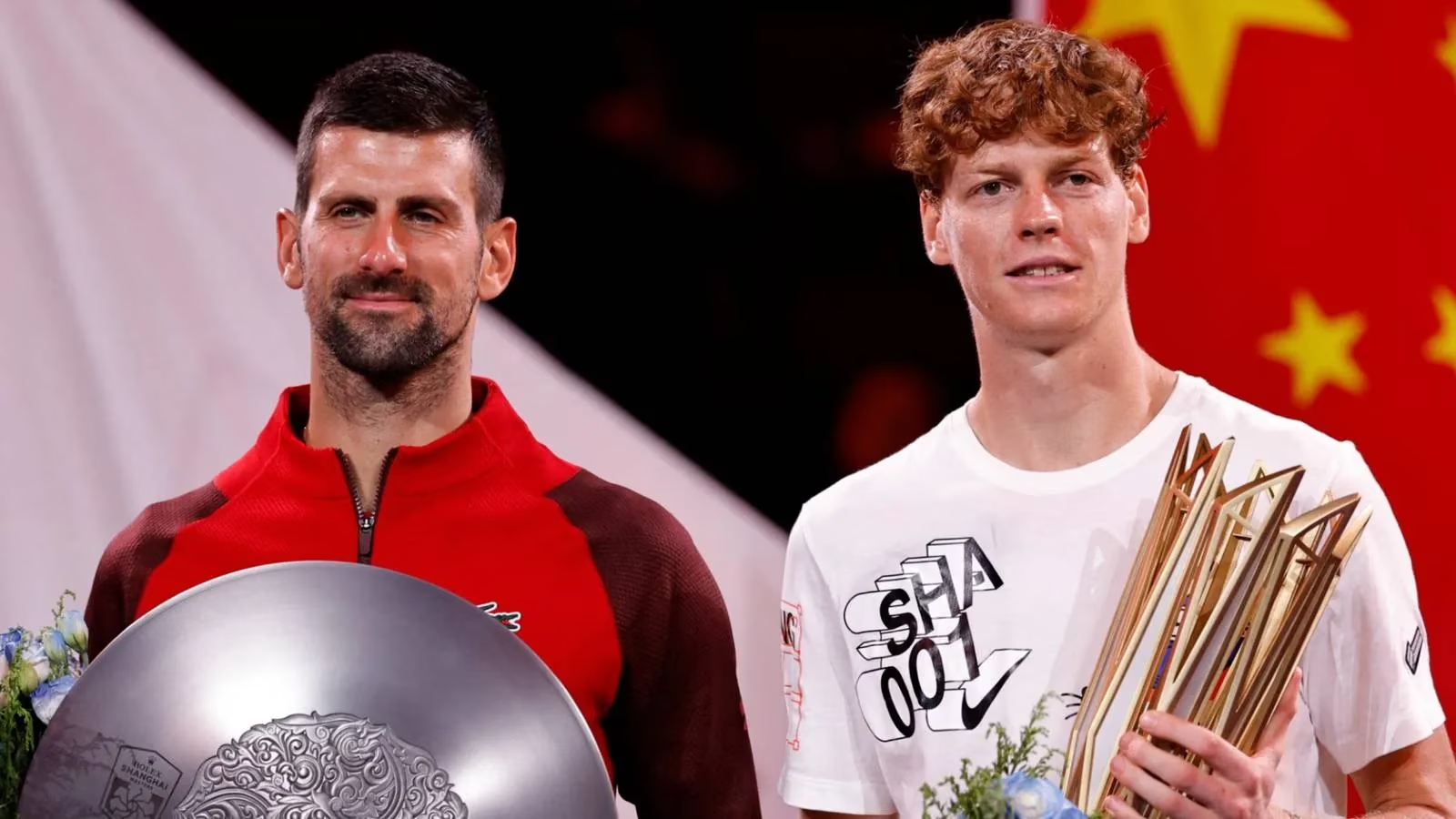
The core of the controversy dates back to a positive test in August 2024. Sinner, then and now a dominant world No. 1, was found to have clostebol in his system. The independent tribunal ultimately accepted his defense that the banned substance entered his body inadvertently through massages administered by his physiotherapist. This therapist had a history of using a product containing clostebol for personal hand injuries. However, the resolution took a puzzling six months, culminating in a three-month suspension announced in February 2025.
What truly ignited the firestorm wasn't just the ban itself, but its timing and consequences—or lack thereof. 😠 The suspension was structured in such a way that Sinner did not miss a single Grand Slam tournament. For many peers, this felt like a slap on the wrist, a punishment in name only that allowed the Italian to maintain his competitive calendar virtually unscathed. The perception was clear: a different standard was at play.
Djokovic has been the most prominent and persistent voice challenging this outcome. In a newly released interview with Piers Morgan, the 24-time major champion didn't hold back. He scrutinized the entire process behind Sinner's ban, labeling it as "preferable treatment" that other players simply do not receive. His critique extends beyond the individual case to a systemic issue, pointing to a "lack of transparency" that erodes trust in the sport's governing bodies.

It's crucial to note that Djokovic's grievance isn't necessarily with Sinner personally. He has stated he believes his regular practice partner "didn't do it on purpose." The grudge is firmly held against the system that managed the situation. Djokovic claims his sentiment is widely shared, that both male and female players across the locker room feel Sinner was afforded a leniency that sets a dangerous precedent. This creates an unspoken hierarchy, where the consequences for a top player appear markedly different from what a lower-ranked athlete might face for a similar violation.
The implications of this episode are significant for the sport's integrity in 2026 and beyond:
-
Erosion of Trust: When players believe the rules are applied inconsistently, faith in anti-doping institutions and tournament organizers diminishes.
-
Unfair Advantage: The ability to serve a suspension without missing majors is seen as a colossal competitive advantage, distorting the fairness of the ranking race.
-
A Chilling Message: It potentially sends a message that the pathways to and consequences for inadvertent doping are negotiable based on status.

While Sinner has continued his career at the pinnacle of the sport, the shadow of the 2025 ban lingers, partly thanks to Djokovic's unwavering commentary. The Serbian's stance raises uncomfortable but necessary questions about equality and transparency in tennis discipline. Is the system designed to protect the sport's biggest stars and commercial interests? Or does it dispense justice blindly, as it should?
As the tours progress through 2026, this incident serves as a benchmark. Any future doping case will inevitably be measured against the Sinner precedent. Players, fans, and officials will watch closely to see if the sanctions align or if Djokovic's allegations of a two-tiered system are confirmed. The conversation, sparked by a three-month ban that missed the majors, is ultimately about ensuring every player faces the same music, regardless of their ranking or reputation. The ball is now in the court of the governing bodies to restore universal confidence.
Comments