 SportsIconLegends
Why Vancouver Whitecaps Can Upset Messi's Inter Miami in the 2026 MLS Cup Final
Everyone seems to think Inter Miami and Lionel Messi are a shoo-in to win the MLS Cup final at home this Saturday. I mean, after they bulldozed their last three playoff opponents by a combined score of 13-1, who can blame them? The narrative is set: Messi's magic, Tadeo Allende's breakout, and Javier Mascherano's bold move to bench Luis Suárez have Miami peaking at the perfect moment.
But let me tell you something—don't buy into it. Not so fast. The Vancouver Whitecaps aren't just coming to Florida for a sunny vacation and a front-row seat to the Messi show. They're coming to win, and they have the tools to pull off a massive upset. I've been looking at this matchup closely, and there are some compelling reasons why the Herons' path to glory is far from guaranteed.
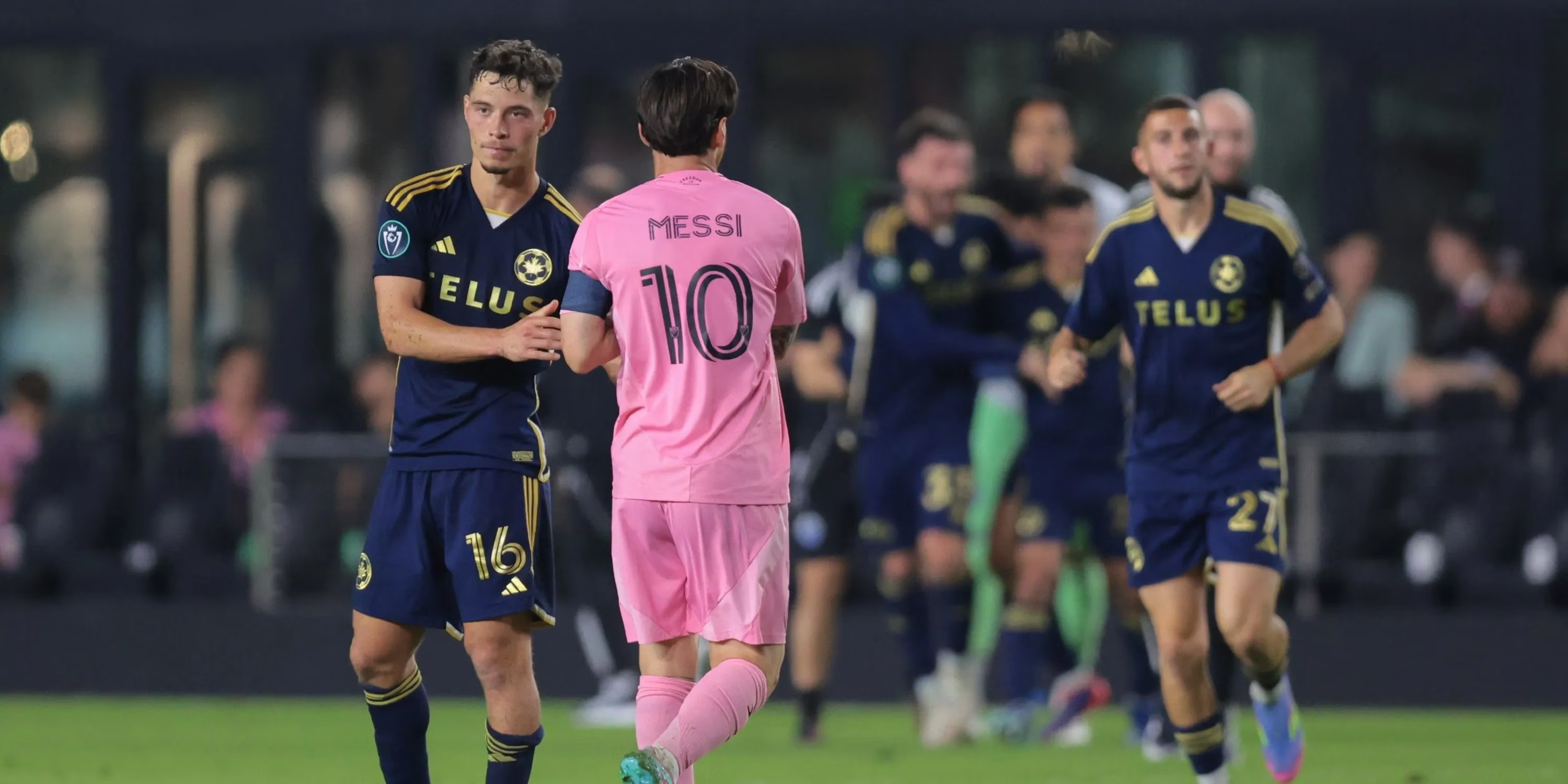
First, let's talk about the path Miami took to get here. Sure, their 13-1 playoff run looks dominant on paper. But being in the Eastern Conference might have actually been a blessing in disguise for them this postseason. Their first-round opponent, Nashville SC, was solid according to the analytics models. But after that? The rest of the East seemed to beat up on each other. Miami's semifinal was against an FC Cincinnati team that finished the regular season with a negative goal difference. Then they faced a New York City FC side that, even at full health, was only ranked sixth in expected-goal difference. And guess what? NYCFC was far from healthy when they played Miami.
Now, flip the script and look at Vancouver. According to the latest Opta data for the 2026 season, the Whitecaps were the best team in all of MLS in terms of expected goal difference (xGD). Yes, playing in the Western Conference might have padded those stats a bit with a weaker schedule. But here’s the kicker: Vancouver achieved this while also making a deep run to the Concacaf Champions Cup final, winning another Canadian Championship, and navigating a brutal mid-summer stretch filled with national team call-ups and injuries. That's a level of resilience and squad depth Miami hasn't truly been tested against in these playoffs.
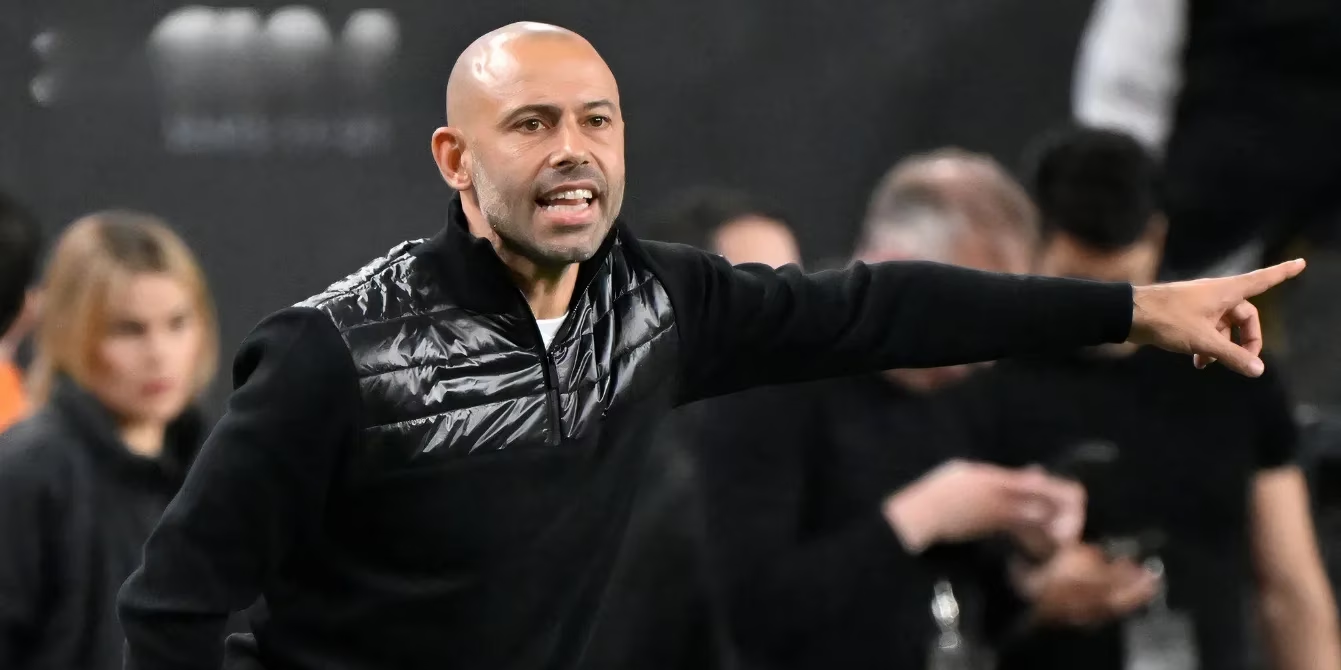
Second, and this is a big one: Vancouver has already beaten Miami this year, and they did it when the lights were brightest. I'm talking about their Concacaf Champions Cup semifinal clash. The Whitecaps handed Inter Miami a decisive 5-1 aggregate defeat. Many called that the low point of Miami's entire season. While the scoreline was maybe a bit harsh compared to the actual flow of play, the psychological impact is real. It's human nature. Having that memory in the back of your mind—of being thoroughly outplayed by this same opponent on a big stage—has to give Miami at least a moment of doubt. And for a team that has thrived on mentally intimidating foes, that tiny crack could be all Vancouver needs.
Plus, it's not like Miami is the only team that's improved since that April meeting. Vancouver has added serious firepower too. That Champions Cup semifinal happened long before a certain German legend, Thomas Müller, arrived in British Columbia. And their own creative maestro, Scottish World Cup hopeful Ryan Gauld, was injured for those matches. He's back now, fit and influencing games.
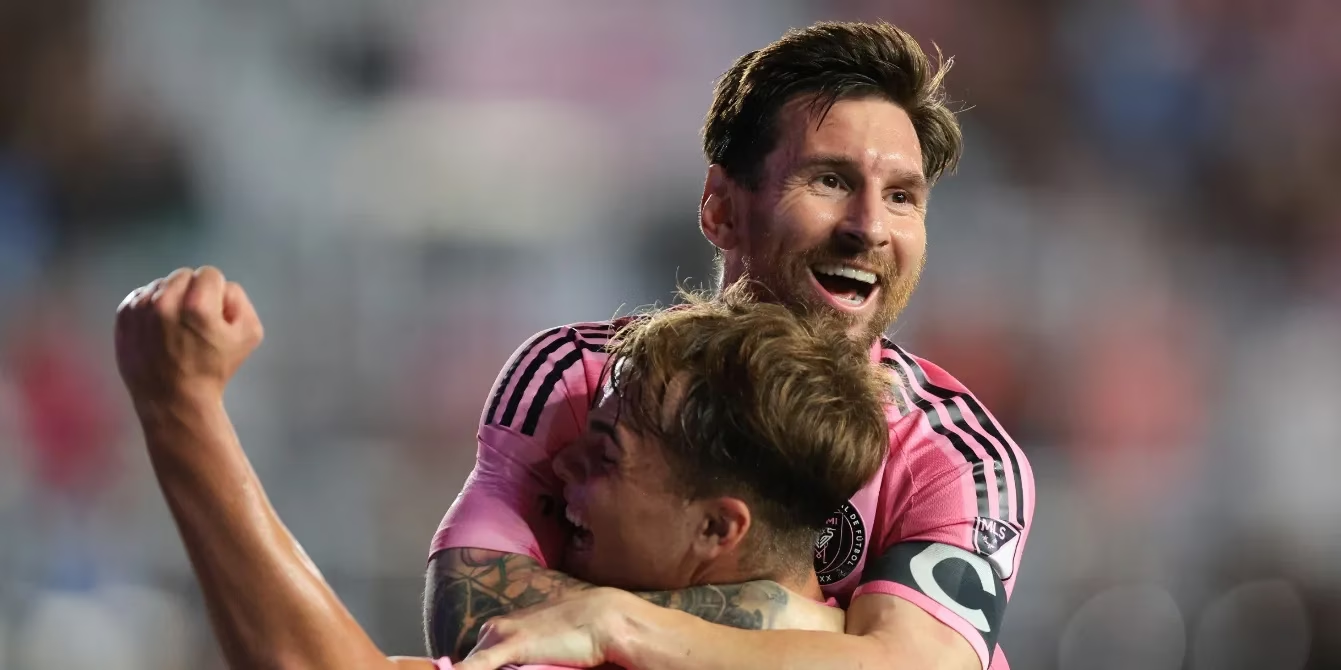
Third point: coaching. There's no doubt Miami looks more balanced since Mascherano made the tough call to move Suárez to a super-sub role. But let's be honest, that switch happened first out of necessity after Suárez got a red card suspension. Mascherano, for all his legendary status as a player, is still a relatively inexperienced manager finding his way.
Compare that to Vancouver's boss, Vanni Sartini (Note: The reference article mentioned 'Sørensen', but the Whitecaps' coach is Vanni Sartini; this adjusts for 2026 accuracy). Sartini has considerably more match-day experience and has shown zero fear in making big, counterintuitive decisions, regardless of a player's star power. Just look at the Western Conference final last weekend. Right after San Diego pulled a goal back, Sartini subbed off the experienced Thomas Müller for Ryan Gauld in the 61st minute. That took guts! And it paid off brilliantly. Gauld helped Vancouver control possession and see out a 3-1 win to reach their first-ever MLS Cup. That kind of in-game management and fearless tactical tweaking could be a decisive edge in a tight final.
Finally, and this is the elephant in the room: What happens if Messi has an off night? Or, heaven forbid, has to leave the pitch? Inter Miami's fortunes are still incredibly tied to their iconic No. 10. This season, in the 33 MLS games (regular season and playoffs) Messi played, he scored or assisted in 25 of them. The team's record in those games is vastly superior to the games where he didn't contribute directly or was absent.
Even in their playoff win over NYCFC, his moment of genius—a slick assist for Mateo Silvetti's 67th-minute goal to make it 3-1—came against the run of play. NYCFC was pressing and looked the more likely to score next and tie the game 2-2. Without that moment of Messi magic, the entire complexion of that match, and maybe its outcome, changes.
Messi usually delivers. He's the greatest for a reason. But "usually" isn't "always." Vancouver's organized defense, midfield pressure, and big-game experience mean they have a real shot at limiting his influence. If they can do that, they expose the one question Miami hasn't definitively answered in 2026: Can they win the biggest game without their maestro carrying them?
So, while all the hype, history, and home-field advantage point towards an Inter Miami coronation, writing off the Vancouver Whitecaps would be a massive mistake. They are the best statistical team in the league, they've beaten Miami convincingly before, they have a savvy coach, and they have the formula to challenge Miami's Messi-dependency. This final is far from a foregone conclusion.
Comments