 SportsIconLegends
Thierry Henry’s Halftime Walkout at the Club World Cup: A Plea for Player Welfare
I still remember exactly where I was when Thierry Henry walked out of the Club World Cup final at halftime last summer. I was sitting on my couch, scrolling through social media while Chelsea dismantled Paris Saint-Germain on the pitch, and the news broke that one of the greatest forwards in history had simply had enough. At first, I thought it was a protest against the performance or a personal emergency, but when the full explanation came out on CBS Sports Golazo months later, everything clicked into a much bigger picture.
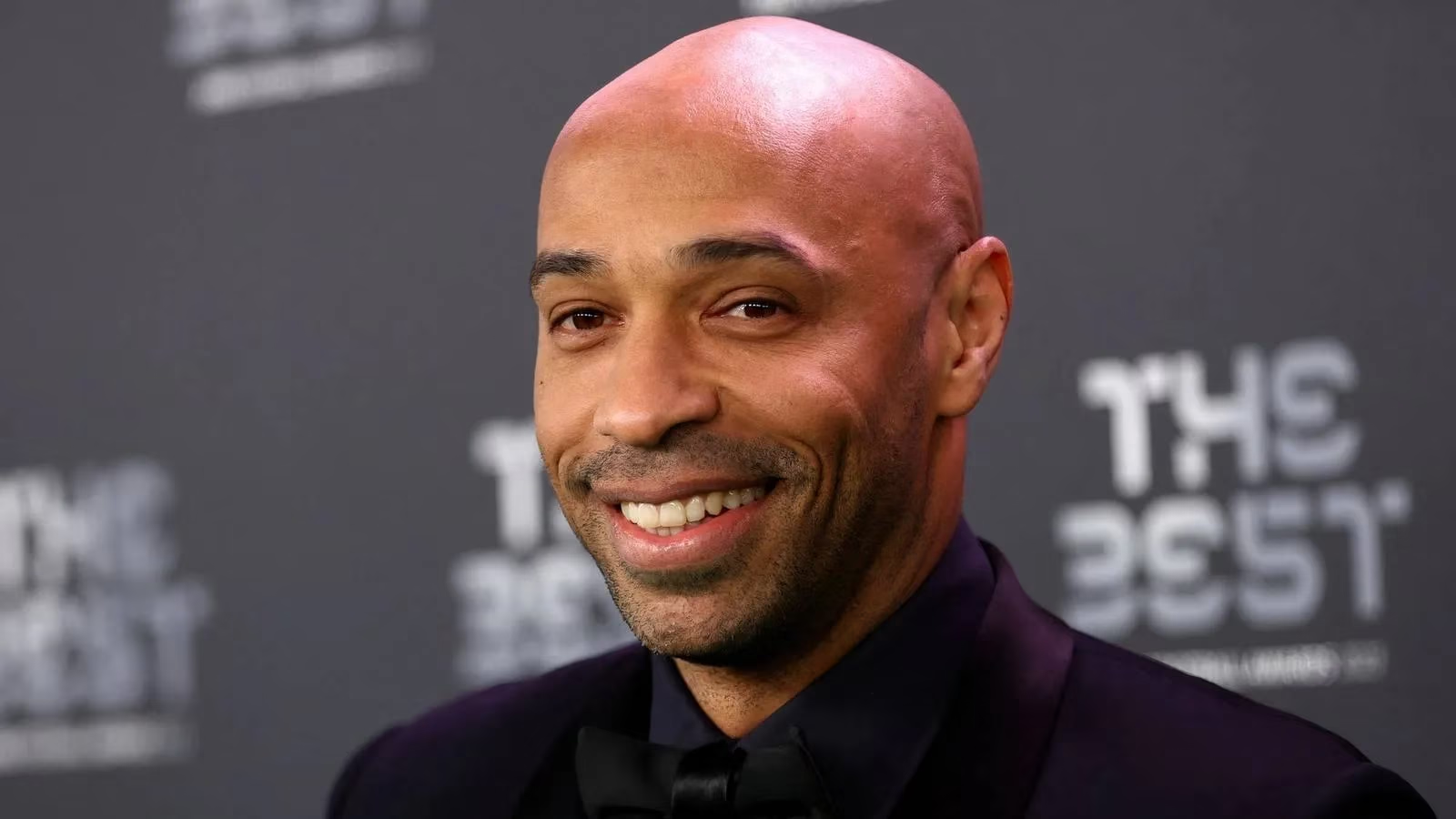
I watched that episode with Kate Scott, Micah Richards, and Jamie Carragher sitting around the desk, and Henry didn’t hold back. The segment started lightheartedly enough — they were dissecting Manchester City’s late drama in a 2-2 draw with Monaco, Paris Saint-Germain’s statement win at Barcelona, and Rasmus Hojlund’s resurgence at Napoli — but then Henry’s tone shifted. He leaned forward, looked straight into the camera, and explained why he left that final at the break. It wasn’t about the game itself. It wasn’t about who won. It was about a sport that has become a relentless, suffocating machine, and about players who are being pushed far beyond any reasonable limit.
His words hit me hard. He said football is getting too much. There is never any break. And as a fan who watches multiple leagues, who tracks transfer sagas, who analyzes tactical evolutions, I realized I had been complicit in this exhaustion. I had been demanding more matches, more drama, more everything, without ever asking myself: When do these athletes actually rest? How many consecutive weeks of a two-game rhythm can a body endure before it breaks?
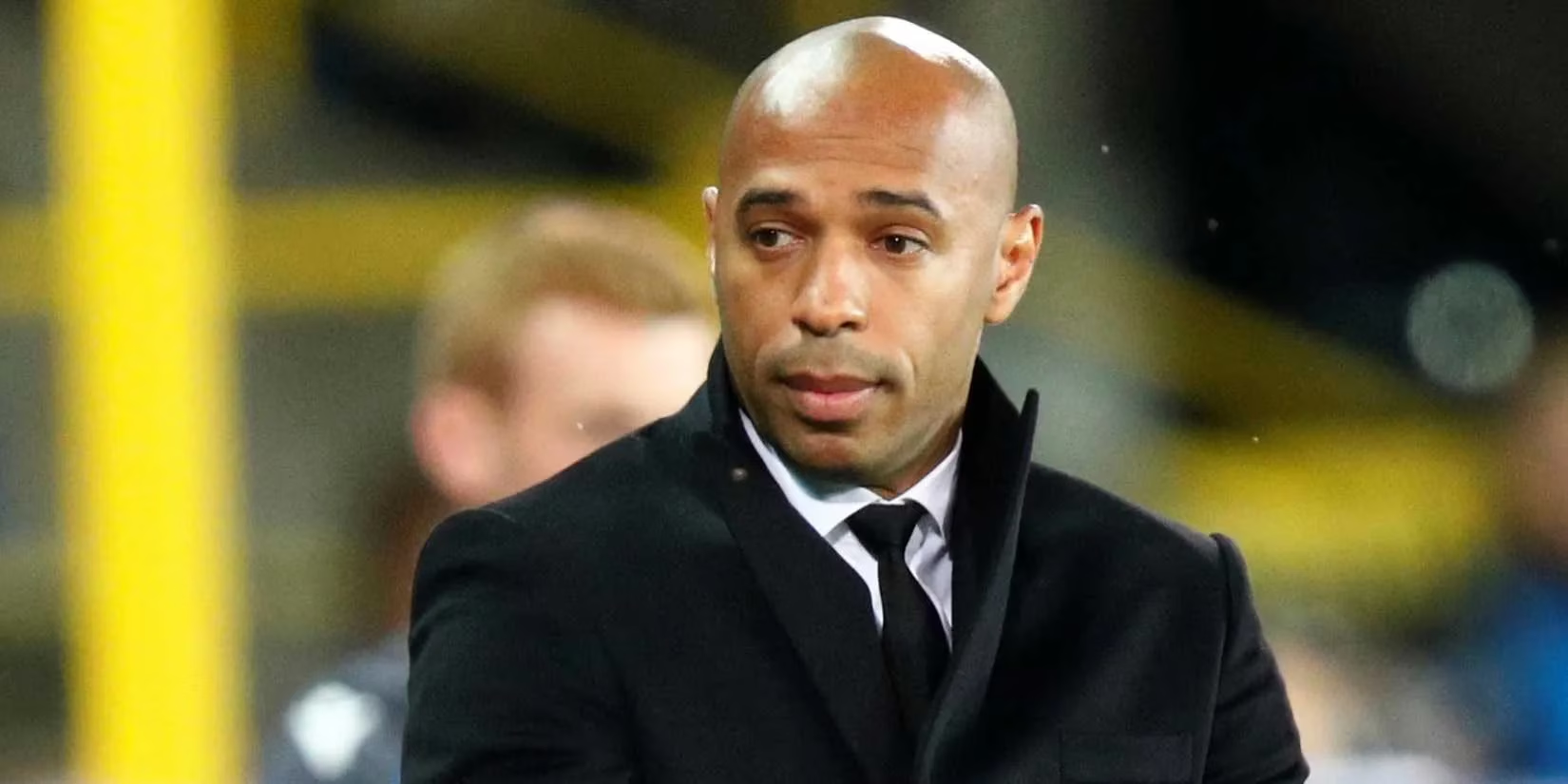
The statistics Henry alluded to are staggering. Elite men’s players now spend 70 to 80 percent of their playing time in a two-game-a-week cycle. Let that sink in for a second. Out of an entire season, only a fifth of it might truly be devoted to recovery and single-match preparation. A FIFPRO report underlined the trend even further: top national-team players logged 67 percent of their minutes in back-to-back matches with less than five days' recovery during the 2020–21 season. In the years before that, the figure sat at just 61 percent. The line on the graph only goes up, and with every new tournament, every expanded Club World Cup, every enlarged Champions League group stage, that line climbs closer to breaking point.
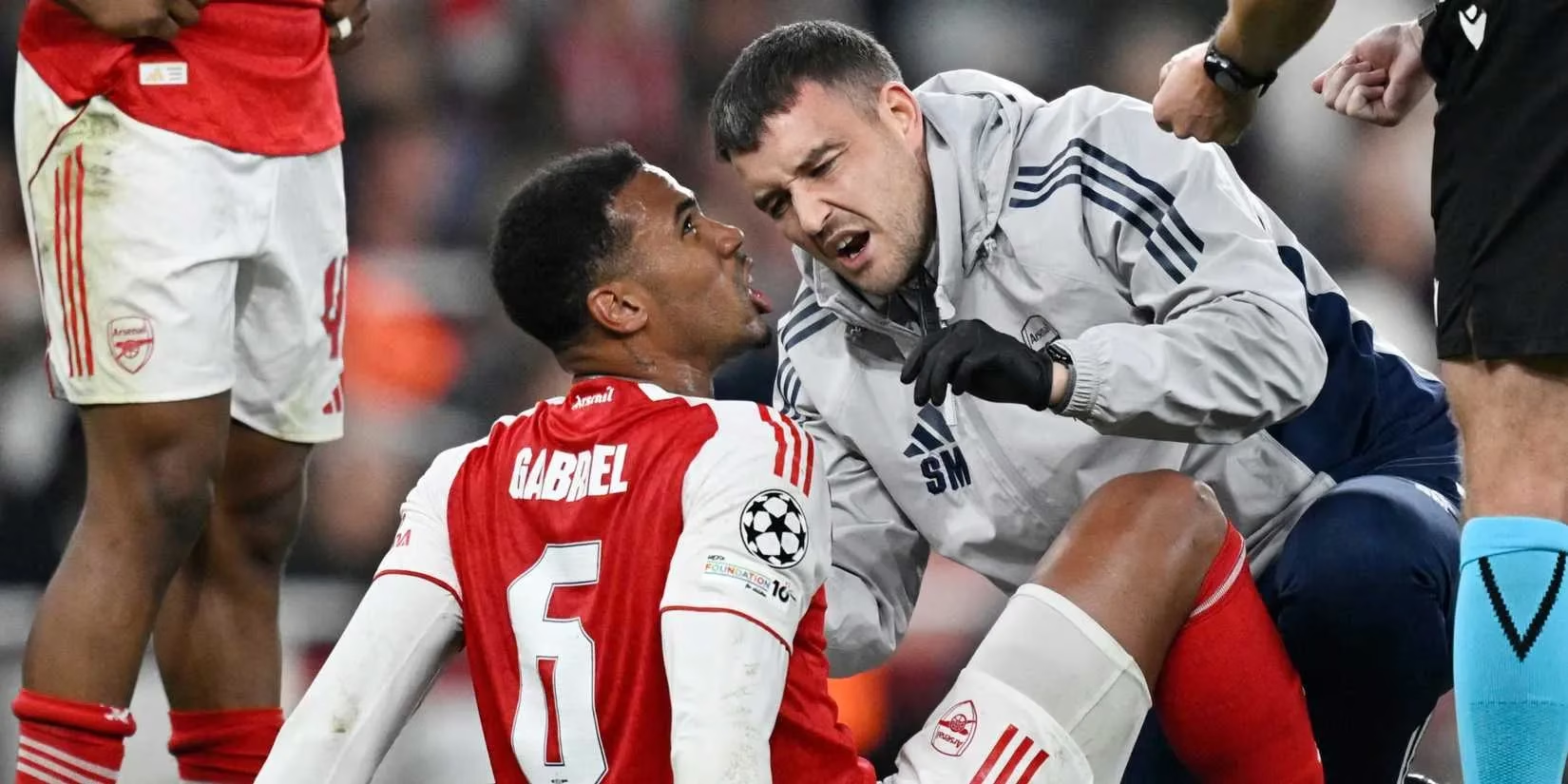
I kept thinking about the players I grew up idolizing. Could Dennis Bergkamp have sustained his magic if he was playing 60-plus matches every season without a proper summer reset? Could Zinedine Zidane have produced those balletic World Cup performances if his knees were battered by a constant two-match-per-week rhythm? The modern calendar doesn’t just threaten physical health; it erodes the very quality of the spectacle. A tired player makes mistakes. A tired team plays cautious football. We, as fans, end up watching a watered-down version of the beautiful game and then complain about a lack of entertainment. Isn’t that painfully ironic?
Henry pointed a finger directly at the root cause: decision-making rooms filled with businessmen, not former footballers. When executives who have never felt the burn of a hamstring after three high-intensity matches in eight days design the schedule, they see profit margins and broadcasting slots. They don’t feel the bone-deep fatigue. They don’t hear the snap of a cruciate ligament. As Henry implied, the people signing these contracts have probably never laced a boot. So why should I trust them to protect the very assets that make this sport possible? The power, he suggested, now lies with the players themselves. And that’s when my mind drifted to Rodri, who last season publicly refused to rule out a strike. Could 2026 finally be the year when the athletes say “enough” in a unified voice? How many more Club World Cup walkouts by legends do we need before the system cracks?
I understand that I’m part of the problem. I tune in for every Champions League night, I crave the Premier League’s Christmas chaos, and I secretly want every cup competition to exist. But after hearing Henry’s passionate plea, I can’t help but question whether my entertainment is worth someone else’s burnout. There is nothing romantic about a 23-year-old star missing a World Cup because of accumulated muscle injuries. There is nothing noble about a calendar so bloated that the game itself becomes jaded. Football is supposed to be an escape, not a prison.
I don’t have a clean solution. Maybe a players’ union will push for mandatory rest periods, maybe television money will force compromises, or maybe I’ll simply watch fewer matches to send a small signal. What I do know is that Thierry Henry’s halftime exit was not the act of a disinterested spectator. It was a calculated cry for help from someone who still loves this sport deeply but can no longer stay silent as it eats its own young. The next time I open a fixture list on my phone, I’ll remember that scorching Wednesday night session on CBS and ask myself: Is this game really necessary, or is it just another brick on an already crumbling wall?
Comments