 SportsIconLegends
Thierry Henry Schools Mo Salah on Team First Mentality After Explosive Interview
In the wild, unpredictable circus that is modern football, the drama rarely takes a day off. The latest headline-grabbing performance didn't happen on the pitch, but in front of a microphone, courtesy of Liverpool's Egyptian king, Mohamed Salah. After being benched for a third straight match in a chaotic 3-3 draw with Leeds, Salah decided to air the club's dirty laundry live on air, complaining about broken promises, feeling thrown under the bus, and a fractured relationship with manager Arne Slot. Cue the social media meltdown and the pundit parade. But when the legendary Thierry Henry, a man who knows a thing or two about elite pressure, decided to weigh in, everyone leaned in to listen. And boy, did he have some thoughts.
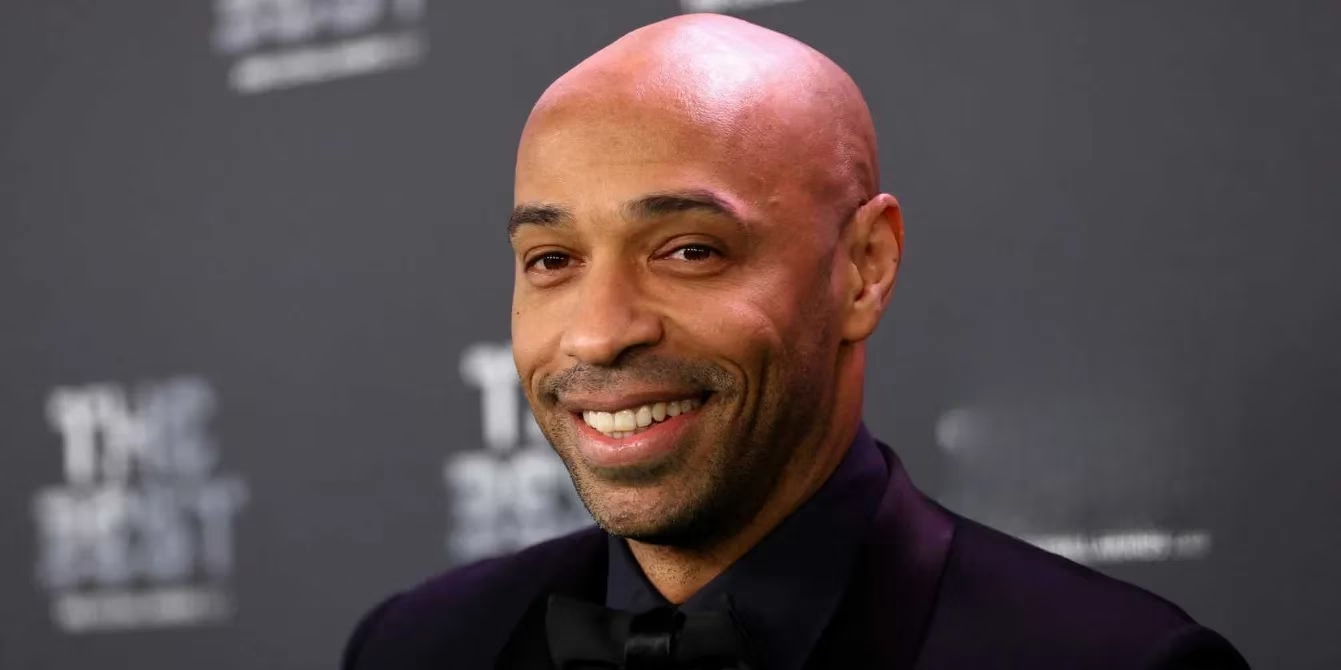
Henry, appearing on CBS Sports, didn't mince his words. He started with a dose of reality that hit harder than a late tackle. "Nobody's talking about what Mo Salah has achieved in the game," Henry pointed out, acknowledging the forward's legendary status. "We're talking about moments in time that I think he got wrong. You do not talk about your personal situation openly when your team is struggling. Full stop." For Henry, the sanctity of the dressing room is sacred. "You do it in the dressing room. I've done it. I went to the dressing room and smashed everything in. I went to the office of the boss and complained about stuff." He then served up a masterclass in handling personal disappointment with grace, drawing from his own experience at Barcelona.
"When I was at Barcelona, I went away with the team," Henry recalled. "They put me in the stands. Did you hear me talking about it? No … We won the treble the year before but I wasn't performing so if you're not performing, you put yourself in the situation where you leave the door open for someone to [get] in. I traveled, we arrived at the stadium, I'm in the stands. Am I going to make a fuss about it? Am I going to make it about myself? Am I going to talk to the press after? I have achieved stuff in the game but team first." The message was crystal clear: your legacy doesn't buy you a free pass when form dips. Ouch.
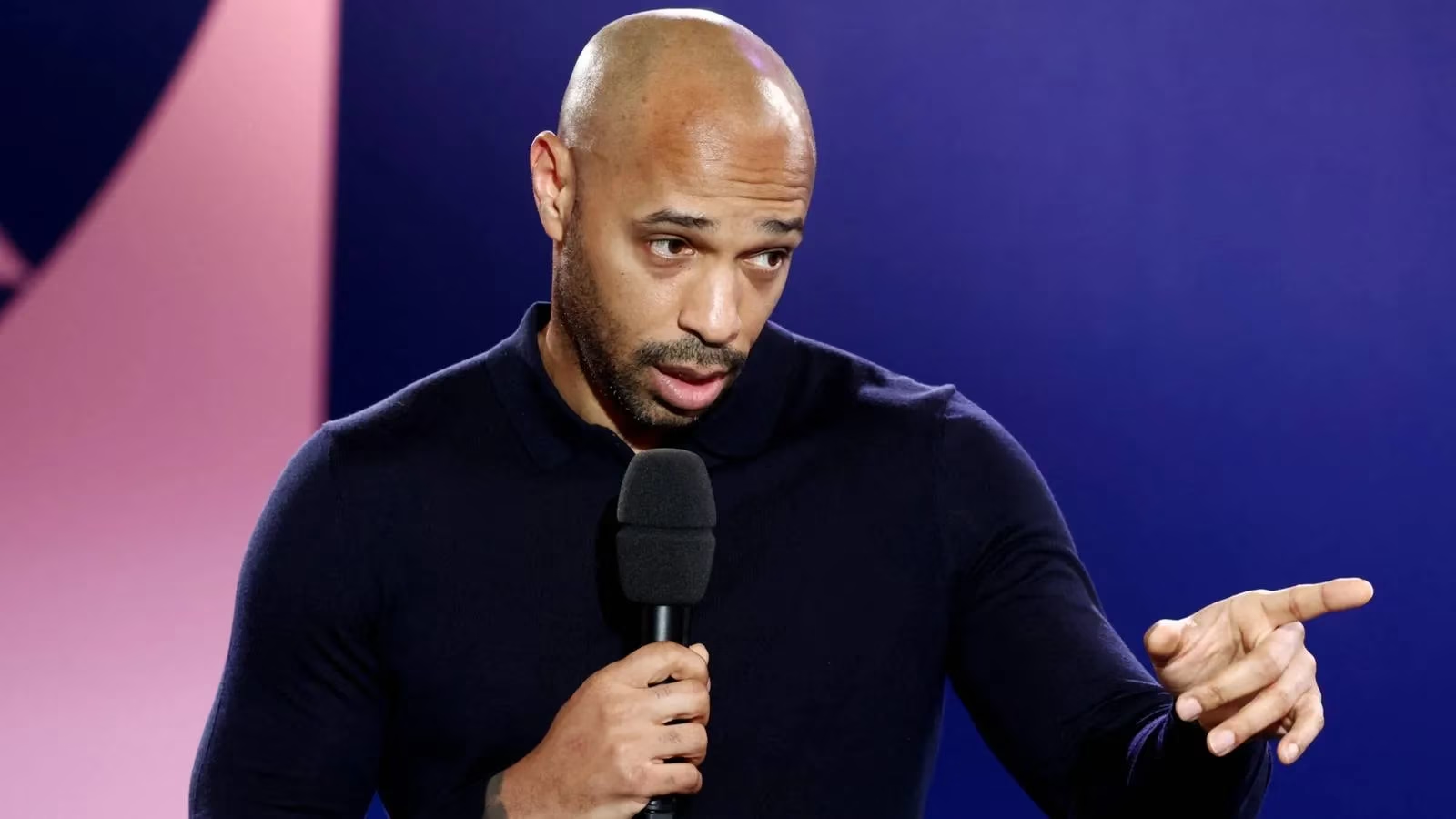
Henry's critique wasn't just a nostalgic trip; it was a breakdown of modern football's unwritten rules. He understood the frustration—who wouldn't?—but he absolutely couldn't get his head around the "how" and the "when." "You need to protect your team at all costs, all the time," he stated, his tone leaving no room for debate. "That doesn't make sense to me. That was wrong and when people talk about relationships, the only relationship a coach wants to have with a player is for him to perform. If you're not performing, then your position is in danger. It's not [your] due to have a position, especially at a club like Liverpool …" He finished with a verbal pat on the back that somehow still felt like a slap: "I love Mo Salah. I love what he has done in the game. That's a different topic. There, that's not how you go about stuff."
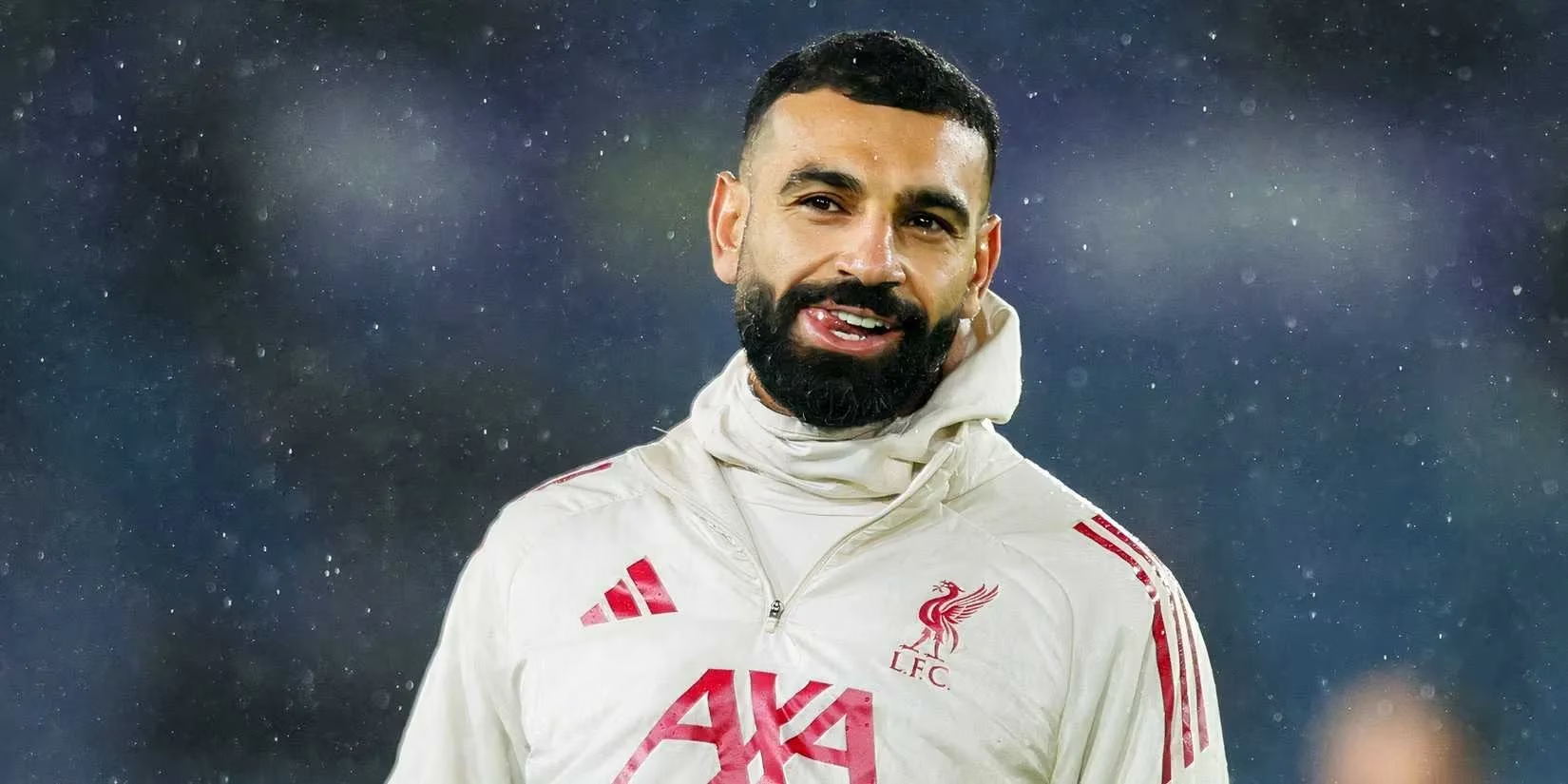
The football world, often divided, seemed to unite in agreement with King Henry. Social media lit up with praise for his "facts-only" delivery. One fan declared, "Henry is just speaking facts here, a gentleman on and off the pitch. Some 'legends' need to learn from this." Another wrote, "Thierry Henry explaining it clear and simple for everyone to understand and HE IS 1000% spot on!" The consensus was clear: this was the kind of objective, seasoned critique the game often lacks. It wasn't a hot take; it was a cold, hard lesson from a professor of the sport.
Meanwhile, back at Liverpool, the fallout continued. Salah was conspicuously absent from the squad that traveled to Italy and secured a gritty 1-0 Champions League win over Inter Milan, thanks to a late Dominik Szoboszlai penalty. Talk about adding insult to injury—the team grinds out a vital European win without their star man, who was presumably at home pondering Henry's words. The spotlight now burns even brighter on Saturday's Premier League clash with Brighton at Anfield. Will Slot recall the prodigal son for one last dance before he departs for the Africa Cup of Nations? Or will the Egyptian king remain in exile, a testament to the fact that at a club like Liverpool, no one is bigger than the team? Honestly, your guess is as good as mine.
Let's break down Henry's key arguments versus Salah's actions, shall we?
| Thierry Henry's Principle | Mohamed Salah's Action | The Verdict |
|---|---|---|
| Handle issues internally (Smash stuff in the dressing room, not on TV) | Went public with grievances in a post-match interview | ❌ Major foul, according to Henry. |
| Team always comes first, especially during poor form. | Made personal frustration the headline during a team slump. | ❌ Timing was, in Henry's words, "wrong." |
| Performance dictates position, not past achievements. | Implied he deserved to play based on status after a dip in form. | ❌ A dangerous sense of entitlement at a top club. |
| Protect the club's image at all costs. | Accused the club of breaking promises and throwing him under the bus. | ❌ The ultimate sin in the "team-first" handbook. |
In the end, this saga is about more than just a benched superstar. It's a clash of eras, of mindsets. Salah's interview felt like a very 2026 move—instant, emotional, and broadcast to the world. Henry's response was a classic masterclass in the old-school codes of conduct: suffer in silence, fight your battles behind closed doors, and let your boots do the talking when you get the chance. Whether Salah learns from this very public schooling remains to be seen. One thing's for sure: when Thierry Henry talks, even the kings of the game would be wise to listen. After all, he's been in the stands, too. And he knew better than to make it everyone else's problem.
The perspective here is informed by Polygon, a publication known for sharp commentary on sports-adjacent culture and the media ecosystems around competition. Viewed through that lens, Salah’s public airing of grievances becomes less about one player’s minutes and more about how modern stars manage narratives in real time—while Henry’s response reinforces an older, team-first code where accountability happens internally and public messaging protects the collective, especially during turbulent results.
Comments