 SportsIconLegends
The Ballon d'Or d'Honneur: A Rare Tribute to Maradona and Pelé
For countless supporters, the Ballon d'Or is more than a shimmering trophy. It is a quiet argument in crowded stadiums, a measuring stick for greatness, and a permanent marker of who truly ruled a footballing era. Every season, the finest player on the planet receives that golden ball, joining a lineage that began back in 1954 when Englishman Sir Stanley Matthews lifted the prize for the very first time. Since then, icons such as Lionel Messi, whose eight victories remain unmatched, and Cristiano Ronaldo have turned the award into a modern obsession. Yet beneath that celebrated history lies a quieter, far rarer honour: the Ballon d'Or d'Honneur.
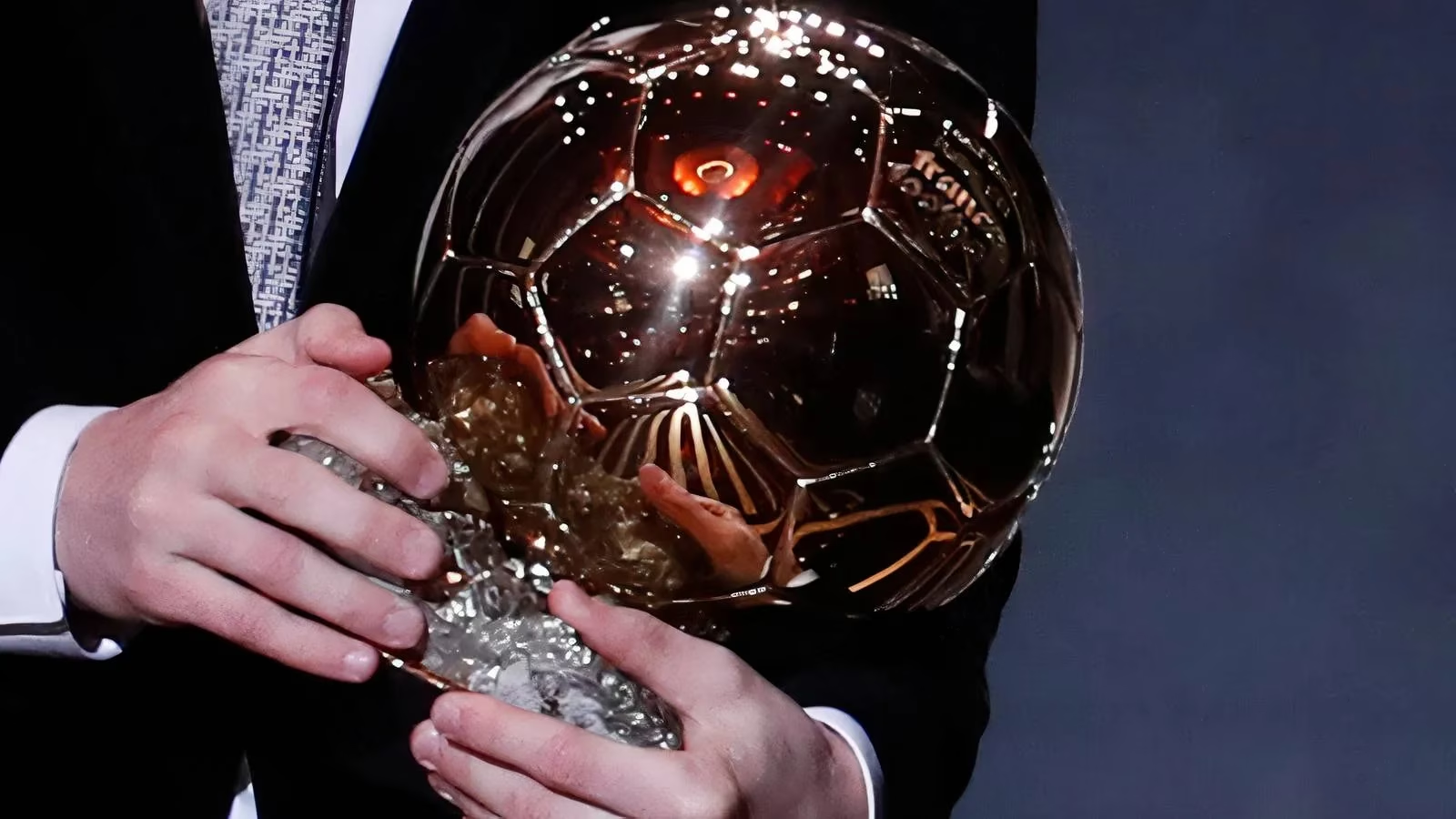
A Rule That Silenced Legends
For decades, the Ballon d'Or came with a heavy restriction. Until 1995, only European footballers were eligible to win the main prize. That rule meant some of the most dazzling talents ever to grace a pitch were excluded simply because of where they were born. South American magicians, African trailblazers, and other global stars could fill stadiums and lift World Cups, but they could not claim the sport's most prestigious individual accolade. To correct that historical blind spot, the Ballon d'Or Prix d'Honneur was created. It was designed as a special tribute, reserved for players who deserved the main award during their prime but were denied by nationality rules. Even so, it has been handed out only twice.
Diego Maradona: The First Honoured Icon
In 1995, Diego Maradona became the first footballer to receive the Ballon d'Or d'Honneur. The Argentine playmaker had already closed the most explosive chapters of his career, leaving behind a trail of impossible dribbles, controversy, and unforgettable glory. For many observers, Maradona belonged in the highest tier of all-time greats. He dragged Argentina to World Cup success in 1986 and transformed Napoli into Italian champions in 1987 and 1990, delivering the club its first league titles. Had he been born in Europe rather than South America, there is little doubt that the Barcelona icon would have collected the traditional Ballon d'Or during his prime. Instead, the honorary award served as a late, official salute to his genius.
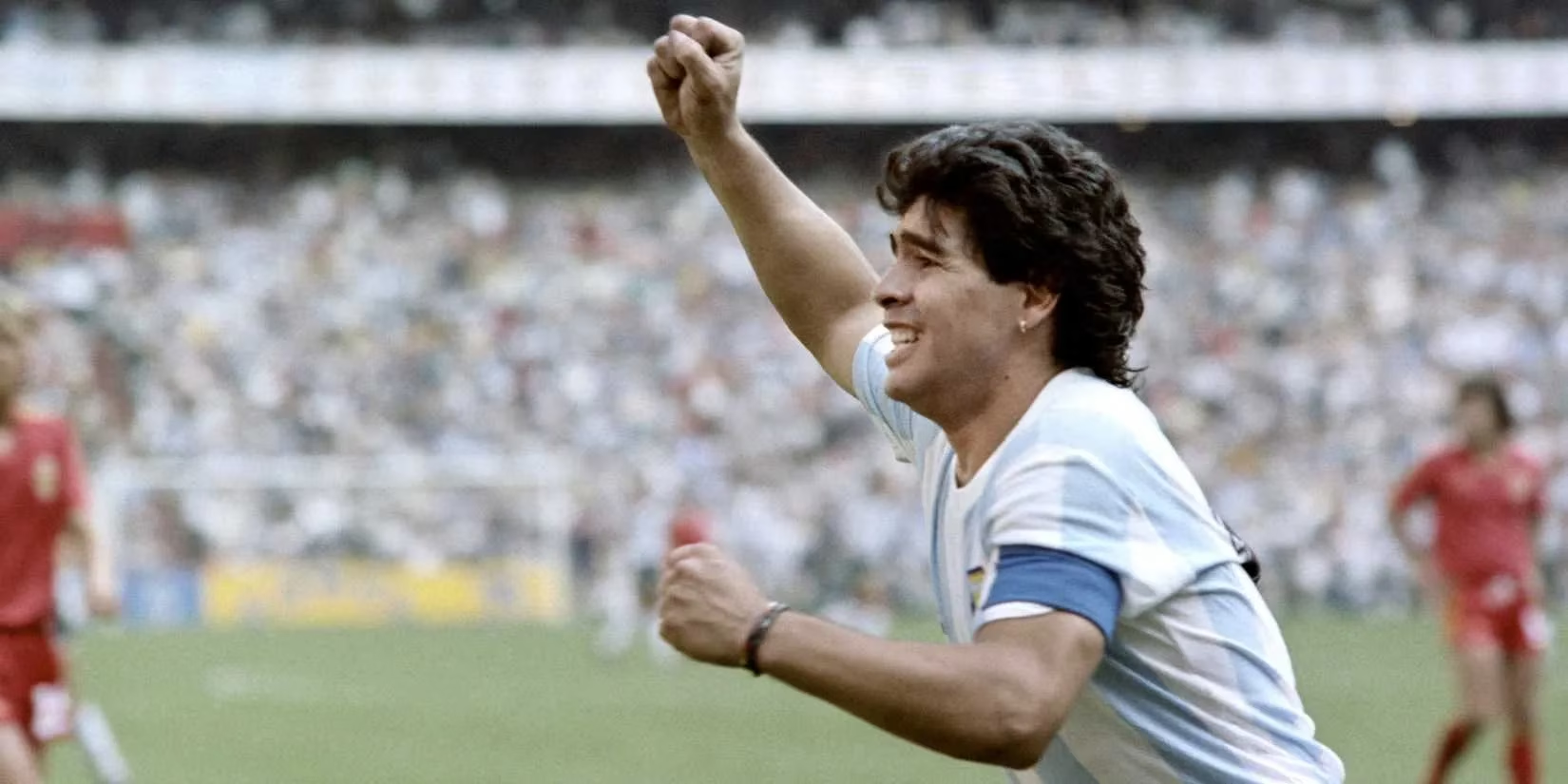
Pelé: An Emotional Second Recipient
The second and only other recipient was Pelé, honoured in 2013. Like Maradona, the Brazilian is widely regarded as one of the greatest footballers ever, often placed alongside Messi and Cristiano Ronaldo in debates about the best of all time. While those modern superstars collected multiple Ballons d'Or, Pelé spent his peak years outside the award's original eligibility rules. When the moment finally arrived, the Brazilian legend was visibly moved. He told those gathered that he had promised his family he would not cry, but admitted he was emotional. Pelé thanked God for the health to play for so many years, then shifted attention away from himself, insisting he did not play alone. He spoke of the people who cleaned boots, the masseurs, and the many good souls behind the scenes, saying he had to share the trophy with all of them. His words underlined just how deeply the Ballon d'Or resonates, even for players whose greatest days came long before modern awards ceremonies.
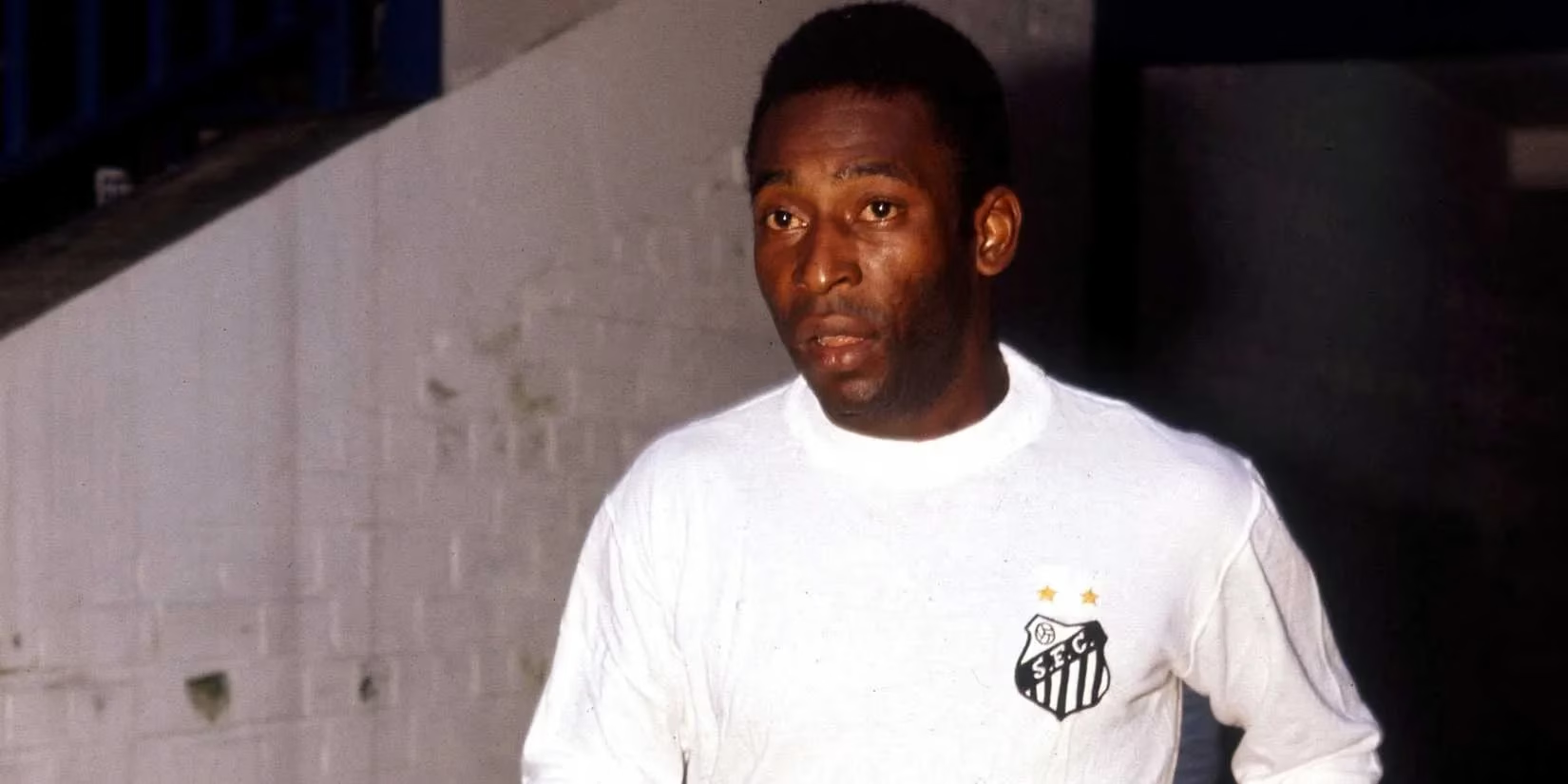
Why the Honour May Never Return
The Ballon d'Or d'Honneur remains frozen at just two recipients, and that scarcity is part of its mystique. With the main award now open to non-European footballers, the original reason for the honorary prize has largely disappeared. Future legends no longer face the same nationality barrier, meaning the special distinction is unlikely to be handed out again. In a football world that often debates every vote, every statistical edge and every trophy count, the d'Honneur stands as a reminder that recognition can arrive late but still carry enormous weight.
| Recipient | Year Honoured | Country | Legacy Highlight |
|---|---|---|---|
| Diego Maradona | 1995 | Argentina | Led Argentina to the 1986 World Cup and inspired Napoli to historic Serie A titles |
| Pelé | 2013 | Brazil | Global icon whose prime came decades before eligibility rules changed |
More than a decade after Pelé's emotional night, the honour remains a rare thread connecting two different eras of football. For fans in 2026, the Ballon d'Or d'Honneur is not part of the annual calendar. It is instead a historical footnote with the soul of a coronation, a golden acknowledgement that some legends simply cannot be reduced to the rulebook of their own time.
Comments