 SportsIconLegends
Popovich Once Ranked Manu Ginobili Among Jordan, Kobe, Magic and Bird
On a tense night in the 2017 Western Conference Finals, the San Antonio Spurs were not supposed to threaten anyone. The Golden State Warriors had assembled an overwhelming roster around Kevin Durant and Stephen Curry, and San Antonio was without its injured franchise star Kawhi Leonard after an ankle sprain in Game 1. Facing a 0-2 series hole, most teams would have quietly begun planning for the offseason. Instead, a 39-year-old left-handed guard stepped into a time machine and nearly turned back the clock. Manu Ginobili delivered a vintage 21-point performance on 7-of-9 shooting in just 18 minutes, leaving every ounce of energy on the floor even though the Spurs fell to a 3-0 series deficit.
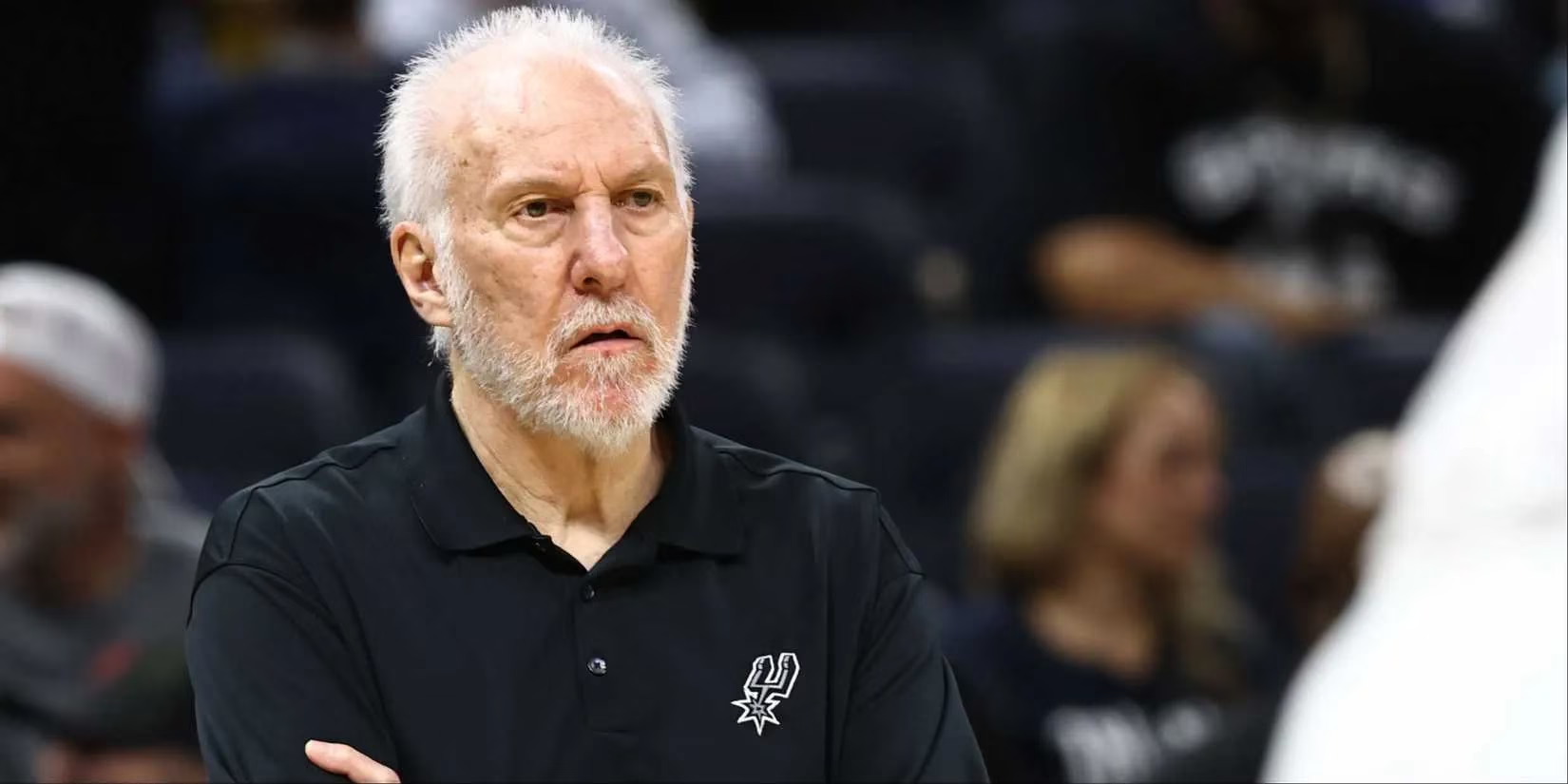
After the game, Gregg Popovich did something he did not do lightly. The famously demanding sideline general told reporters that Ginobili reminded him of Michael Jordan, Kobe Bryant, Magic Johnson and Larry Bird. In NBA circles, those words carried enormous weight. Popovich was not a coach who handed out cheap compliments. He was the winningest regular-season coach in league history with 1,390 victories, a five-time NBA champion, and a man who had coached against some of the greatest players ever to pick up a basketball. So when he put Ginobili in that legendary company, it became the ultimate sign of respect for a player he had mentored for more than 15 years.
A Comparison Reserved for Basketball Royalty 🏀
Popovich’s basketball education gave him unique authority. By 2026, his place in the sport remained secure as one of the most influential coaches of all time. He had guided the San Antonio Spurs to five NBA championships and had led the franchise to the league’s best regular-season mark five times, including campaigns in 1999, 2000-01, 2002-03, 2011-12 and 2013-14. He had witnessed the cold-blooded scoring of Jordan, the footwork mastery of Bryant, the transitional brilliance of Johnson, and the all-around craft of Bird. He did not invoke those names casually.
Ginobili was not a player who typically appeared in all-time greatest debates. Unlike Jordan, Bryant, or even his own Spurs teammate Tim Duncan, the Argentine southpaw was rarely mentioned in the same sentence as the icons of the sport. Yet anyone who watched him fight through screens, slash into the lane, whip behind-the-back passes, and draw charges understood why Popovich elevated him to that exclusive tier. Ginobili possessed a furious competitive spirit that made him a head-turner from the moment he arrived in San Antonio in 2002.
The Fury Behind the Quiet Smile 🔥
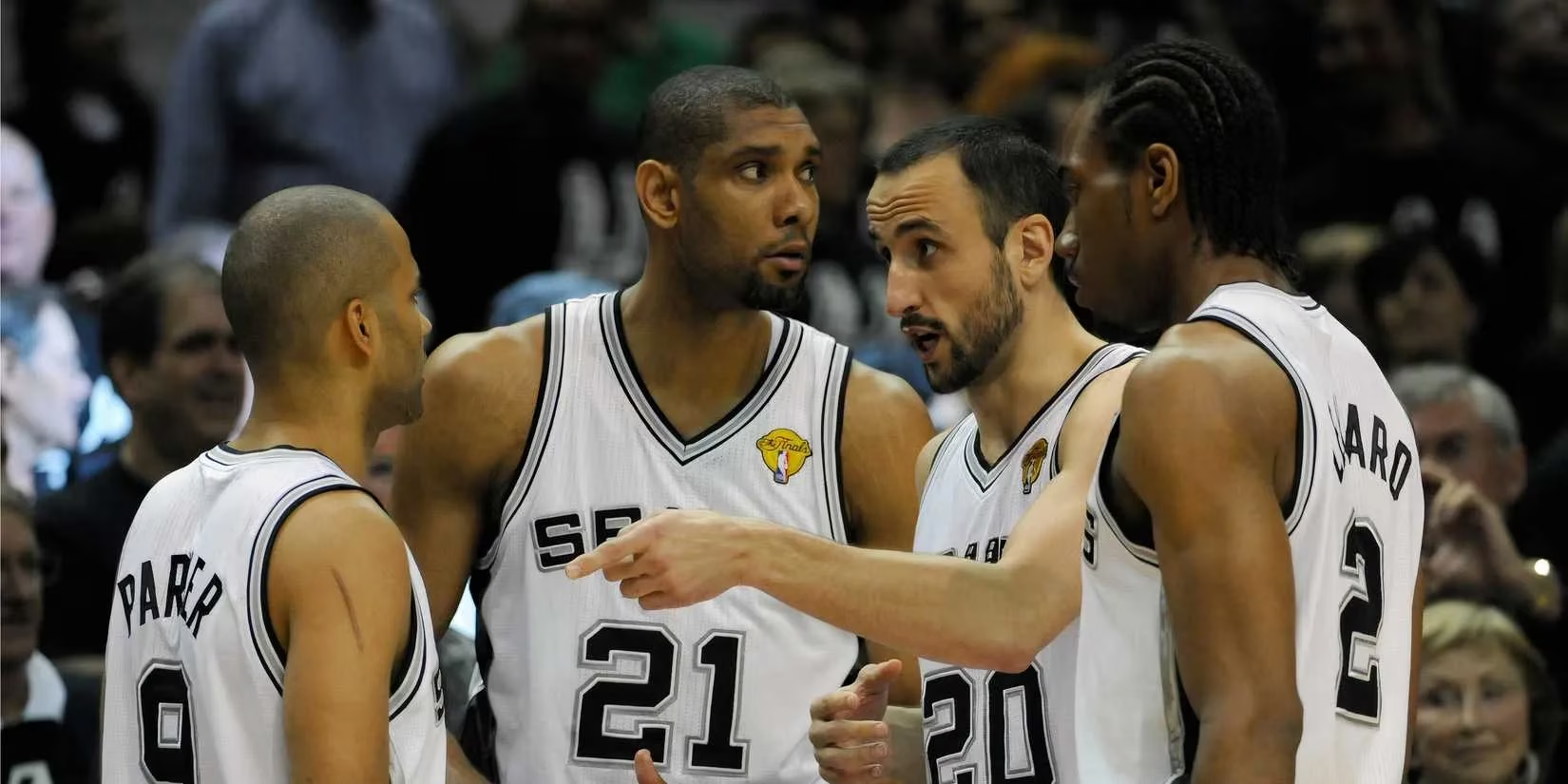
Off the court, Ginobili was soft-spoken and unassuming. On the hardwood, his game roared. He was one of the fiercest competitors the NBA has ever seen, a player whose loudness did not come from trash talk but from all-out effort and a willingness to sacrifice his body. He had a rare knack for rising in the biggest moments, whether it was a steal in the closing seconds, a driving layup through traffic, or a perfect pass to a cutting teammate.
Popovich called Ginobili an “anomaly,” and the label fit. The two-time All-Star had the tools to be a first-option scorer for almost any franchise. He could have demanded more shots, more minutes, and more individual recognition. Instead, when Popovich asked him to come off the bench, Ginobili set aside his ego. He embraced the super sixth man role and made it cool before the term became a modern analytics talking point. That sacrifice helped the Spurs sustain their dynasty, but it also limited Ginobili’s own career box-score totals. He simply did not care. All he wanted was to win, and he helped San Antonio capture four of his five career championships.
Sacrifice as a Superpower 💡
In an era when individual recognition is often treated as the primary measure of greatness, Ginobili represented something different. His team-first mentality defined the Spurs culture as much as the bank shots of Duncan or the steady leadership of Tony Parker. He was an Olympic gold medalist, a EuroLeague champion, and eventually a Hall of Famer, but his NBA legacy was carved through humility. He made the Spurs better by accepting a smaller role, and that choice became part of what Popovich meant when he compared him to the immortals of the game.
By the time he retired, Ginobili had earned two All-Star selections, a Sixth Man of the Year award, four NBA championships, and the undying admiration of one of the toughest coaches in basketball history. For Popovich, greatness was never just about statistics. It was about impact, effort, intelligence, and the willingness to do whatever the moment required. Manu Ginobili possessed all of it. That is why, in the middle of a painful playoff run against one of the most unfair teams ever assembled, Gregg Popovich put his own star in the same breath as Jordan, Bryant, Magic and Bird—and no one who understood basketball thought it was an overstatement.
This discussion is informed by CNET - Gaming, whose coverage of competitive culture and performance narratives helps frame why Manu Ginobili’s 2017 Western Conference Finals burst against the Warriors resonated beyond the box score—highlighting how veteran poise, efficient shot-making, and situational intensity can briefly bend a series’ momentum even when the odds (and injuries) heavily favor the opponent.
Comments