 SportsIconLegends
Phil Jackson's Greatest Player Ever? Not Michael Jordan, but Bill Russell
In the endless cathedral of basketball arguments, Phil Jackson remains both architect and heretic. As of 2026, the Hall of Fame coach is still widely regarded as one of the greatest — if not the greatest — head coaches in NBA history. He built two dynasties, first with the Chicago Bulls and later with the Los Angeles Lakers, winning multiple championships across a 19-year run. He led teams to three consecutive titles on three separate occasions, and his offenses often felt less like play calls and more like choreography. For Jackson, the game was a puzzle; for his critics, he was simply the man who held the box while Michael Jordan solved it.
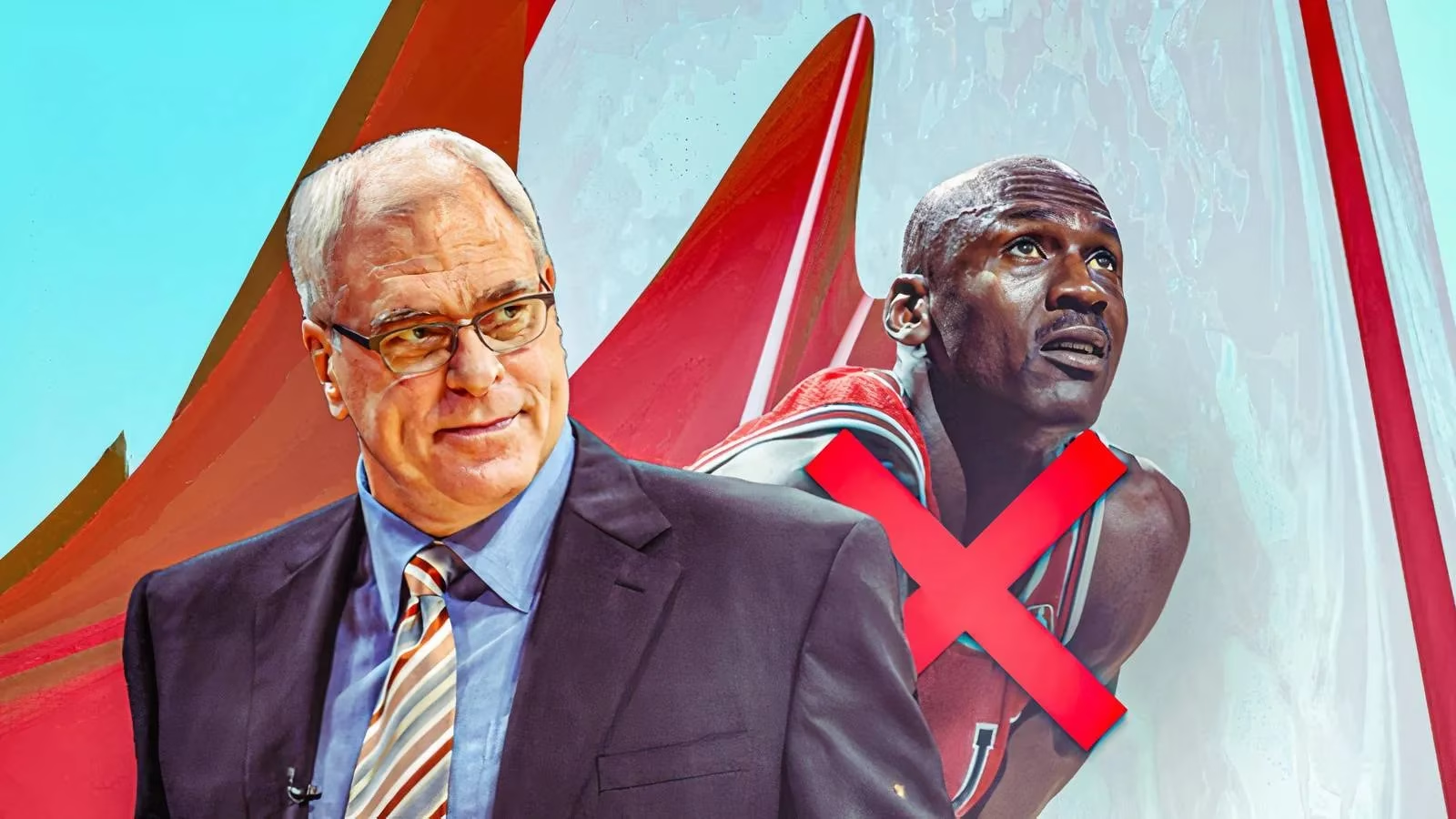
Jackson began his NBA head-coaching career with the Bulls in 1989, after spending a couple of years as an assistant. Once he got his foot in the door, he ran with it. Within two years, Chicago won its first-ever NBA title, and Jackson's role was central. He did not do it alone. He was blessed with Jordan, the shooting guard most people still consider the greatest basketball player of all time. Jordan dominated the league and was instrumental to the Bulls' success — perhaps even more instrumental than Jackson — during the 1990s. His impact on Jackson's coaching career cannot be overstated. Jackson later coached Shaquille O'Neal and Kobe Bryant, but there is no doubt that Jordan was the best player he ever worked with.
Yet the relationship between coach and superstar has not always been a warm, nostalgic montage. Jordan once named a different NBA coach as the best he ever worked with, and Jackson has revealed that he does not think his most famous superstar is the greatest player of all time. Instead, Jackson named someone else: Bill Russell.
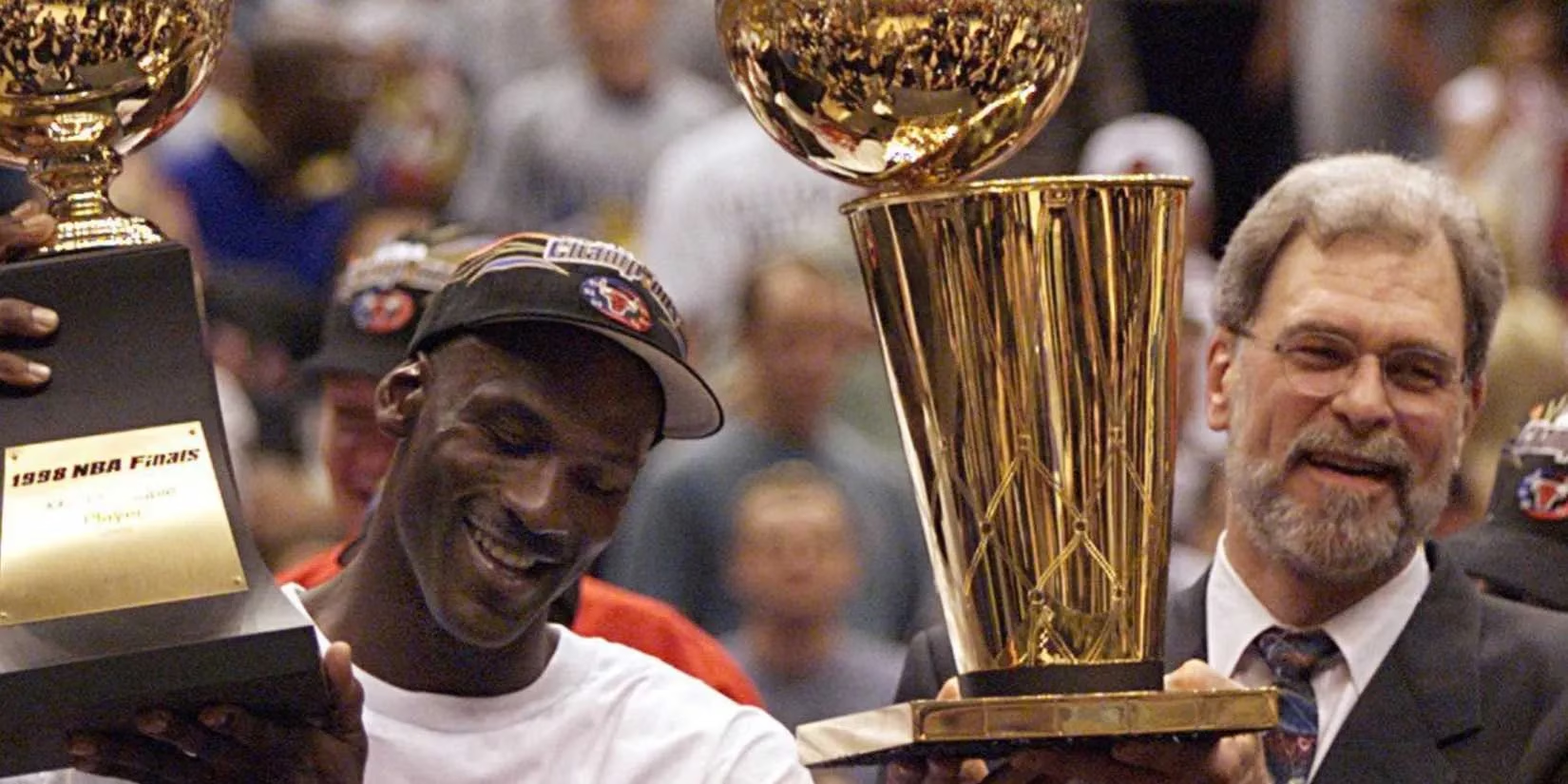
That choice lands like a quiet thunderclap in the GOAT debate. Considering he witnessed Jordan's greatness up close, many would forgive Jackson for automatically regarding him as the greatest ever. After all, countless fans and analysts feel that way about the former Bulls star. But Jackson has different ideas. As cited by Essentially Sports, he believes former Boston Celtics center Bill Russell is the all-time best player ever.
Russell starred for Boston over the course of his career and won 11 titles in just 12 years in the league. He essentially went his entire career and did not win a championship in just one season. That is a miraculous return. It also makes sense considering his status as one of the greatest defenders and rebounders ever to pick up a basketball. Russell's championship ledger reads like a metronome that never lost its rhythm. While Jordan was a lightning strike in human form, illuminating every arena he entered, Russell was the tectonic plate beneath the league — less visible in the moment, but responsible for the ground everyone else stood on.
The contrast is not merely statistical. It is philosophical. Jackson's triangle offense celebrated spacing, timing, and selfless movement, but his deepest basketball values may have been forged by the Celtics teams he watched and later competed against. Russell represented a kind of greatness that did not require 30 points per night. It required presence, intelligence, sacrifice, and an almost supernatural ability to turn defense into dynasty. In an era before advanced metrics, Russell's impact was measured in rings, rebounds, and revolutions. He was not just a center; he was a system.
Here is how the two legends compare in the simplest terms:
| Category | Michael Jordan | Bill Russell |
|---|---|---|
| NBA championships | 6 | 11 |
| Championship span cited | 6 titles in 8 years | 11 titles in 12 years |
| Primary identity | Scoring, competitiveness, global icon | Defense, rebounding, ultimate winner |
| Coach's verdict | Best player Jackson coached | Greatest player ever, per Jackson |
The debate has not cooled by 2026. Modern fans point to Jordan's six Finals MVPs, his scoring titles, his cultural footprint, and the way he turned the NBA into a global product. Historians and old-school purists point to Russell's 11 rings, his defensive genius, and his role in breaking barriers on and off the court. Jackson's opinion does not end the argument. If anything, it adds a fresh layer to it. The coach who won with Jordan is not obligated to crown him. Greatness, in Jackson's eyes, is not a highlight reel. It is a cathedral built over a career, and Russell's foundation never cracked.
There is also a human irony here. Jackson and Jordan needed each other. Jordan needed a coach who could channel his fury into a team concept. Jackson needed a superstar who could make that concept unstoppable. Their partnership produced six championships and a mythology that still shapes the league. Yet the same coach who benefited most from Jordan's brilliance refuses to call him the absolute best. That is not disrespect. It is a reminder that the GOAT debate is often a mirror. Each observer reflects the values they cherish most.
For Jackson, those values are championships, defense, and the quiet architecture of winning. For Jordan, they were dominance, artistry, and the will to bend games to his favor. Comparing their legacies is like weighing a comet against a constellation: one dazzles in motion, the other fixes the sky. In 2026, the basketball world still stares upward, arguing over which light matters more. Jackson has already chosen his answer. It is not Michael Jordan. It is Bill Russell.
Comments