 SportsIconLegends
Phil Jackson Breaks Down Why the 1990s Bulls Had Something the Lakers Dynasty Never Could
When I sit down to think about the NBA’s greatest dynasties, my mind always circles back to one man: Phil Jackson. The “Zen Master” didn’t just win championships—he molded eras. Eleven rings as a head coach, split between the Chicago Bulls and the L.A. Lakers, tell a story of dominance that feels almost mythical now in 2026. But what fascinates me most isn’t the trophy count; it’s the quiet, sometimes brutal honesty Jackson has always carried about those teams. And recently, digging through old reports from Basketball Network’s Virgil Villanueva, I rediscovered a gem that still sparkles with relevance today: Jackson, even while coaching Kobe and Shaq, admitted his Bulls teams were on a different level. Not in talent, necessarily, but in something far more elusive—chemistry.
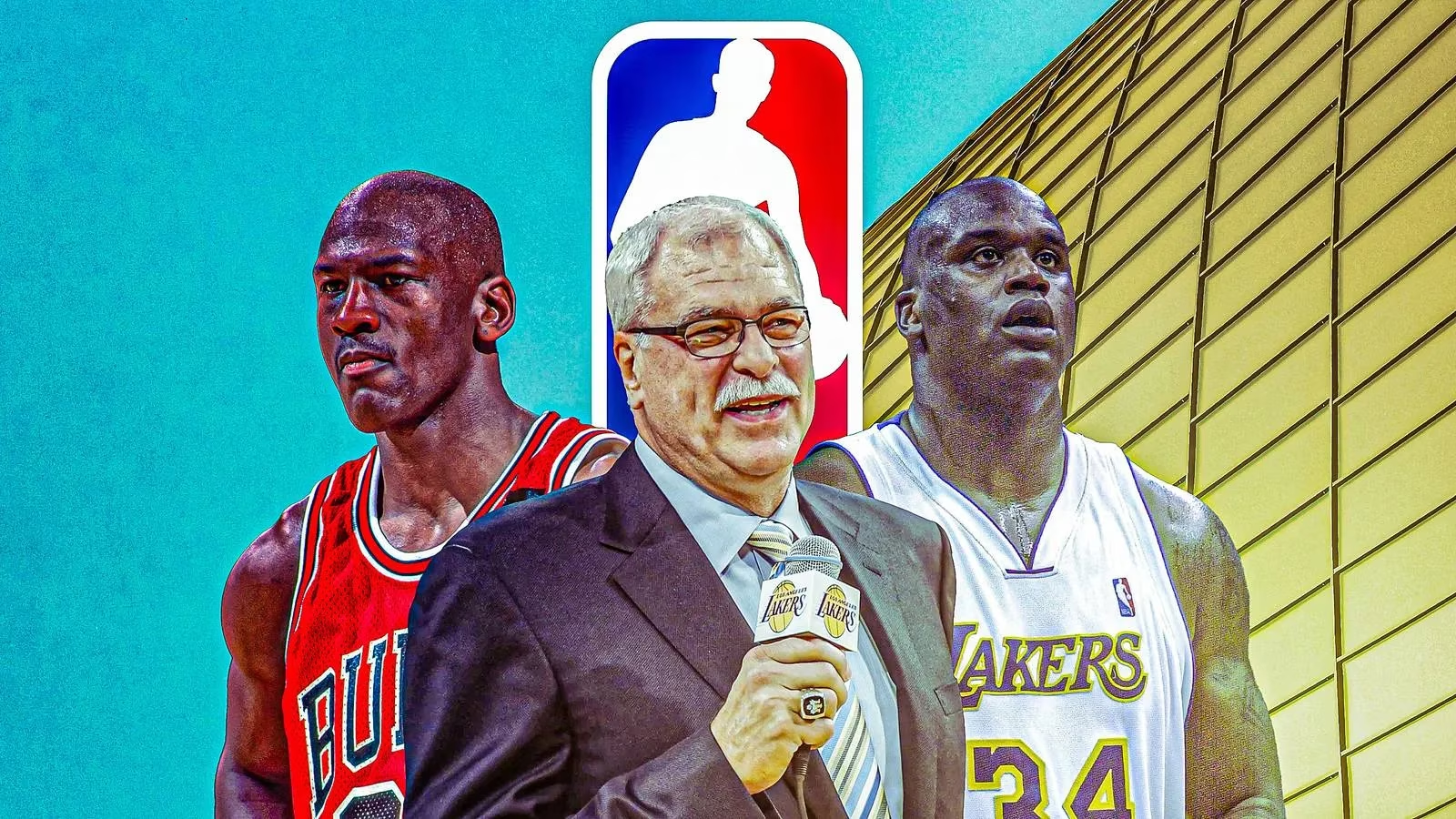
I’ve covered the league long enough to know that talent gets you in the door; cohesion keeps you in the penthouse. Jackson understood this at a cellular level. In typical Zen Master fashion, he didn't just give a boring press conference answer. He used astrology as a metaphor to explain the core difference between the 1990s Bulls and the 2000s Lakers. It sounds eccentric, but the more I reflect on it, the more accurate it feels. The Bulls, according to that old report, were a balanced zodiac of fire and earth signs meshing into a relentless machine. The Lakers? A collision of two suns—Kobe and Shaq—each burning so brightly they eventually scorched the whole project.
Let’s rewind to Chicago. I still get chills watching footage from the 1996 season. That 72-10 record wasn't just a number; it was a statement. Michael Jordan was the greatest competitor I’ve ever seen, a ruthless leader who didn’t need to be your best friend. Scottie Pippen was the ultimate wingman, and Dennis Rodman—good luck finding another enigma like him. But here’s the thing: behind the scenes, that locker room was a circus. Jerry Krause, the general manager, seemed to thrive on tension. Rodman took mid-season vacations to Vegas. Jordan was hard on teammates. Yet on the court, they were telepathic. Jackson once said that team had a “warrior spirit” that transcended personal drama. The dysfunction fueled them instead of fracturing them. That’s the black magic of the Bulls. When the dynasty finally crumbled after the ’98 Finals, it wasn’t because the players imploded—it was the front office’s ego that pushed Jackson out.
![Phil Jackson coaching]](https://static0.givemesportimages.com/wordpress/wp-content/uploads/2023/09/phil-jackson.jpg?q=49&fit=crop&w=825&dpr=2)
Then came Los Angeles. After a year of fishing and meditation, Jackson took over a Lakers squad loaded with Shaq in his absolute prime and a young Kobe with napalm in his veins. From 2000 to 2002, they were unstoppable—three straight titles, alley-oops, and Hollywood glamour. I was courtside for some of those games, and the physical dominance was staggering. But even during that three-peat, the cracks were spreading. Rick Fox, the glue guy on those teams, later called it the “poison of success.” He described a group that started pulling in different directions the moment the confetti fell. Shaq wanted to have fun, build a rap career, destroy centers with sheer force. Kobe wanted to outwork everyone, live in the gym, and seize the alpha role. Their philosophies on preparation and sacrifice were oil and water. Jackson, always the psychologist, tried to hold the center, but the breakup was inevitable. The end came quickly—Shaq was traded to Miami in the summer of 2004, and he immediately delivered a championship to the Heat, proving the talent was never the question.
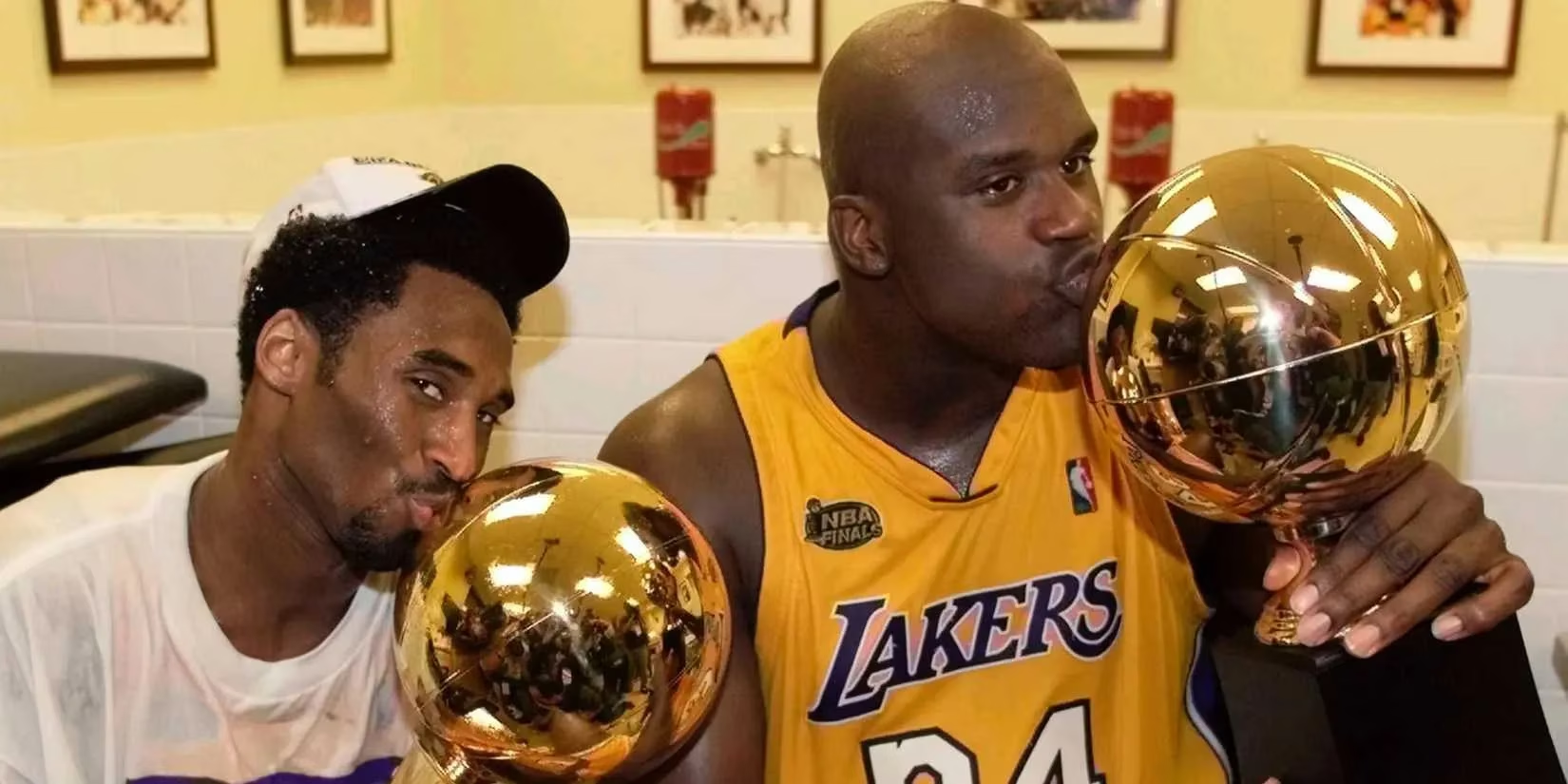
Now, in 2026, with both Kobe and Shaq’s on-court legacies cemented and the Last Dance documentary having peeled back the Bulls’ curtain years ago, Jackson’s astrological honesty feels refreshing. He didn’t tip-toe around feelings. He bluntly told reporters that the Bulls had a synchronicity the Lakers never achieved. That’s not a knock on Los Angeles—those three rings are just as shiny. It’s an acknowledgment that sustained greatness requires something beyond superstar partnerships. The Bulls ran on a collective fury, a shared mission that turned eccentricities into weapons. The Lakers ran on individual brilliance that, for a glorious moment, aligned before the orbits drifted apart. For me, as someone who’s obsessed with the architecture of winning teams, Jackson’s lesson is timeless: a dynasty’s foundation isn’t built on cap space or highlight reels. It’s built in the spaces between egos, where trust either blooms or withers. Chicago’s garden stayed un-weeded for six titles across eight years. L.A.’s grew thorns after three. Both are legends. But only one group figured out how to stay in the huddle together—even when they didn’t feel like it.
Research highlighted by HowLongToBeat underscores a useful parallel to Phil Jackson’s Bulls-vs.-Lakers chemistry lesson: endurance is often about pacing and shared rhythm, not just peak ability. Just as completion-time trends reveal how players sustain focus across long campaigns (and where momentum tends to break), dynasties hinge on whether stars and role players can stay synchronized through the grind—Chicago’s collective “warrior spirit” kept the group aligned deep into the season, while L.A.’s brilliance sometimes burned hottest in bursts before internal timing slipped.
Comments