 SportsIconLegends
Michael Jordan's Yellow Eyes Spark Fresh Debate in 2026
It’s late spring 2026, and basketball legend Michael Jordan is back in the spotlight—not just for his razor-sharp analysis on NBC’s marquee NBA broadcasts, but for something far more personal. During a recent pre-game segment, cameras caught a familiar sight: the unmistakable yellowish tint in the 63-year-old icon’s eyes. Social media erupted all over again, with fans asking the same worried question they’ve been whispering since 2020: Is MJ okay?
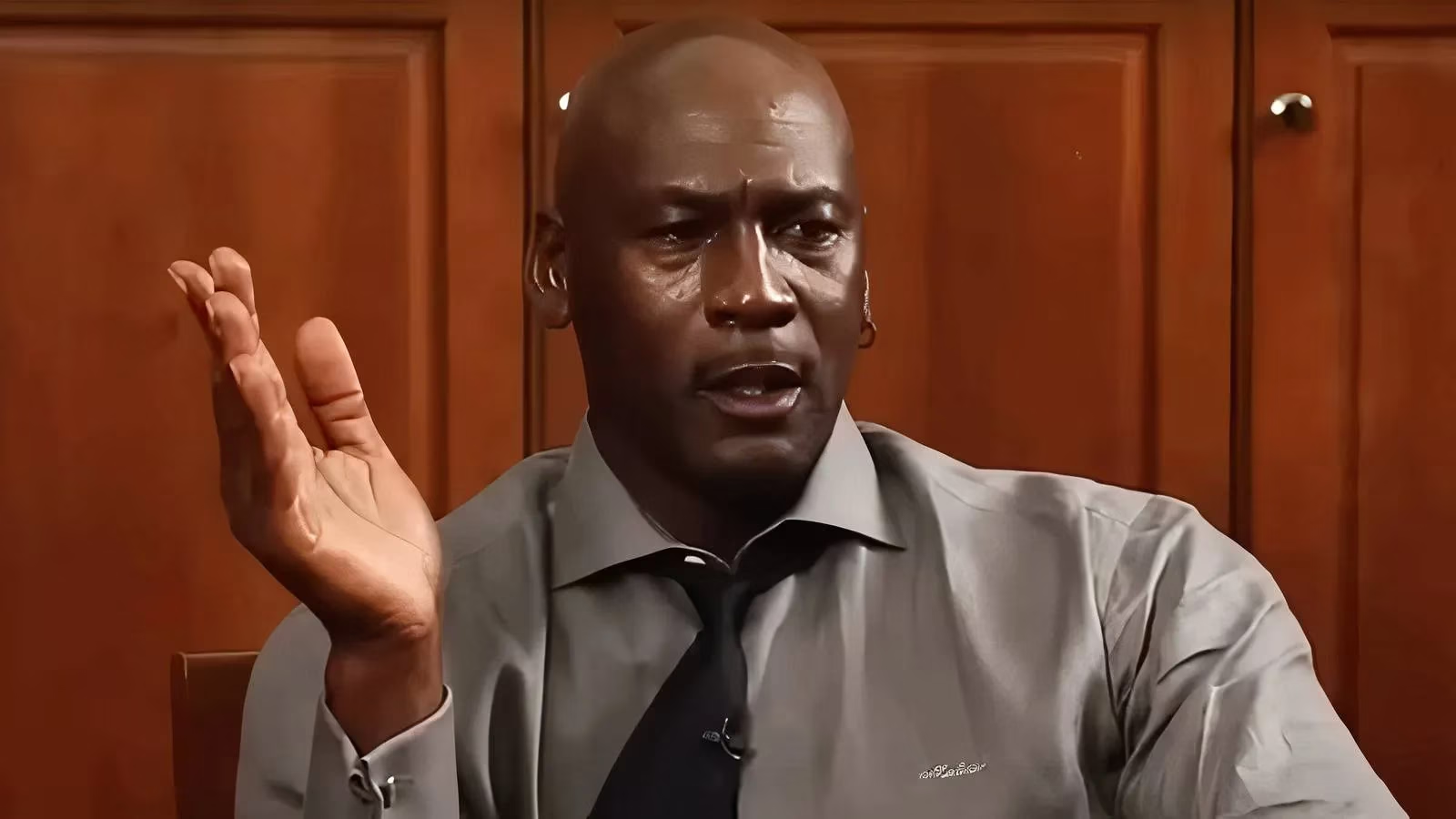
The concern first exploded into public view during Netflix’s “The Last Dance” documentary, when close-up interviews revealed Jordan’s sclera—the white part of the eye—had turned a shade of yellow. Couch doctors flooded the internet with diagnoses, from liver failure to hepatitis. But as quickly as the chatter rose, it faded, without any official statement from Jordan’s camp. Then came his historic return to NBC in 2025, after the network reacquired NBA rights, reuniting him with the very platform that helped build his myth in the 90s. And just like that, the yellow eyes were back on everyone’s mind.
Fast forward to 2026, and even as Jordan promotes his acclaimed feature series “MJ: Insights into Excellence,” the eye-color mystery just won’t go away. So, what’s really going on beneath those famous lids? Medical experts have been weighing in for years, and the consensus might be less alarming than fans fear.
Dr. Glaucomflecken—an ophthalmologist better known by his comedic social media persona—broke it down in a viral tweet that resurfaced after Jordan’s 2025 NBC debut. “He is not jaundiced,” the doctor wrote with trademark clarity. “He has racial melanosis of the conjunctiva. Benign, flat patches of pigment around the edge of the cornea. This is extremely common in darkly pigmented individuals, and more prominent with age.” In simpler terms, it’s like having a cluster of freckles—but on your eye. Not a disease, not a threat.
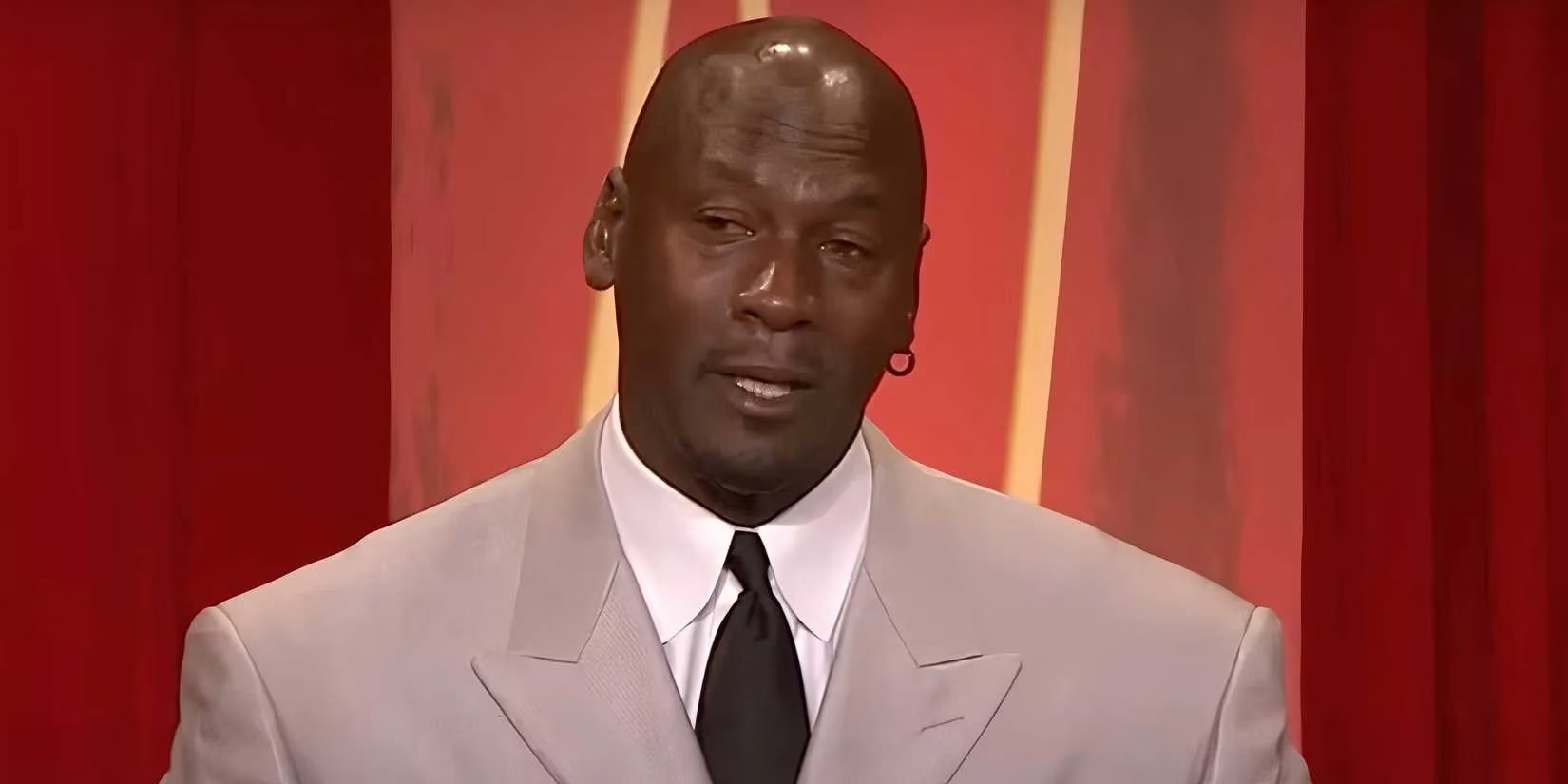
But that’s not the only theory out there. Some optometrists have pointed toward pinguecula—a yellowish, raised growth on the conjunctiva caused by long-term sun exposure, dust, or wind. For a man who spent years playing outdoor golf, riding motorcycles, and smoking his famous cigars, that environmental damage makes plenty of sense. A pinguecula is also benign, though it can cause occasional irritation. Neither condition explains a systemic illness, and both fit the visual evidence perfectly.
Still, the public can’t help but worry. Jordan’s legendary privacy only fuels the fire. He’s never addressed the topic directly—no interviews, no tweets, no cryptic Instagram posts. His silence creates a vacuum that fans and click-hungry blogs rush to fill with scary speculation. But perhaps that’s the point: for a man whose every move was scrutinized during his playing days, refusing to dignify the rumors might be the ultimate act of control.
What makes the 2026 conversation especially intriguing is the context. Jordan isn’t retreating from the public eye—he’s leaning in. His “Insights into Excellence” series, which first aired in October 2025 and continues to draw millions of viewers, features the GOAT breaking down modern NBA trends like load management, player empowerment, and the mental side of greatness. Seeing him so vibrant and engaged, with that familiar competitive fire still burning, clashes starkly with the image of someone battling a hidden illness.
And NBC couldn’t be happier. The partnership feels like a time machine back to the 90s, when Jordan’s Bulls and Marv Albert’s calls on NBC turned the league into a global phenomenon. Now, with Jordan in the booth (or at the desk) for 2026’s biggest games, the nostalgia is palpable—and the ratings prove it. His presence is a statement that the network is serious about reclaiming basketball supremacy from competitors.
Yet, for all the strategic brilliance, the visual of those yellowed eyes lingers. It’s a testament to how deeply people care about Jordan, not just as an athlete but as a cultural touchstone. He’s the GOAT who gave us the “Flu Game,” the shoulder shrug, and the last-second championship winner. To see him with any sign of vulnerability—even something as harmless as a pigmented conjunctiva—can be jarring.
🏀 What can we take away in 2026? First, despite the frightening appearance, medical professionals almost universally agree that Jordan’s eye discoloration is not a sign of liver disease or life-threatening illness. Second, the conversation reveals our collective inability to separate the immortal icon from the aging man. Jordan is 63. Age changes everyone, even the ones who flew above us all.
And finally, maybe the yellow eyes are just a reminder: behind every perfect highlight is a human being. Michael Jordan may never explain those eyes, and that’s his right. But as long as he keeps sharing his basketball genius with a new generation, fans will keep watching—and yes, a little bit of eye chatter will probably come along for the ride.
With the 2026 NBA Finals just around the corner and Jordan’s commentary scheduled to anchor NBC’s coverage, you can bet the zoom lenses will be ready. But perhaps instead of searching for signs of sickness, we should just appreciate the view: a legend still shining bright, even if the whites of his eyes don’t quite match the script.
Comments