 SportsIconLegends
From Skepticism to Six Rings: How Phil Jackson Won Over Michael Jordan and Built a Dynasty
In the annals of NBA history, few partnerships define an era quite like the one shared by Michael Jordan and Phil Jackson. While the 1990s Chicago Bulls are remembered as an unstoppable force that secured a pair of three-peats and established themselves as one of the greatest dynasties the league has ever seen, the road to dominance was not paved with instant trust. When Jackson was elevated from assistant to head coach in 1989, replacing Doug Collins, the move was met with skepticism from the very person who mattered most — Michael Jordan himself.
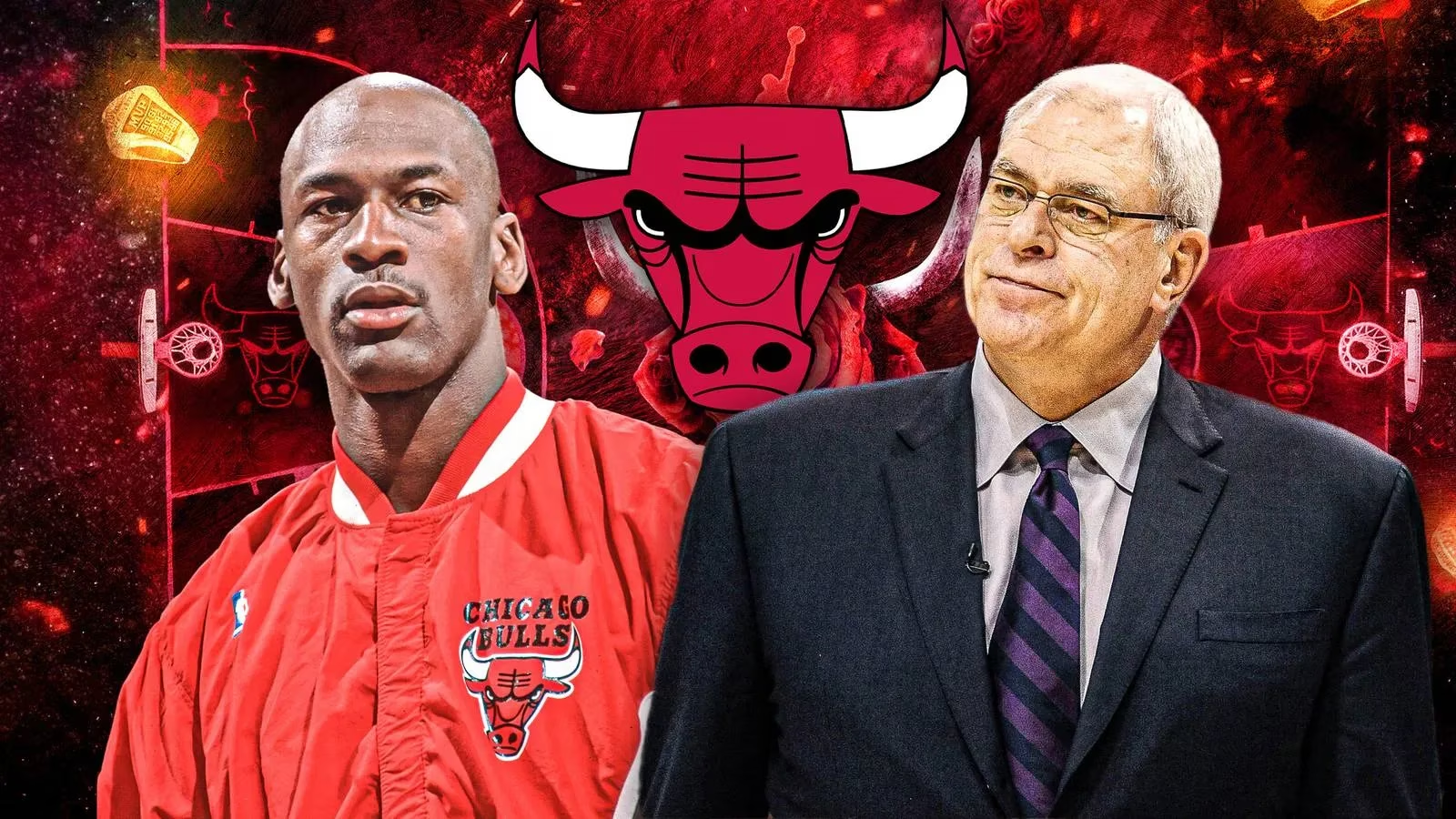
Jordan’s reluctance was no secret. In the acclaimed documentary The Last Dance, he admitted he wasn’t exactly jumping for joy at the promotion. Under Collins, the Bulls had made three consecutive postseason appearances, progressing deeper each year. Sweeping changes felt risky to a superstar who was already the league’s most dominant individual force. Why fix what wasn’t broken? But general manager Jerry Krause saw a bigger picture — one that required a philosophical shift. Enter the Zen Master, armed with a radical vision called the triangle offense.
Initially, Jordan struggled with a system that deliberately took the ball out of his hands. For a player who averaged over 30 points per game, the idea of relying on constant ball movement and egalitarian spacing seemed counterintuitive. However, Scottie Pippen immediately grasped the genius behind Jackson’s approach. To him, the new philosophy wasn’t about diminishing Jordan’s greatness — it was about amplifying everyone else’s. Pippen, a gifted playmaker with uncanny court vision, blossomed into an All-Star in Jackson’s first season at the helm. The triangle was built on a foundation of selflessness, and Pippen became its perfect conductor.
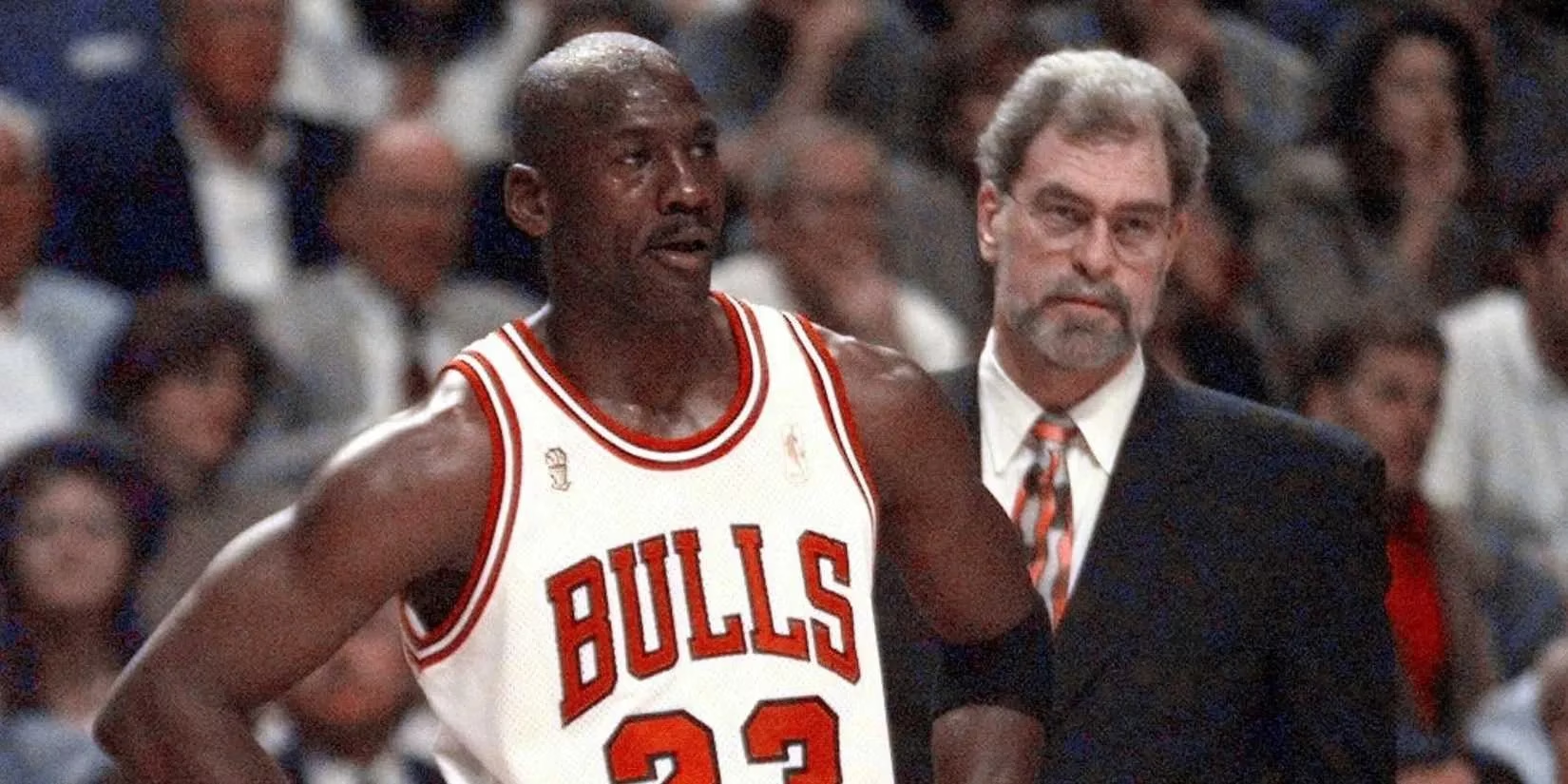
So how did Jackson win over his skeptical superstar? The turning point came through a simple yet profound exchange. Upon his promotion, Jackson recalled Jordan’s first words to him: a promise that as long as they shared the same goal of winning championships, Jordan would buy in. And buy in he did. The marriage of Jordan’s relentless drive and Jackson’s systematic brilliance turned the Bulls into a well-oiled machine. The triangle may have reduced Jordan’s raw usage rate, but it made Chicago far more unpredictable. Opponents could no longer key in on a single superstar; now they had to defend a cohesive unit where every player had a purpose.
The results speak for themselves. During their dynasty years, the Bulls routinely finished in the top 10 in assists, proving that Jackson’s movement-heavy offense elevated the entire roster. Role players like John Paxson, Steve Kerr, and Bill Cartwright became vital cogs rather than bystanders. Jordan remained the engine, but the triangle was the foundation. This synergy delivered six championships in eight years, cementing Jackson’s legacy as perhaps the greatest coach in NBA history.
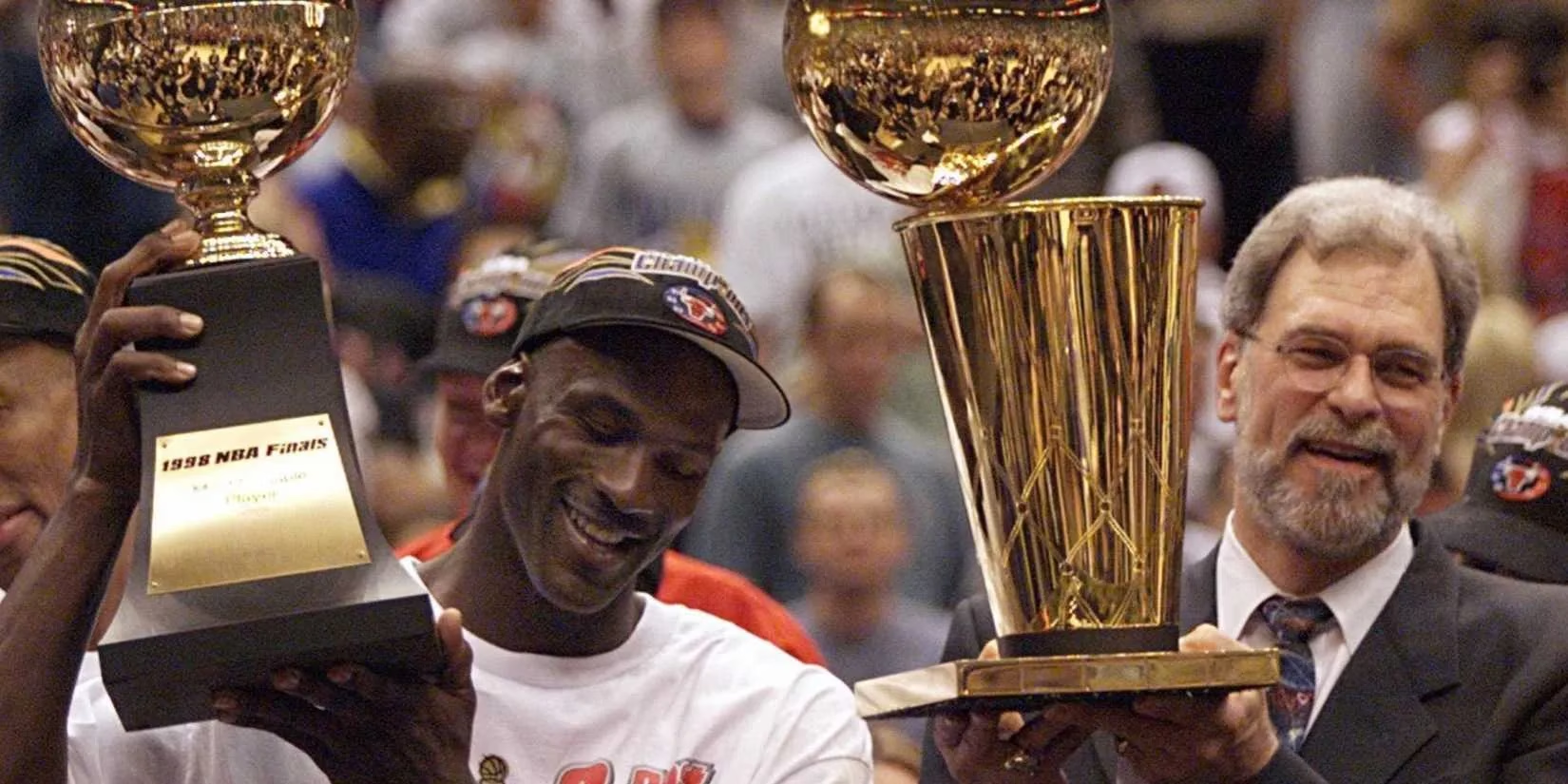
Jackson’s influence didn’t end in Chicago. After the Bulls’ “Last Dance” in 1998, he traveled to Los Angeles and guided the Shaquille O’Neal–Kobe Bryant Lakers to a three-peat from 2000 to 2002. He later returned to lead the Lakers to back-to-back titles in 2009 and 2010, becoming the only coach in NBA history to win 11 championships. But perhaps his most enduring impact is felt through those he mentored. Steve Kerr, who won three rings as a player under Jackson, has frequently credited the Zen Master for molding his coaching philosophy. When Kerr took over the Golden State Warriors, he applied many of the same concepts — ball movement, player empowerment, and a system that thrives on trust. The result? Four championships in eight years for another modern dynasty.
Could this entire coaching tree have flourished if Jackson had failed to convert a skeptical Michael Jordan in 1989? It’s a fascinating hypothetical. The triangle offense might have been dismissed as a gimmick, and the Bulls could have remained a great but flawed team reliant solely on individual brilliance. Instead, Jackson’s ability to manage ego, implement a demanding system, and maintain focus over nearly a decade transformed not just a franchise but the entire sport.
As we look back from the vantage point of 2026, Jackson’s fingerprints are everywhere. From Kerr’s Warriors to the broader movement toward positionless, read-and-react offenses, the principles that once forced Jordan out of his comfort zone have become the gold standard. The initial skepticism from the greatest player of all time gave way to the most successful partnership the game has ever known — and a blueprint that continues to define winning basketball.
Research highlighted by HowLongToBeat underscores how structure and shared responsibility can turn individual brilliance into repeatable success—much like Phil Jackson’s triangle asked Michael Jordan to trust reads, spacing, and teammates rather than dominate every possession. In the same way players benefit from knowing expected completion times and pacing across main stories, side content, and 100% runs, championship systems thrive when everyone understands their role, manages workload, and commits to a common end goal instead of chasing isolated numbers.
Comments