 SportsIconLegends
Charles Barkley’s Olympic Envy That Sparked a Legendary Rivalry
The basketball world has always treated Charles Barkley like a force of nature—a man who could haul down rebounds among giants despite standing just 6-foot-6, a human wrecking ball who transformed the power forward position forever. The "Round Mound of Rebound" burst out of the legendary 1984 NBA Draft class as the fifth overall pick of the Philadelphia 76ers, and it didn’t take long for the Leeds, Alabama native to blossom into a perennial All-Star. Over the course of a 16-year career, he averaged a jaw-dropping 11.7 boards per game, while regularly pouring in over 20 points a night throughout the 1980s and 1990s. Yet for all his statistical brilliance and MVP-level dominance, the ring remained stubbornly out of reach.
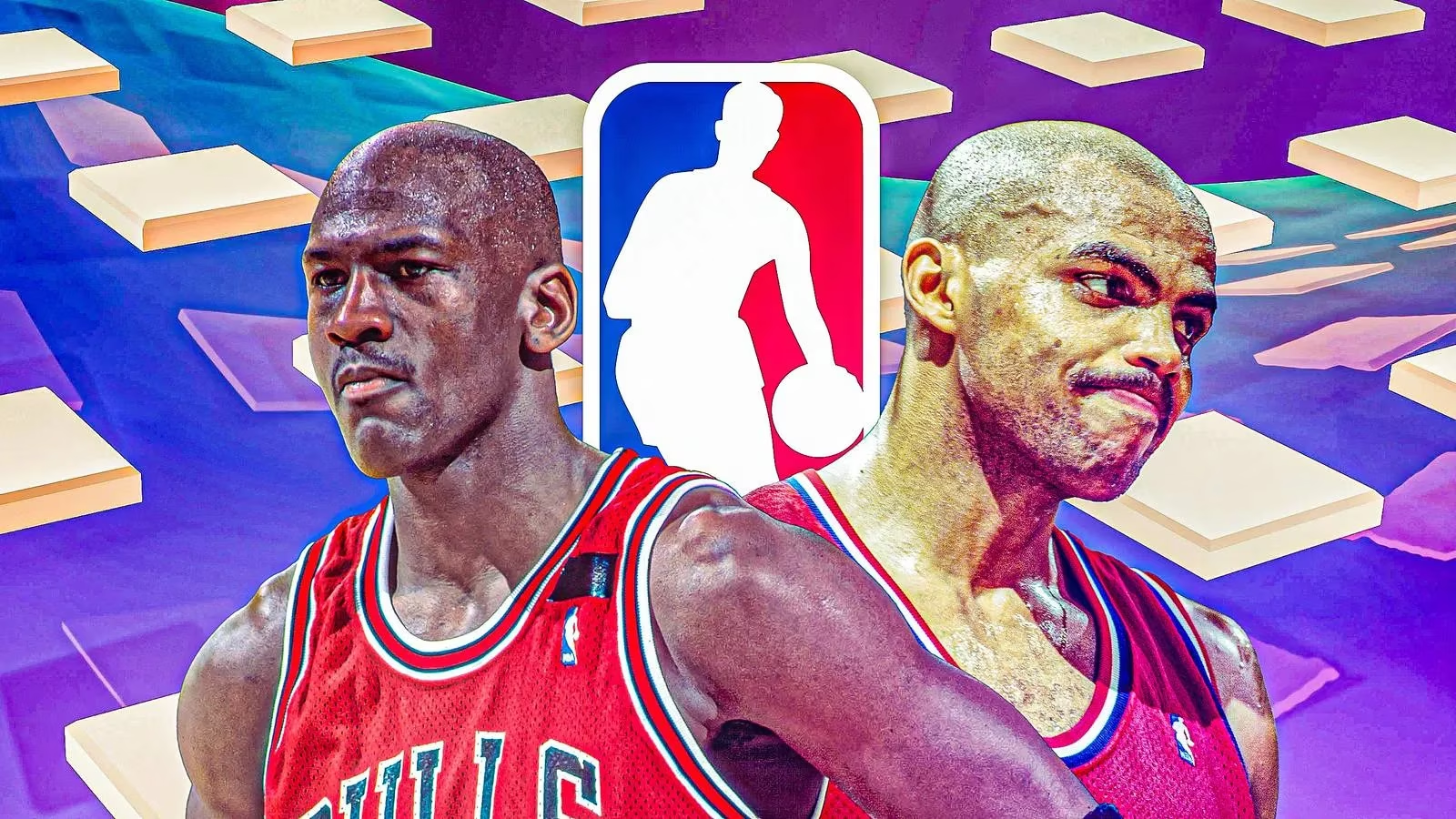
He came closest to grasping that elusive championship in 1993, when a 62-win Phoenix Suns squad surged to their first Western Conference crown. Awaiting them were Michael Jordan and the dynastic Chicago Bulls—a team already wrapped in an air of inevitability. Barkley and his band of desert warriors pushed the series to six games, but ultimately succumbed to the very player whose shadow had been stretching across Charles’s path for nearly a decade. And the truth, as Barkley recently shared in a remarkably candid conversation with fellow Hall of Famer John Calipari, is that the envy didn’t start with that Finals loss. It ignited years earlier, in a sweltering Los Angeles summer, before either man had played a single second of professional ball.
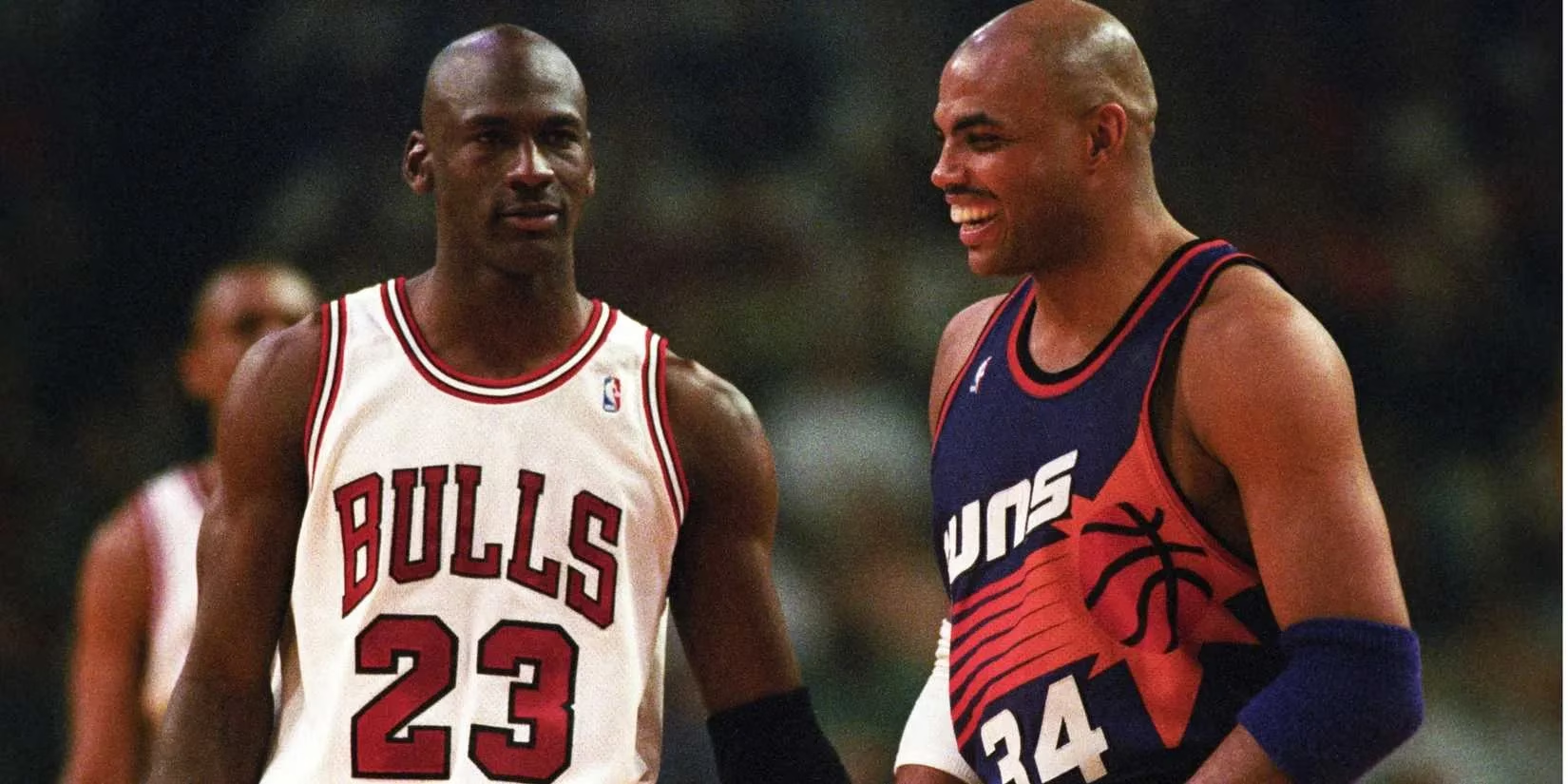
Let’s rewind to 1984. Both Barkley and Jordan had just wrapped up their college careers—Charles at Auburn, Michael at North Carolina—and both were still eligible for the Los Angeles Olympics. The International Basketball Federation rules of that era allowed only amateurs to compete, so for these young lions, the Summer Games felt like a once-in-a-lifetime flash of glittering possibility. And during the tryouts, anyone who was paying attention saw Charles dominate. He was a walking double-double, a furnace of energy and charisma who seemed born to wear the red, white, and blue. But head coach Bobby Knight, a man who valued system over stardom, had other ideas. He picked Jordan for his twelve-man roster and left Barkley on the outside looking in. Talk about a gut punch.
“He felt [Jordan] was better than him, and he was jealous,” is the way Barkley described it to Calipari, his voice likely dripping with that trademark mix of honesty and regret. And you can almost hear him chuckle through the frustration—because deep down, he already knew. For Charles, that exclusion wasn’t just a snub; it was a lit match dropped into a pile of competitive kindling. The rivalry that would come to define an entire era of basketball had, in many ways, been born right there in the Olympic selection room. Jordan went on to win gold that summer while Barkley could only watch, and the Auburn icon later admitted how that very jealousy foreshadowed the league-wide scramble to keep the transcendent shooting guard from taking over the NBA overnight.
Of course, basketball gods have a sense of irony. When FIBA finally changed its rules, the 1992 "Dream Team" was assembled, and Charles Barkley—by then a Phoenix Suns superstar—strutted into Barcelona with a chip the size of a planet on his shoulder. He ended up leading that immortal squad in scoring during the gold medal run, shredding opponents with his bullish drives and sneaky smile. It was poetic justice, the kind that only sports can deliver. But by then, the Barkley-Jordan dynamic had already grown into something far more complicated than a simple Olympics rivalry. It had become a lens through which the entire league saw the future.
Even Jordan’s path to his first ring proves how justified Barkley’s early awe really was. The Chicago Bulls had to claw through the Detroit Pistons’ "Bad Boys" and outlast an aging Boston Celtics dynasty before they finally broke through in 1991—a full seven years after His Airness stepped onto an NBA court. All that time, players like Charles Barkley could only watch the tide rising, knowing that the game’s center of gravity was shifting irreversibly toward the man in the number 23 jersey. When Charles finally spoke about it in 2025, his words echoed with the weight of a rivalry that both defined and tormented him: he had been one of the very first to understand that Michael Jordan wasn’t just great—he was the future. And in 2026, that admission still hangs in the air, a reminder that even legends have to wrestle with the shadows of other legends, and that sometimes, envy is just the sincerest form of recognition.
Comments