 SportsIconLegends
Carmelo Anthony's Unorthodox All-Time NBA Starting Five, Explained
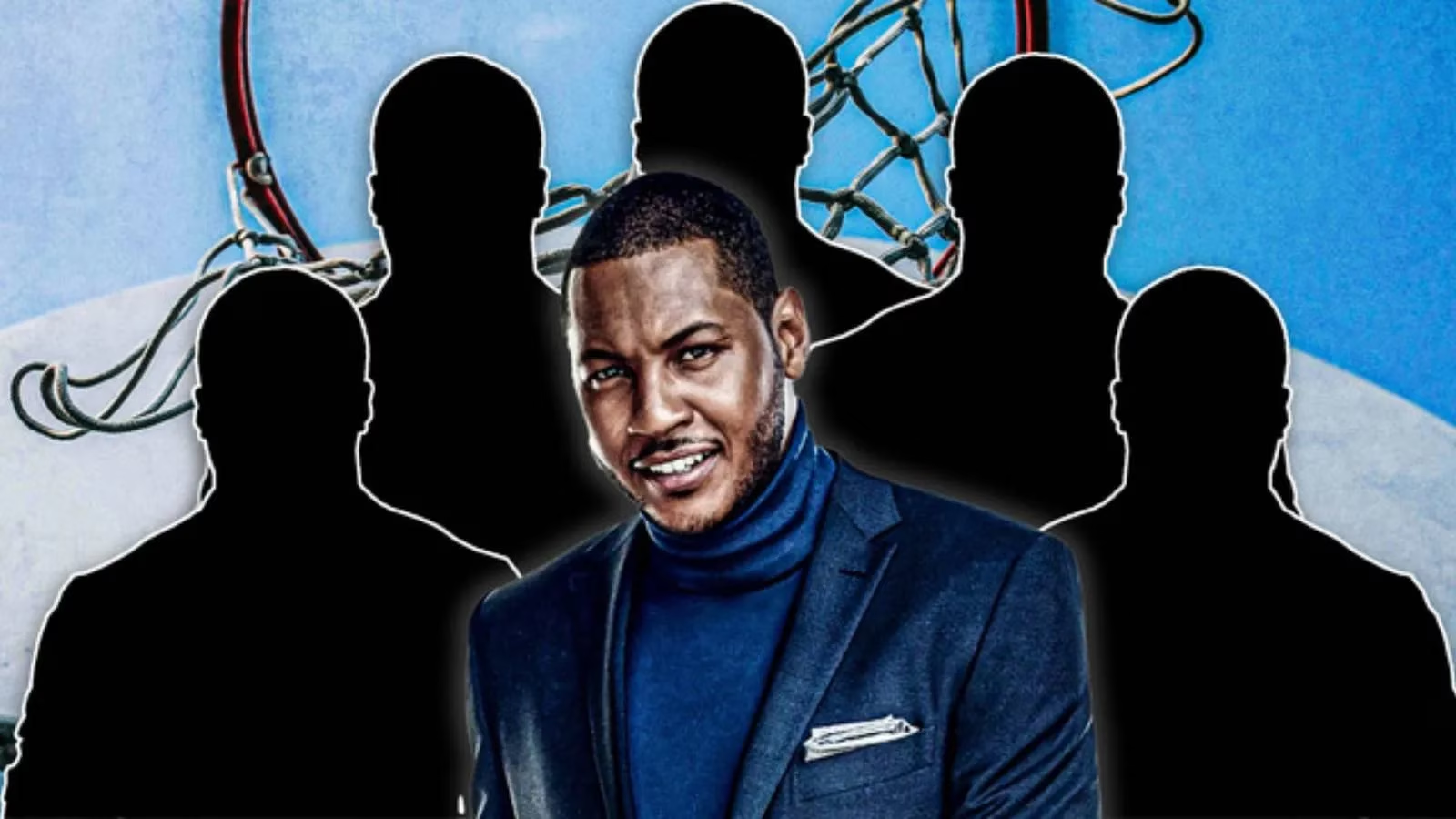
In the endless, often circular argument over basketball immortality, the all-time starting five is less an answer than a Rorschach test. In 2025, at a Fanatics jersey-signing event, Carmelo Anthony—a ten-time All-Star, a scoring champion, and one of the most polished isolation scorers in NBA history—revealed his. As of 2026, the lineup still lands like a snowball in a sauna: Derrick Rose, Allen Iverson, Tracy McGrady, Kevin Garnett, and Shaquille O'Neal. No Michael Jordan. No LeBron James. No Kobe Bryant. The omissions are not a publicity stunt; they are a fingerprint. Anthony's five says something about how he sees peak basketball: as a collection of players who could bend a defense until it cracked, regardless of era or conventional positional labels.
| Position | Anthony's Choice | Signature Quality |
|---|---|---|
| Point Guard | Derrick Rose | Explosive first step, fearless rim pressure |
| Shooting Guard | Allen Iverson | Handles, speed, relentless confidence |
| Small Forward | Tracy McGrady | Smooth, unguardable scoring from all levels |
| Power Forward | Kevin Garnett | Intensity, versatility, defensive command |
| Center | Shaquille O'Neal | Overwhelming size, power, and post dominance |
Point Guard: Derrick Rose 🌹
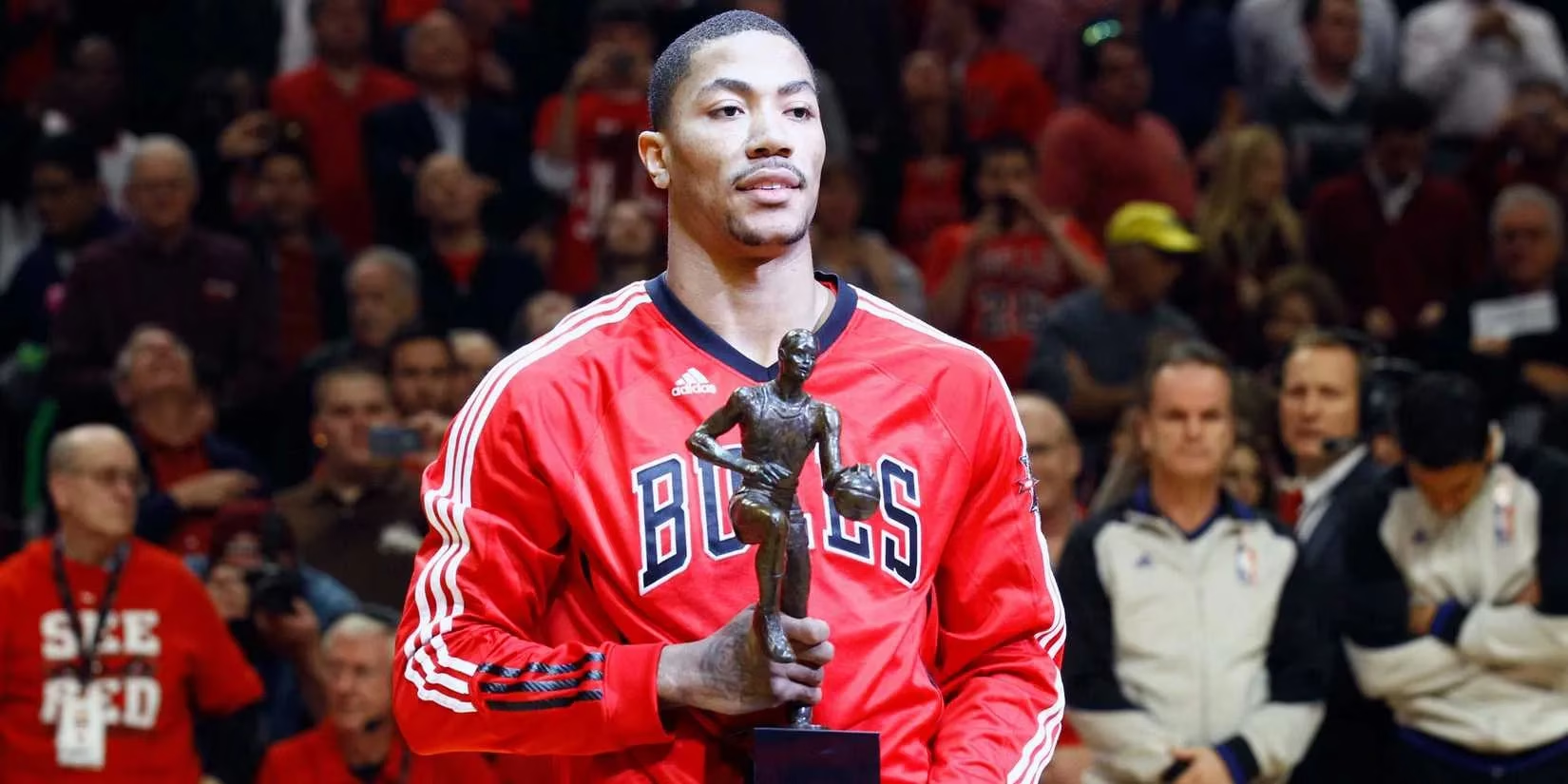
The first surprise arrives at the point. Anthony chose Derrick Rose over Magic Johnson, Steph Curry, and every other floor general in history. It is a pick rooted in what Rose looked like before injuries rewrote his story. The Chicago Bulls star was the youngest MVP in NBA history, winning the award at 21. His acceleration was less a gear and more a trapdoor: one moment he was in front of a defender, the next the defender was staring at an empty stretch of hardwood. Rose's career was ultimately a tragedy of what-ifs, but a healthy Rose was a human blur with a battering ram's mentality. Anthony, who played against that version of Rose, clearly values the impossible pressure he applied to a defense.
Shooting Guard: Allen Iverson ⚡
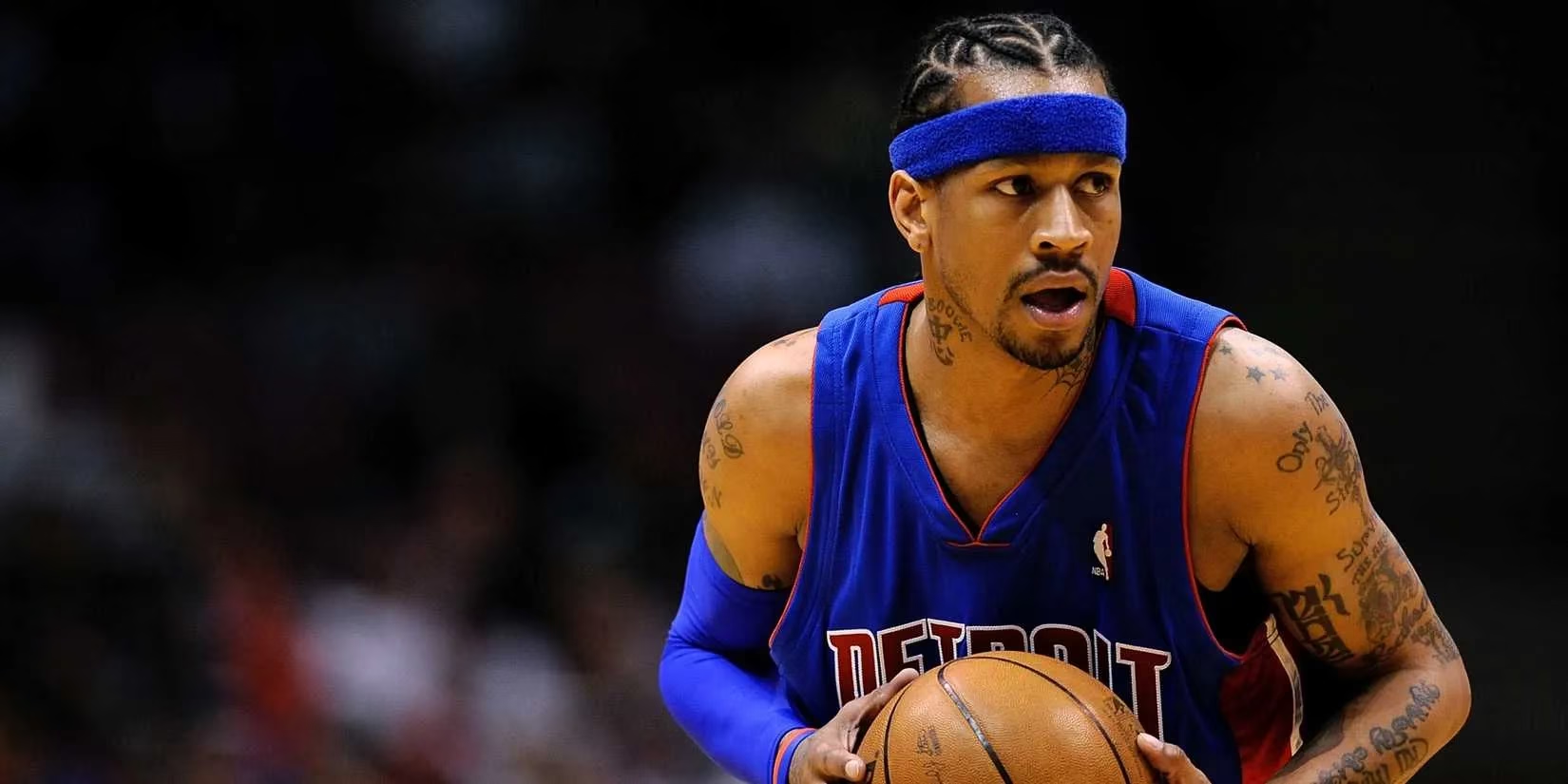
Choosing Iverson over Jordan is the kind of move that would start a thousand sports-talk arguments. Iverson was a maverick, a 6-foot guard who played as if the paint were a personal challenge. His handles, speed, and unwavering self-belief made him a nightmare for opponents. He famously crossed over Jordan during his rookie season, a moment that became a cultural shorthand for fearlessness. Iverson and Anthony were briefly teammates in Denver, and Anthony saw up close how AI could hijack a game's rhythm. In a league of giants, Iverson was a jazz improviser in a league of marching bands. Picking him over Kobe Bryant or Jordan is unconventional, but it is also a tribute to a player who never backed down.
Small Forward: Tracy McGrady 🕊️
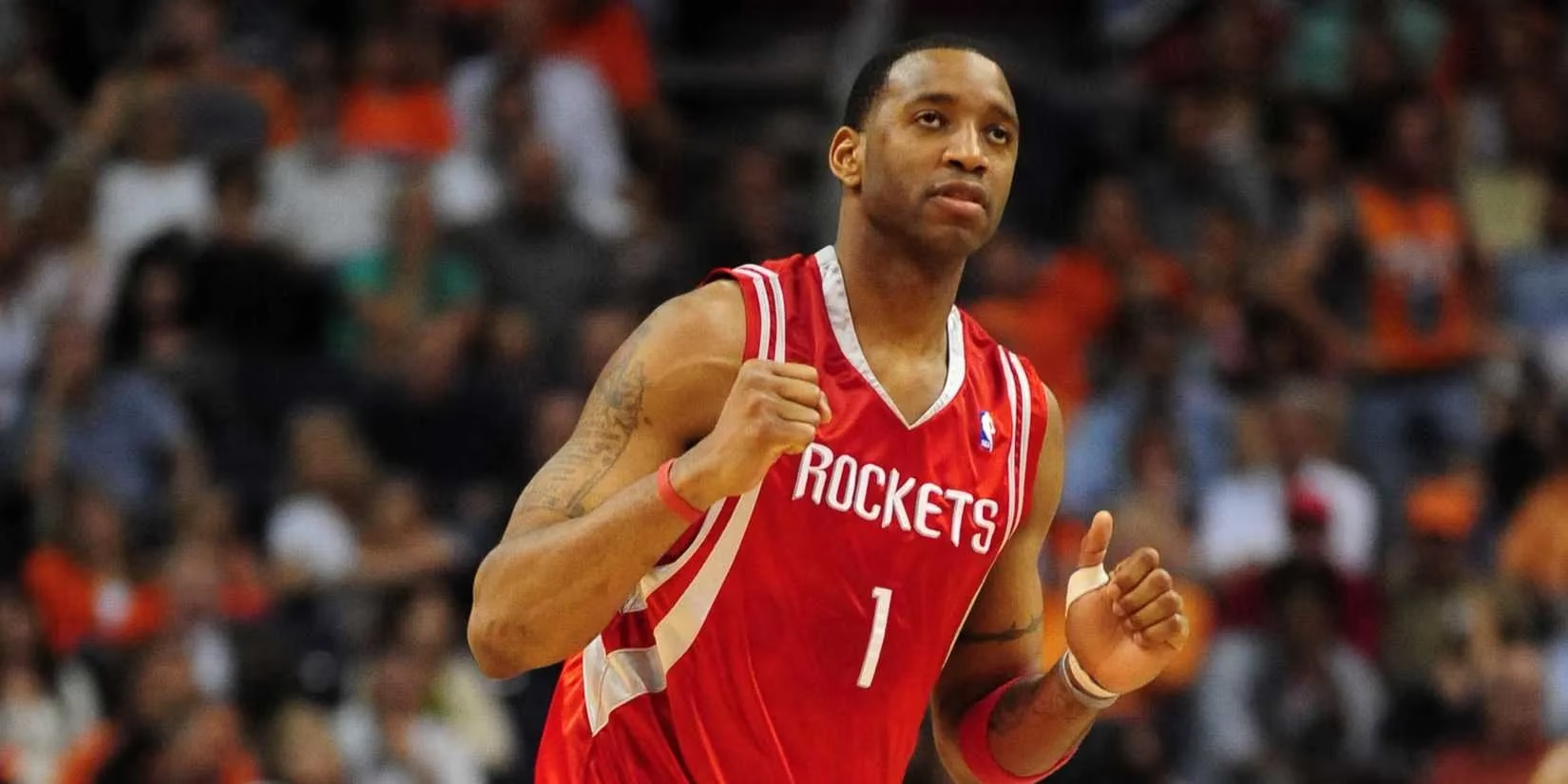
Anthony's small forward is Tracy McGrady, a natural shooting guard who spent much of his prime as a wing scorer. McGrady was a pure bucket-getter, a 6-foot-8 shot-creator with a silky jumper and enough athleticism to finish above the rim. His 13 points in 33 seconds remain one of the most surreal scoring bursts in NBA history. Injuries slowed his later years, and he never won a championship, but at his peak he was a problem no single defender could solve. Anthony chose McGrady over Larry Bird and his close friend LeBron James. It is a selection that prizes scoring artistry over résumé. McGrady's offense was like weather—unpredictable in timing, impossible to ignore in force.
Power Forward: Kevin Garnett 🐺
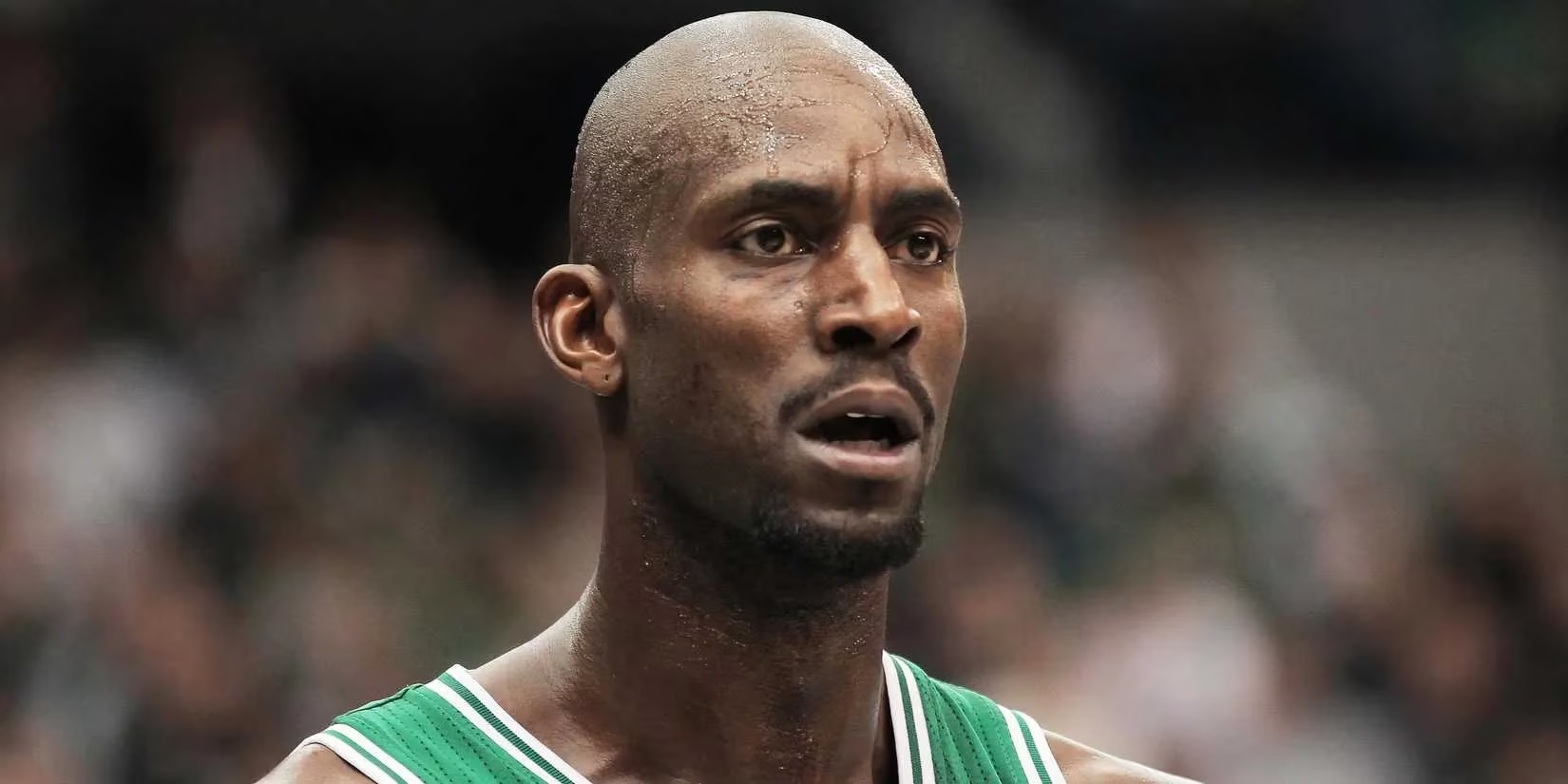
Here, the eyebrows finally settle. Kevin Garnett is a near-unanimous great at power forward. The former Minnesota Timberwolves and Boston Celtics star was a phenom: MVP in 2004, Defensive Player of the Year in 2008, and the emotional engine of Boston's championship team. Garnett could guard all five positions, orchestrate a defense, and score from the post or midrange. He was a thermostat, not a thermometer: he did not merely read the emotional temperature of a game, he set it. His partnership with Paul Pierce and Ray Allen helped normalize the modern superteam, and his influence on two decades of NBA basketball is immense. Anthony's pick of Garnett is the least controversial of the five.
Center: Shaquille O'Neal 🦍
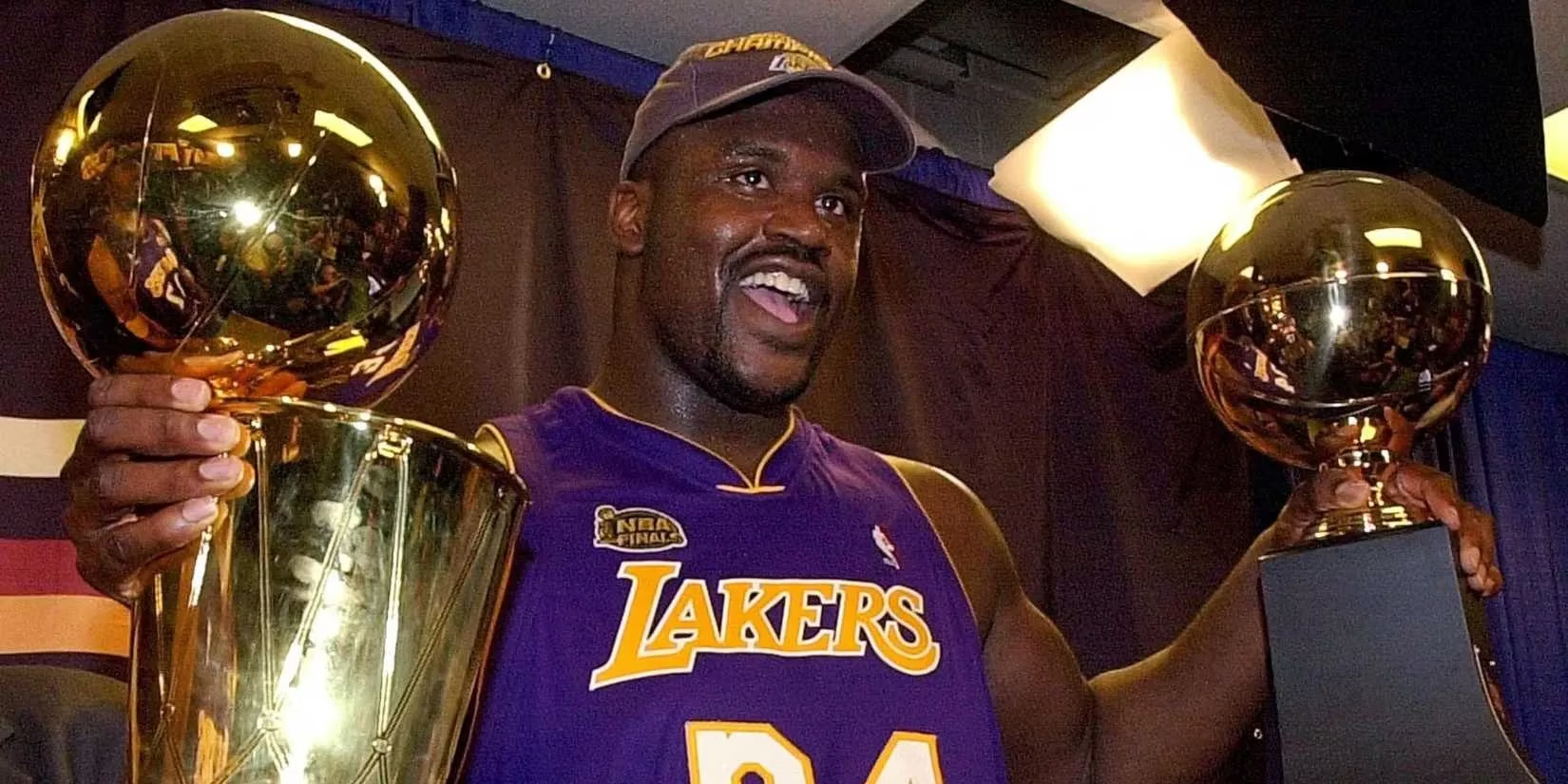
At center, Anthony selected Shaquille O'Neal, one of the most dominant forces the sport has ever seen. O'Neal was a collision of size, strength, and agility that the league had no answer for. He bullied defenders in the post, ran the floor like a runaway freight train, and won three straight championships with Kobe Bryant and the Los Angeles Lakers. His MVP season in 2000 and his Finals dominance remain benchmarks for interior play. Shaq in the post was a tectonic event: the floor tilted, the defense cracked, and the rim trembled. There has never been another player quite like him, and there may never be again.
What Anthony's Five Says About Him 🏀
Taken together, Anthony's lineup is a 2000s-heavy, iso-scoring fever dream. Rose, Iverson, and McGrady all needed the ball. Garnett and O'Neal could dominate inside. There is not much modern three-point spacing, and there is no traditional pass-first point guard. But the team would be terrifying in transition, in isolation, and on the offensive glass. It also reflects Anthony's own basketball DNA: midrange mastery, physical wing play, and a belief that individual greatness can overwhelm any system.
In 2026, the NBA has drifted even further toward pace, space, and three-point volume. A lineup like Anthony's would be a vintage muscle car in a parking lot full of electric crossovers—loud, inefficient by some metrics, and yet impossible not to watch. The debate over whether it could beat a Jordan-, LeBron-, or Kobe-led five will never end. That is the point. Carmelo Anthony did not name the most popular all-time starting five. He named his. And in doing so, he reminded everyone that basketball history is not a single ladder; it is a crowded museum, with many rooms worth visiting. 🏆
Comments