 SportsIconLegends
B.J. Armstrong Says Tim Duncan Was Closest to Michael Jordan, Not LeBron James
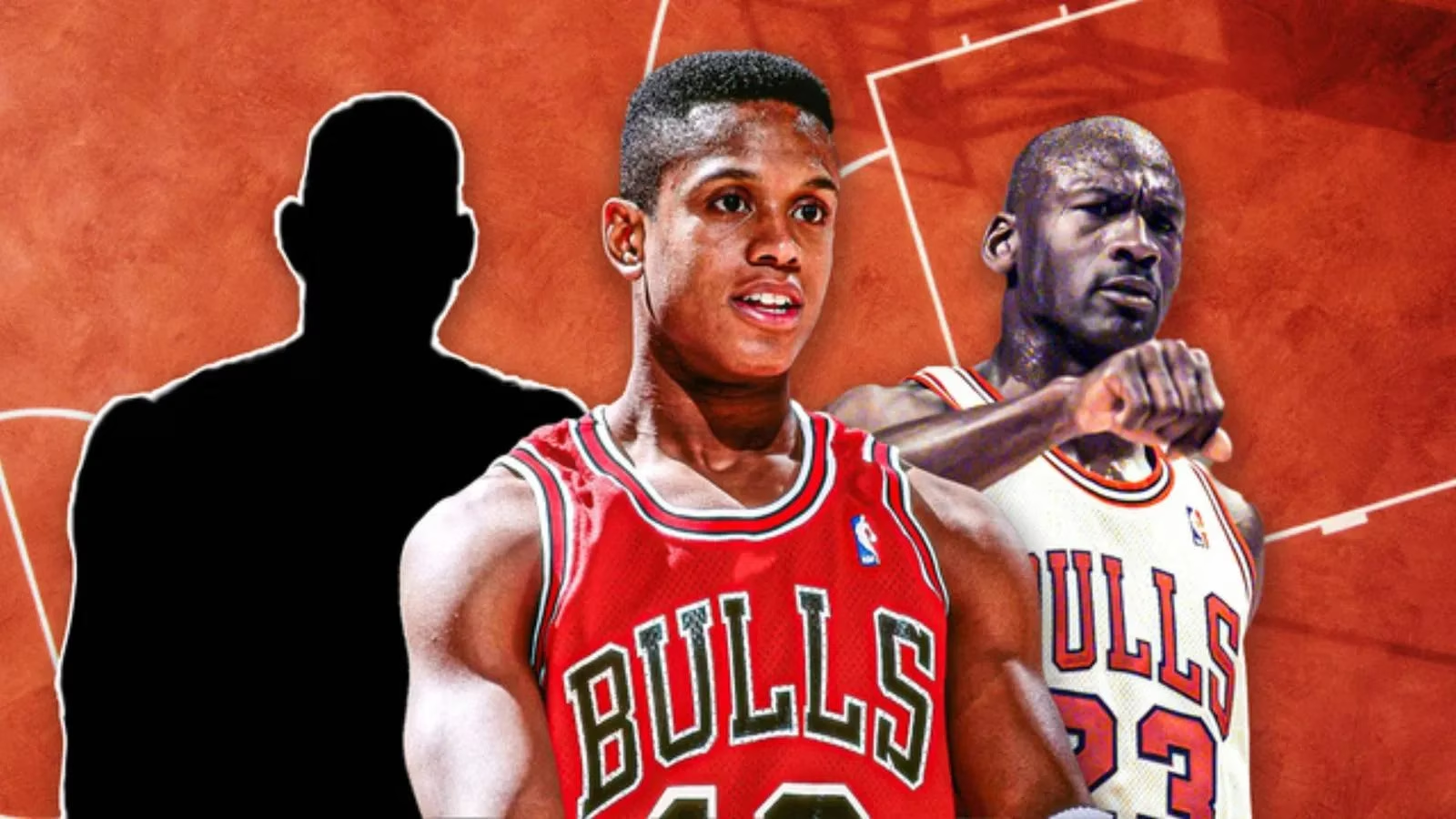
The debate over who came closest to Michael Jordan has followed the NBA for more than two decades, and in 2026 it remains one of the league's most durable arguments. Jordan retired for the final time in 2003 after establishing himself as the defining player of his era, a fierce competitor who dominated on both ends of the floor and led the Chicago Bulls to six NBA championships between 1990 and 1998. Since then, LeBron James and Anthony Edwards have been among the stars frequently compared to Jordan, but one of Jordan's former teammates believes the answer lies elsewhere. B.J. Armstrong, who won three championships alongside Jordan in Chicago, has identified Tim Duncan as the closest thing to another Michael Jordan.
Armstrong's Unique Perspective
Armstrong's view carries weight because he saw Jordan's greatness from the inside. Drafted by the Bulls in 1989, Armstrong spent four years playing alongside Jordan and won three NBA championships with him. He remained with Chicago until 1995, leaving shortly before Jordan returned to the franchise after his first retirement. That experience gave Armstrong an up-close view of Jordan's scoring brilliance, defensive intensity and competitive nature. It also gave him a clear standard for evaluating the players who followed.
According to comments shared by Basketball Network, Armstrong revealed that San Antonio Spurs legend Tim Duncan is the closest thing to another Michael Jordan. The choice is notable because it does not follow the usual script. Most modern comparisons center on James, whose all-around production and longevity have fueled endless debates, or Edwards, whose athleticism and scoring style have drawn Jordan comparisons. Armstrong instead points to a player whose game was built on fundamentals, consistency and quiet dominance.
Why Duncan Fits the Comparison
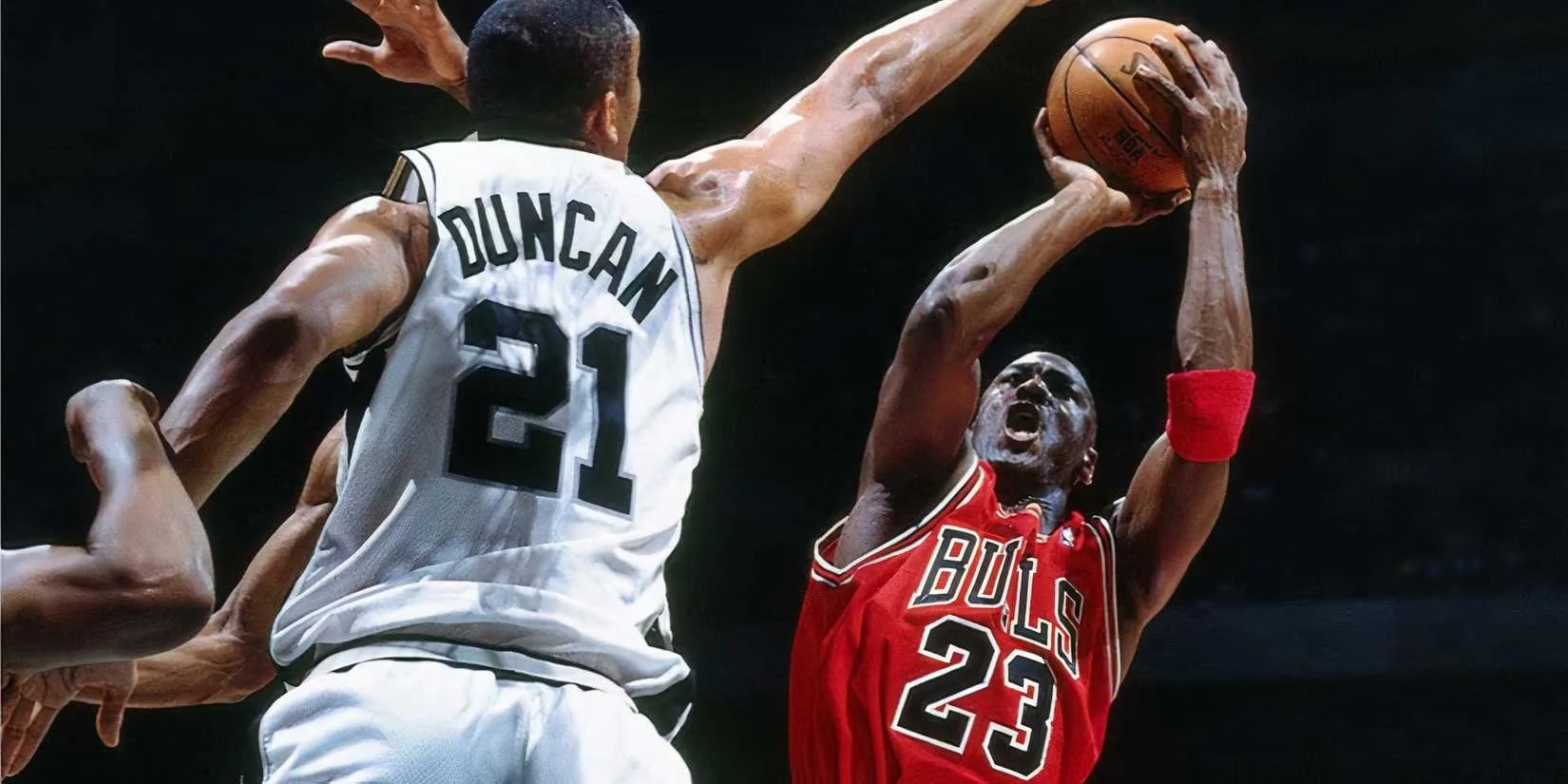
Duncan was drafted by the Spurs in 1997 and spent his entire 19-year career with the franchise. Known as 'The Big Fundamental,' he was consistently one of the greatest players in the NBA during his time in Texas and helped San Antonio win five championships. He was named the NBA MVP on two occasions, and his combination of superb scoring and tight defending made him a real problem for teams across the league. That two-way impact is central to why Armstrong sees Duncan as the closest thing to another Jordan.
The comparison is not about stylistic mimicry. Duncan did not play with Jordan's flair or score in the same explosive way. Instead, the link rests on winning influence, defensive reliability and the ability to raise a franchise to championship standards. Jordan was an elite scorer and a tremendous defender at the same time; Duncan was a dependable offensive anchor and a defensive cornerstone. Both players made their teams title contenders year after year, and both built legacies defined by championships rather than highlights alone.
A Debate That Continues in 2026
The conversation remains relevant in 2026 because the NBA is still searching for the next Jordan. James has built one of the most complete careers in league history, and Edwards has become one of the most exciting young stars in the game. Yet Armstrong's answer suggests that replacing Jordan is not only about scoring titles or viral moments. It is about sustained excellence, defensive commitment and the kind of leadership that produces championships.
Duncan's resume supports that argument. He spent his entire career with one franchise, won five titles and earned two MVP awards. He was rarely the loudest voice in the room, but his presence shaped the Spurs' identity for nearly two decades. In a league that often celebrates spectacle, Duncan's greatness was rooted in repetition, discipline and results. That may be why Armstrong sees him as the closest thing to Jordan even if the two players looked very different on the court.
| Category | Michael Jordan | Tim Duncan |
|---|---|---|
| NBA championships | 6 | 5 |
| Primary franchise | Chicago Bulls | San Antonio Spurs |
| Defining strengths | Scoring, defense, competitiveness | Fundamentals, defense, consistency |
| Leadership style | Fierce and demanding | Quiet and steady |
| Legacy | Global icon and six-time champion | Franchise cornerstone and five-time champion |
The Meaning of Armstrong's Praise
Armstrong's comment is an incredible compliment to Duncan. It places him in a conversation usually reserved for the most explosive scorers and most celebrated stars. It also adds nuance to a debate that can become repetitive. Rather than asking which modern player copies Jordan's moves, Armstrong's view asks which player came closest to matching his impact. For Armstrong, the answer is Duncan, a player who won at the highest level and did so with a complete, two-way game.
That does not end the argument, and it is unlikely to silence fans who favor James or see Edwards as a future heir. But it does offer a fresh perspective from someone who witnessed Jordan's dominance firsthand. In 2026, with the debate still alive, Armstrong's choice of Duncan stands out as a reminder that greatness can take different forms. Sometimes it arrives with a highlight reel; sometimes it arrives with a bank shot, a defensive rotation and five championships. 🏀
Comments